Hold On Tight: Your Guide to Metal Roof Wind Resistance
We’re no strangers to wind in Montana. Strong summer gusts near Livingston have been clocked at 110 mph or more, and icy gales race through the Rocky Mountain regions all year long.
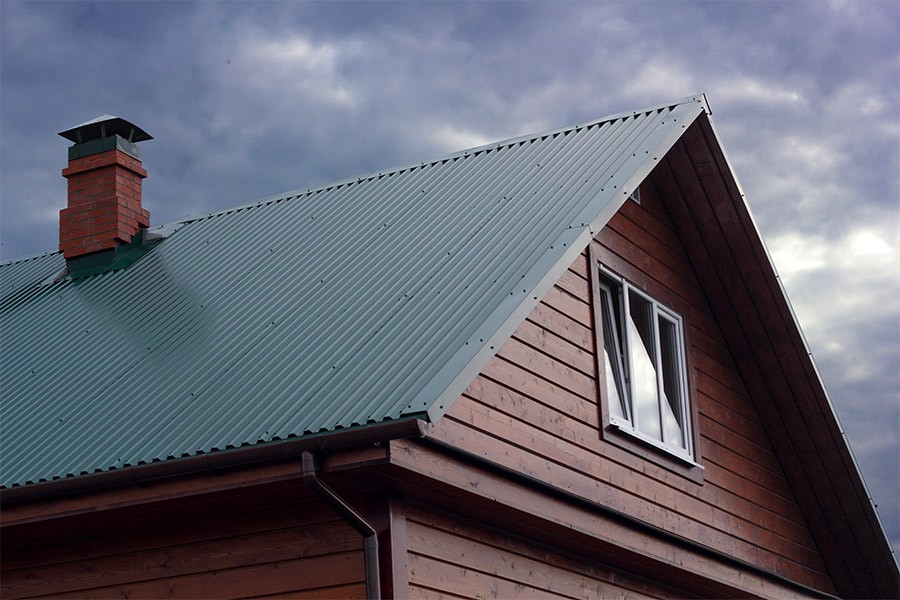
Given these conditions, you need roofing that can withstand the strongest of winds—and metal roofing is your best choice. Known for their incredible durability, metal roofs are also famous for wind resistance. Most metal panels undergo rigorous testing for wind resistance and repeatedly prove their superiority over shingles or wood shakes. Their ability to withstand the strongest of gusts contributes to their overall roofing performance, keeping your buildings safe, secure, and longstanding.
Whether you’re an architect, contractor, or property owner, understanding metal roof wind resistance can help you make educated decisions for your projects and ensure they stand the test of time (and wind). In this article, we’ll cover the importance of metal roof wind resistance, panel-specific performance, and installation best practices for keeping roofs windproof.
Why Wind Resistance Matters in Roofing
Wind is one of nature’s most destructive forces—especially for roofs. A sudden windstorm can rip shingles or shake wood shake tiles loose, leaving your property exposed to rain and snow. Even in Montana, a place far from hurricanes, high winds can lift a roof off a building if it’s not properly secured. The roof is your first line of defense against the elements, so it needs to resist uplift and pressure.
What Is Metal Roof Wind Resistance?
Metal roof wind resistance refers to how well a metal roofing system can withstand high winds without failing. It’s often expressed as a wind speed rating, such as a metal roof system being rated to handle winds up to a certain miles-per-hour threshold.
So how much wind can a metal roof withstand? Answer: a lot.
Many standard metal roofing systems are engineered to endure gusts around 140 mph or more. For context, that’s equivalent to a Category 4 hurricane wind gust. Some premium metal roofs can even resist winds in the 160+ mph range, far beyond the limits of shingles or wood shakes. Manufacturers test and certify the wind rating for metal roof panels using rigorous uplift tests. These tests simulate suction forces trying to pull the roof up (since high winds create low pressure above the roof and can lift materials).
What Makes Metal Panels So Wind-Resistant?
Metal roofing panels have built-in advantages that make them all-star performers in high winds. First and foremost is their interlocking design. Unlike individual shingles or tiles, metal panels often overlap and interlock with each other on all sides, forming a tight seal like an armor plate. This leaves very few gaps for wind to sneak underneath and pry the roof up. In a windstorm, failure usually starts when air gets under a roofing material and creates uplift. Metal panels’ continuous sheets and secure seams foil that process.
Another big factor is the fastening system. Many metal roofs (especially standing seam systems) use concealed fasteners—clips or screws that are hidden beneath the panels. Because they’re not exposed to the elements, these fasteners are less likely to deteriorate or loosen over time, especially when high winds hit. Even exposed fastener metal panels (which have visible screws) are typically attached with hundreds of screws across the roof, giving a very strong hold.
The material properties of metal also help in its wind resistance. Steel roofing panels have high tensile strength, so they resist tearing or breaking. In a monster windstorm, a metal roof might bend slightly or sustain a dent from flying debris, but it will largely stay intact and keep protecting your home. By contrast, wood shakes can crack, and shingles can shear off or tear. Metal’s durability means even if the wind is strong enough to cause some cosmetic damage, the roof will still be doing its job of sealing out the weather.
Combined, these attributes make metal roofing one of the best roofing materials for high-wind areas you can choose.
Metal Roof Vs Shingles Wind Showdown: Which Wins?
Let’s face it—metal roofs leave shingles in the dust when it comes to wind resistance. While asphalt shingles are common and initially less expensive, they’re vulnerable in strong wind events. Shingles are installed in overlapping rows and held down by adhesive strips and a few nails each—making them prone to lifting and tearing off during high wind pressure. A few missing shingles can expose underlayment or decking, leading to leaks, insulation damage, and expensive repairs.
Metal roofing panels, on the other hand, are secured with dozens (sometimes hundreds) of fasteners and often interlock for added strength. Panels cover larger spans of the roof, creating fewer opportunities for wind to gain access underneath. Because of this, metal roofs are more likely to withstand storm conditions intact. For property owners who want long-term performance, fewer maintenance headaches, and confidence during extreme windstorms, metal panels are the clear winner.
Top 3 Long-Term Payoffs of Metal Roofs
Opting for a wind-resistant metal roof goes beyond surviving the next storm. It’s about the long-term benefits that add up year after year. Here’s the top three benefits of choosing a metal roof for your windy-area project:
- Durability – Metal roofs are incredibly long-lived (often 50+ years with proper care) and they don’t degrade from wind the way other materials do. Where a severe windstorm might strip off half the shingles on a traditional roof (leading to frequent repairs or premature replacement), a metal roof will come through intact, meaning you avoid those emergency repair bills. Over the decades, that reliability saves money and hassle.
- Safety – A roof that stays put in high winds protects your property, the people inside, and even neighboring properties. Flying roof debris in a windstorm can be dangerous and destructive. By having a securely fastened metal roof, you reduce the risk of roofing pieces becoming airborne hazards. Some insurance companies recognize this and may offer discounts for metal roofs because of their superior wind and fire resistance—a nice bonus on top of peace of mind.
- Peace of Mind – Living in a high-wind area, it’s stressful to wonder if your roof will hold. With a properly installed metal roof, you can rest easy when those big gusts blow. You won’t have to constantly check the yard for missing shingles or worry about the next storm—your metal roof has you covered. That peace of mind and security is hard to put a price on.
Choosing the Right Panels for Wind Resistance
To maximize wind resistance, you’ll want to pick a profile and product that is designed for the challenge. Here’s what to consider when choosing panels for a high-wind metal roofing system:
- Concealed vs. Exposed Fasteners: As noted earlier, concealed fastener panels are generally better suited for high-wind zones. Standing seam panels (a type of concealed fastener metal roofing) have no exposed screw holes, meaning less chance of fasteners loosening. Great Northern Metal Company’s concealed fastener roofing systems are specifically wind-tested for extreme weather areas. Exposed fastener panels can still work in windy areas (they often have more points of attachment), but they will require more maintenance over time. If ultimate wind resistance is the goal and budget allows, go with a concealed fastener (standing seam) system for the best performance.
- Panel Profile and Strength: Within the world of metal panels, some profiles handle wind better than others. Look for panels with higher rib profiles or heavy gauge steel if you’re in a severe wind corridor. For example, a standing seam metal roof design might use a mechanically seamed panel These have seams that are crimped shut, making them extremely resistant to being lifted or peeled back. Similarly, narrower panel widths and additional ribs/striation in the flat part of the panel can add rigidity and reduce flutter in high winds. Our team at Great Northern can guide you to the best metal roofing for high-wind areas based on our product lineup.
- Wind Ratings and Certifications: It’s wise to check the wind uplift ratings on any panel you consider. Many metal roofing products will advertise compliance with tests like UL 580 or ASTM wind uplift tests, sometimes expressed as a wind speed (e.g. “rated for 150 mph winds”). While you may not need a hurricane-approved roof in Montana, it doesn’t hurt that metal roofing products often meet those standards. Choosing a panel that exceeds your local code requirements for wind will give you an extra cushion of safety. In high-wind territories, we always recommend erring on the side of a stronger panel – the investment up front will pay off the first time a big wind tries (and fails) to budge your roof.
Installation Best Practices for High Wind Zones
Even the toughest metal panel can underperform if installation is even just a little bit off. Here are some best practices our experts recommend to ensure a metal roof achieves its full wind resistance:
- Secure Fastening Pattern: It’s critical to use the recommended number of fasteners (clips or screws) per panel and to place them as per the manufacturer’s spacing guidelines. High-wind areas often call for tighter screw spacing, especially along edges and corners of the roof where wind pressure is highest. Properly secured fasteners help resist uplift forces by anchoring the panels firmly.
- Use the Right Fasteners: Always use fasteners suited to your roof’s substrate (the material below the panels) as outlined in the installation guidelines. Using the correct length is important too. When in doubt, err on the side of longer fasteners for more bite. If you’re adding snow guards or “snow breaks” on the roof (common in Montana’s snow country), use at least 2-inch screws to mount them. Longer screws ensure those attachments stay put under the force of sliding snow or high winds.
- Exposed Fastener Maintenance: Exposed fastener metal roofs can experience a phenomenon where vibrations (from wind or even regular thermal expansion) gradually loosen the screws. This is sometimes called “harmonic” vibration. The wind can make panels hum ever so slightly, backing out the fasteners over time. The solution is simple: perform an annual check and re-tighten any loose screws. Keeping those fasteners snug will maintain the roof’s full wind uplift resistance.
- Preventing Wind Noise: A well-installed metal roof should not rattle or whine in the wind. To avoid metal roof wind noise, contractors must focus on secure fastening and proper edge details. For instance, adding foam closure strips at the eaves and ridges can block wind from getting under panels and causing a whistle. By ensuring every panel is locked down tight and all trim and flashing are correctly fitted, you’ll have a quiet roof, even on gusty nights.
Ready to Weather the Next Storm? Contact Us for a Consultation
Replacing an old roof? Planning a new build in a windy locale? Let’s talk—Great Northern Metal Company is here to help you make the best choice. Our team has deep expertise in matching high-wind metal roofing solutions to projects across Montana. We can walk you through panel options (exposed vs. standing seam, profiles, coatings) and recommend the ideal setup to keep your roof on tight.
Don’t wait for the next big windstorm to put your roof to the test. Get proactive and fortify your building now. Give us a call or reach out online—our roofing experts are ready to help you hold on tight to a safer, smarter roof.
What Is Sealant for Metal Roofing?
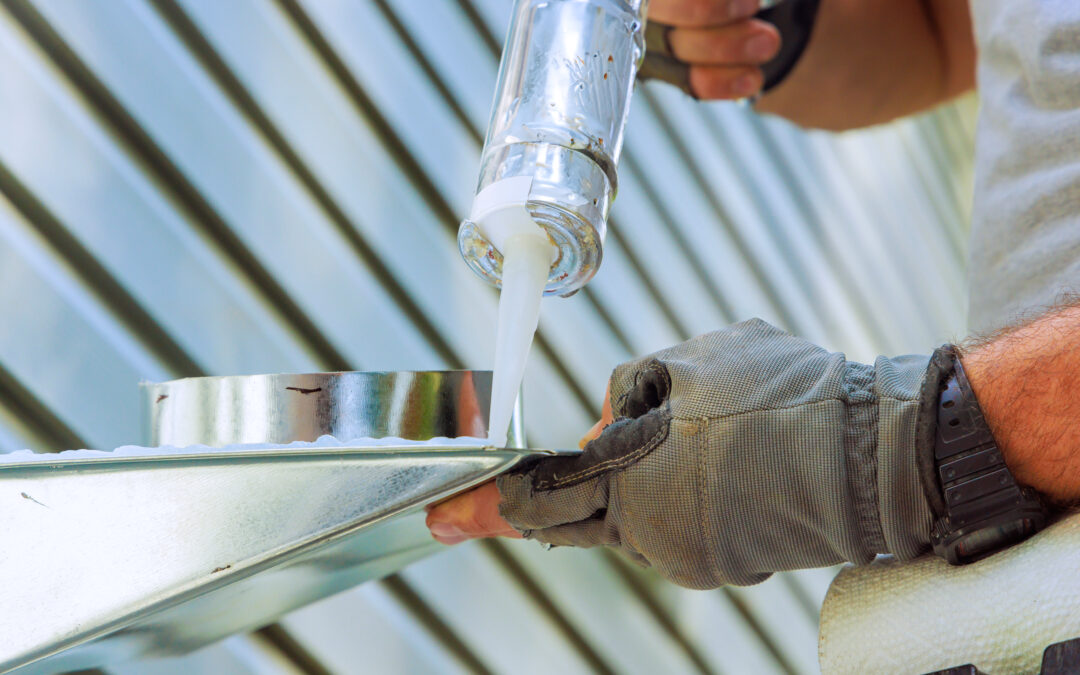
Metal roof sealant helps seal seams, joints, gaps, and other areas where water or air could enter a roofing system. Most gun-grade sealants are applied from a tube and form a bead over or within a joint. Depending on the formulation, the material may remain permanently pliable or cure into a flexible seal.
For metal roofing, flexibility matters. Panels naturally move as temperatures rise and fall, so a sealant used at a moving joint needs to accommodate that movement without losing adhesion.
The location of the seal matters too. A product used at an exposed seam may need different properties than one placed inside a concealed joint.
Sealant also should not be treated as a substitute for proper flashing, fastening, or panel installation. It works as part of the roofing system, not as a fix for a detail that was built incorrectly.
What Is Butyl Tape for Metal Roofing?
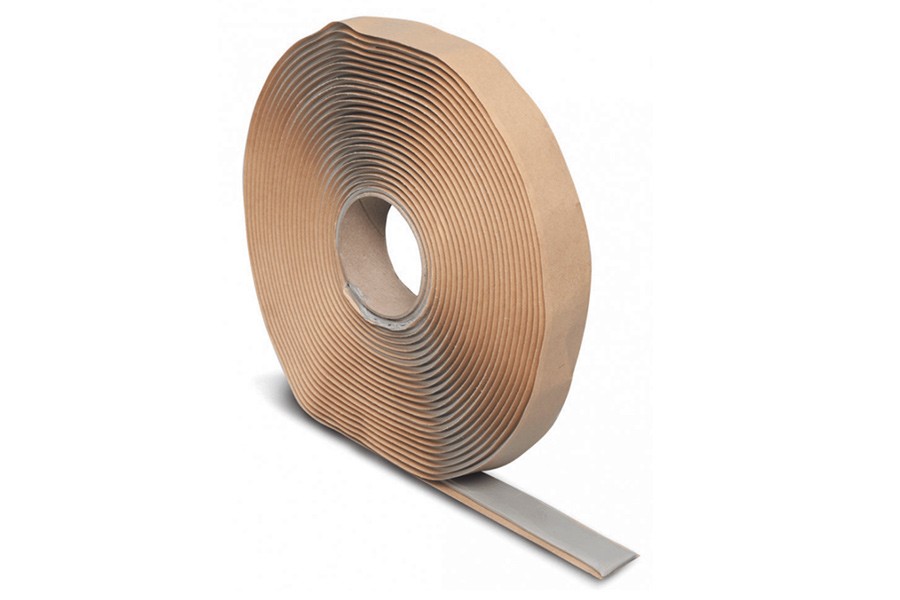
Butyl tape is a preformed sealing material typically installed between two roofing components. Instead of applying a bead from a tube, the installer lays a continuous strip of tape along the joint before the materials are fastened together. That makes it especially useful at concealed laps and other locations where two metal surfaces come together.
Butyl stays flexible, which helps it maintain a seal as a metal building experiences normal movement. There are also expanding sealant tapes that serve a similar purpose while filling irregular gaps and accommodating movement within the joint.
Sealant vs. Butyl Tape
The simplest way to think about the difference is application.
Gun-grade sealant works well when you need to apply a bead into a seam, joint, or gap. Butyl tape works well when you need a continuous seal between overlapping or adjoining components.
One is not automatically better than the other. The roof detail determines which type makes sense.
Metal Roof Sealant vs. Butyl Tape: Which Should You Use?
Different roof details put different demands on the sealing product.
These are general guidelines. Always check the roofing-system requirements and the manufacturer’s installation instructions before choosing a product.
4 of the Top Metal Roof Sealants and Butyl Tapes
The right product depends on the joint, expected movement, temperature conditions, and whether the seal will be exposed or concealed.
Here are four options GNMC has tried, tested, and trusts so much that we chose to carry them at our shop.
Best for: Expansion joints, lap seams, and joints that need to accommodate movement.
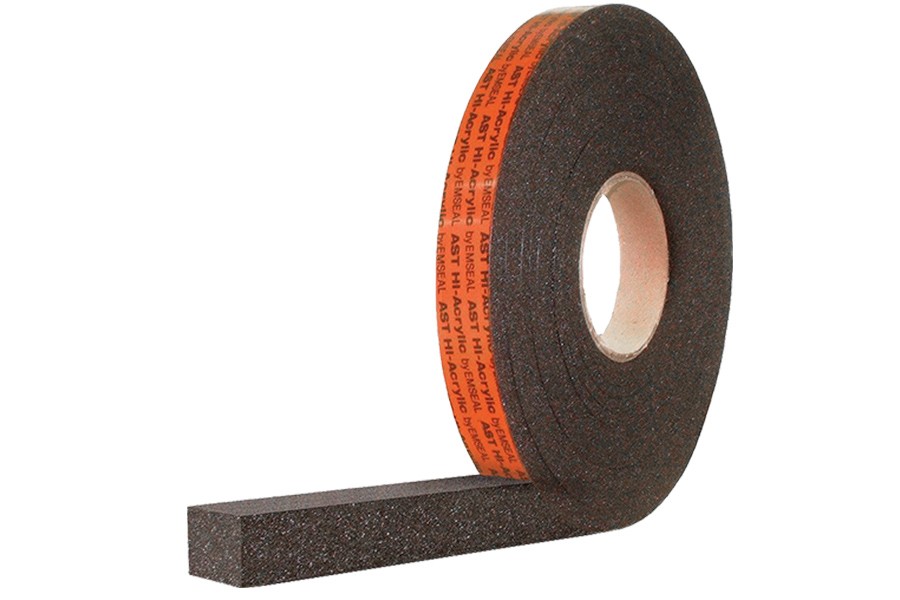
EMSEAL AST Hi-Acrylic Sealant Tape is a self-adhering, open-cell polyurethane foam tape impregnated with acrylic-modified asphalt.
Unlike a standard flat tape, EMSEAL AST gradually expands after it is removed from its packaging. That allows it to conform to the joint and fill gaps along irregular surfaces. For metal roofing and metal buildings, that can be particularly useful around details affected by thermal expansion and contraction.
Why It Works Well With Metal Roofing
One of EMSEAL AST’s biggest advantages is its ability to move with the building. The tape conforms to contours and maintains a seal as metal panels expand and contract. It is designed to help keep out dust, air, wind-driven snow, and moisture through joint details.
It also does not dry out and become hard or brittle over time. Because the material remains compressed within the joint, it is designed to stay in place rather than squeeze out the way some caulks or butyl products can.
Its resistance to UV exposure, aging, and mildew also makes it well suited to demanding exterior applications.
Common Applications
EMSEAL AST can be useful for:
- Expansion and compression joints
- Lap seams
- Mechanically fastened joints
- Irregular gaps
- Metal building details where movement needs to be accommodated
It can also be used alongside several common building materials, including metal, plastic, wood, and concrete.
Interested in EMSEAL AST? Contact GNMC
Best for: Metal panel joints that need a permanently pliable, gun-grade sealant.
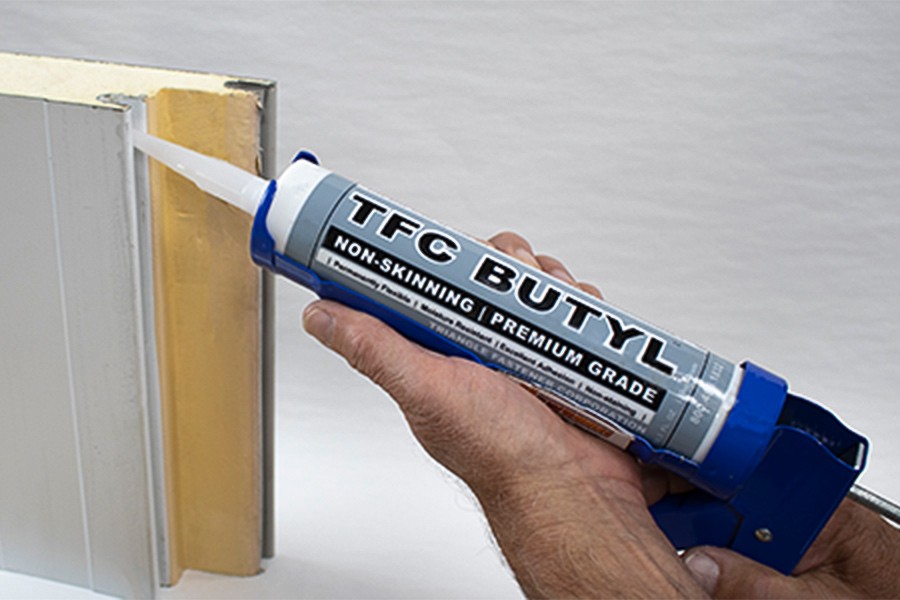
TFC BUTYL™ is a single-component butyl-based sealant designed specifically for strong adhesion to metal panels.
Its biggest distinction is that it remains permanently pliable. It does not skin over into a hard surface, which allows the material to continue moving with the joint after installation.
Why It Works Well With Metal Roofing
Metal panels do not stay perfectly still over the life of a building. Temperature changes create movement, and joints need a sealing product that can handle it.
TFC BUTYL remains flexible and moisture-resistant, which makes it useful for metal panel details where a rigid sealant would not be appropriate.
It also meets or exceeds AAMA 809.2 and is available in gray or white.
Installation Matters
Good adhesion starts with a clean surface. Before applying TFC BUTYL, the substrate should be dry and free from frost, oil, grease, incompatible coatings, or other contaminants that could interfere with adhesion.
The product is applied using a standard caulking gun and can be tooled after application if needed.
It is also worth paying attention to storage. TFC BUTYL should be kept in a controlled, dry environment below 75°F and used within 12 months of manufacture.
One other detail to know before choosing it: TFC BUTYL is not paintable.
Ask GNMC about TFC BUTYL™.
Best for: Seams, panel joints, and gaps that need a flexible cured sealant.
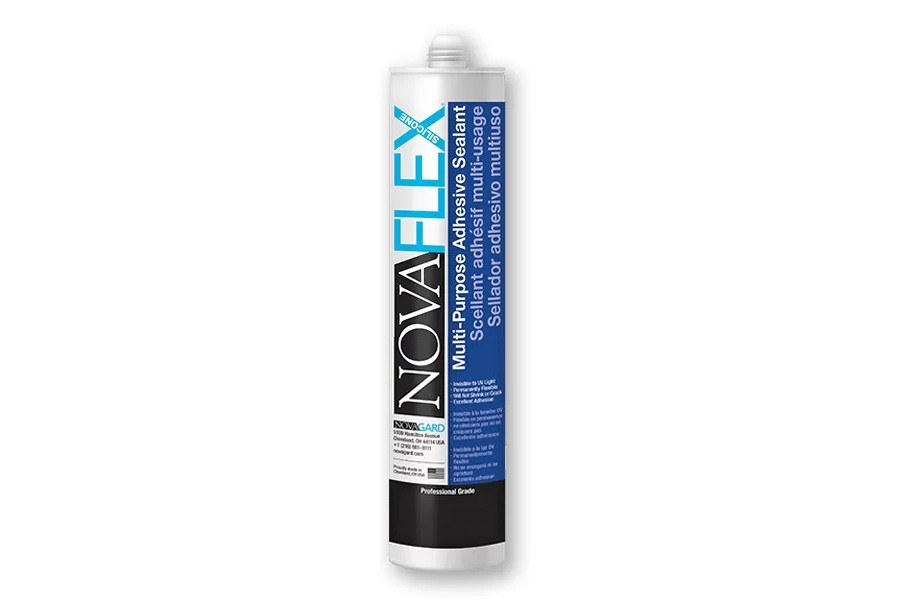
NovaFlex Metal Roof & Panel Adhesive Sealant is a single-component silicone sealant and adhesive commonly used as a seam sealant or joint filler in metal roofing and panel systems.
It is non-corrosive and non-sag, making it useful where contractors need a gun-grade product that will stay where it is placed.
Why It Works Well With Metal Roofing
Temperature range is one of NovaFlex’s standout characteristics. The product can be applied at temperatures from -20°F to 160°F and has a service temperature range of -40°F to 400°F.
That broad range is useful for metal roofing, where surfaces can experience substantial temperature swings.
NovaFlex also offers good adhesion to common building materials and can bridge gaps up to 3/8 inch. Its exterior weathering and aging performance make it suited to exposed building applications.
Where NovaFlex Makes Sense
Contractors may consider NovaFlex for:
- Metal roof seams
- Panel joints
- Joint filling
- Small gaps
- Details exposed to wide temperature swings
It remains flexible at temperatures down to -10°F and is freeze-thaw stable. There are a couple of limitations worth knowing before installation. NovaFlex is not recommended for joints that will be submerged underwater, and it should not be used on surfaces that will later be painted.
Cure time also depends on temperature and humidity, so installers should account for site conditions and follow the product instructions.
Contact GNMC about product availability.
Best for: Concealed metal building joints that need a continuous, flexible seal.
MB-10A Butyl Tape is an elastomeric butyl rubber sealant specifically designed around the requirements of metal buildings.
It comes extruded on silicone-coated release paper, which makes it straightforward to position during installation. It is also produced in different sizes and lengths to suit a range of applications.
Why It Works Well With Metal Roofing
MB-10A is designed to maintain its seal through normal building movement. Its combination of adhesive strength and cohesive strength helps the tape stay together and stay bonded as the assembly moves.
Temperature performance is another important benefit. MB-10A is designed to withstand extreme roof temperatures while maintaining compressibility in colder conditions. It also offers resistance to UV light and cold flow.
Those characteristics matter on metal buildings, where the material may experience a wide range of temperatures throughout the year.
Common Applications
MB-10A may be a good fit for:
- Concealed panel laps
- Metal building joints
- Overlapping components
- Details requiring a continuous butyl seal
- Joints affected by normal building movement
Choosing the right tape size is important. The joint needs enough material to create the intended seal without using so much that the tape squeezes excessively out of the detail.
Inquire about MB-10A Butyl Tape
What to Consider Before Choosing a Metal Roof Sealant
Before grabbing a tube or roll, look at what the joint actually needs and ask yourself the following questions:
- How Much Will the Joint Move? Metal panels expand and contract as temperatures change. A sealing product at a moving joint needs enough flexibility to accommodate that movement.
- What Temperatures Will the Product See? Metal roof surfaces can get hot, and Montana projects can also see very cold conditions. Check the product’s application temperature separately from its service temperature. A sealant may perform across a wide temperature range once cured while still having specific limits for installation.
- Is the Joint Exposed or Concealed? A concealed panel lap has different needs than an exposed seam. Butyl tape is often a practical choice where two materials are compressed together. A gun-grade sealant may make more sense when a seam or gap needs to be filled from the outside.
- What Materials Is the Product Touching? Always check compatibility with the metal substrate and any adjoining materials. A product that adheres well to bare metal may have different requirements around painted finishes, other coatings, plastics, or masonry.
- Will the Surface Be Painted? Some sealants are not paintable. Both TFC BUTYL and NovaFlex have limitations that should be understood before choosing them for a detail that will receive a finish later.
- What Does Installation Require? Good products still need good installation. Surface preparation, storage, bead size, compression, and cure time can all affect the finished seal. Read the product instructions before installation instead of assuming every sealant or tape works the same way.
Frequently Asked Questions About Metal Roof Sealants and Butyl Tape
What is the best sealant for a metal roof?
The best metal roof sealant depends on where it will be used. Gun-grade sealants can work well for seams and joints, while butyl tape is commonly used between overlapping components or in concealed joints. Movement, temperature, substrate compatibility, and exposure should all factor into the decision.
Is butyl tape good for metal roofing?
Yes. Butyl tape is well suited to many metal roofing details because it creates a continuous seal between components while remaining flexible enough to accommodate normal building movement.
Is sealant or butyl tape better for a metal roof?
Neither option is better for every application. Butyl tape is often used inside laps and concealed joints, while gun-grade sealants are useful for filling seams, joints, and gaps. Some details may use both as part of the roofing system.
Does metal roof sealant need to stay flexible?
For joints that experience movement, flexibility is important. Metal panels expand and contract as temperatures change, so the sealing product needs to accommodate the expected movement without losing adhesion.
Can you use any silicone sealant on a metal roof?
No. Use a sealant that is compatible with the roofing material, coating, joint design, and expected temperatures. The product instructions and roofing-system requirements should guide the choice.
Need Metal Roof Sealant or Butyl Tape for Your Next Project?
Great Northern Metal Company carries EMSEAL AST, TFC BUTYL™, NovaFlex, and MB-10A Butyl Tape for a range of metal roofing and metal building applications.
Tell our team what detail you are working on and what you need the product to do. We can help you review the options GNMC carries and get the right product information before you place an order.
Inquire About Metal Roof Sealants