How to Choose the Right Structural Metal Roof Panels for Your Projects

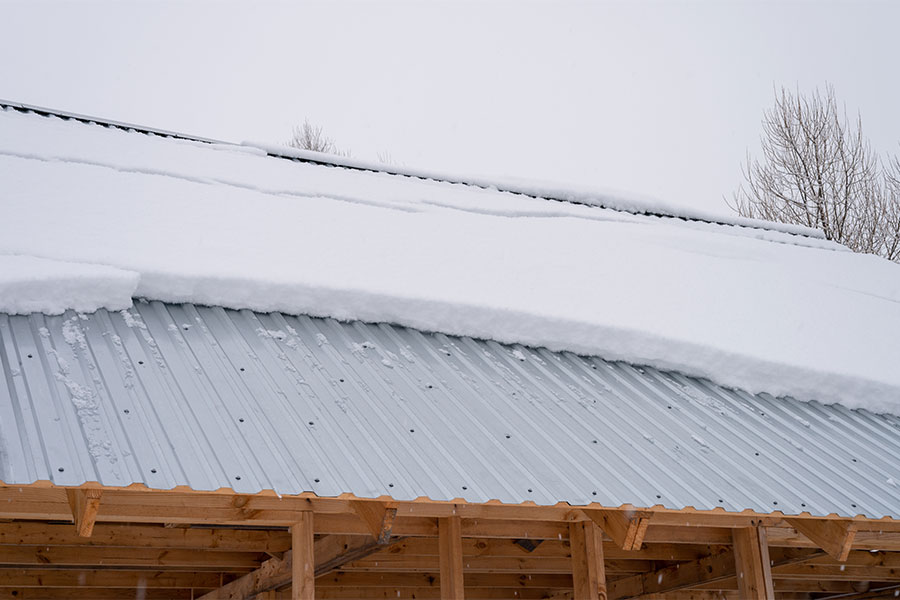
Montana Structural Metal Roof Panel Project with Snow

When you’re designing a roof that needs to perform, structural panels are a different breed. These aren’t your standard panels for looks or lightweight sheds. Structural metal roof panels are engineered to handle longer spans, harsh Montana weather, and fastener systems that can stand up to years of use.

At Great Northern Metal Company, we work with architects and contractors every day to help them choose the right panels for load requirements, wind ratings, and project goals. This blog breaks down what makes a panel truly structural and gives you an at-a-glance look at our top-performing profiles. Whether you’re designing a low-slope commercial roof or need serious strength for a high-altitude build, we’re here to help you spec it right the first time.

What Are Structural Metal Roof Panels?

Structural metal roof panels are profiled metal sheets designed to carry loads without needing a solid deck underneath. They can serve as both the roof covering and a structural element, spanning between roof supports (like purlins or trusses) and supporting snow, wind, and maintenance loads on their own. This is in contrast to architectural (non-structural) panels, which are thinner or lower-profile panels that must be installed over a solid substrate (such as plywood sheathing) for support.

Only a few metal panel profiles are truly “structural.” Each structural panel profile undergoes strict engineering tests to earn that designation. In fact, every structural panel is put through rigorous laboratory testing (e.g. spanning tests, wind uplift tests) to failure, in order to determine its performance limits. These tests dictate the panel’s allowable spans, load capacity, fastening methods, clip spacing, and other installation parameters. A panel only earns the “structural” label after proving it can meet specific structural load requirements in accordance with building codes and standards.

Remember: making a panel thicker doesn’t automatically make it structural. For instance, using a heavier gauge of a non-structural profile might improve dent resistance slightly, but it won’t significantly increase span or load capacity because the panel’s shape and engineering remain the same. In such cases, if your project demands greater strength or longer spans, it’s better to choose a panel that was engineered for that purpose, rather than just increasing the metal thickness on a weaker profile.

Characteristics of Good Structural Metal Panels

What makes a structural panel different from the rest? Here are some key characteristics and design features to look for when selecting a structural metal panel:

  • Taller Rib Profiles for Strength: Structural panels generally feature taller, deeper ribs than light-duty panels. The added rib height creates a stronger beam effect in the panel, allowing it to span further and handle more weight. The deeper the panel’s corrugation or rib, the more rigidity and load capacity it has.
  • Thicker, Higher-Grade Steel: Structural panels are typically roll-formed from heavier gauge steel and high-tensile material. Commonly, 24-gauge (or even 22-gauge) steel is used for structural applications, often with a high tensile strength. This ensures the panel can carry heavy loads without buckling. By contrast, thinner gauge steel is often used for non-structural panels. It’s worth noting that using an unusually heavy gauge in a non-structural profile doesn’t yield the benefits one might expect. True structural performance comes from the combination of panel profile and material strength. This is why standing seam requires a softer material, lower tensile strength in order to create the shape, whereas a panel like PBR requires a harder material, higher tensile strength to maintain its shape once roll-formed and provide the structural integrity to maintain loads.
  • Standing Seam vs. Exposed Fasteners: Both concealed-fastener (standing seam) and exposed fastener panels can be structural, but they have different use cases. Standing seam structural panels (especially mechanically seamed ones) lock together with concealed clips and seams, providing a weathertight surface ideal for low slopes and architectural applications. Because their fasteners are hidden, there are no screw penetrations through the panel surface, which improves leak resistance and allows them to handle snow or water sitting on the roof more safely. Exposed fastener structural panels (like PBR) have visible screws fastening them to the structure. They are often easier and more cost-effective to install and are preferred in many commercial, agricultural, or industrial projects where a slightly rustic or utilitarian look is acceptable. The choice here may come down to aesthetics and slope: for a high-profile building or very low-pitch roof, a standing seam structural panel might be the best fit, whereas for a large warehouse or barn, an exposed-fastener panel might be ideal.
  • Seam Design (Single vs. Double Lock): When choosing a standing seam for structural use, look for a mechanical lock panel that has been engineered and tested for structural applications. These will specify the needed clip system and seam type to achieve their rated performance. Mechanically seamed standing seam panels come in single-lock (90° seam) and double-lock (180° seam) versions. A double-lock seam means the panel legs are folded over twice, creating an extremely secure lock. This is recommended for the most demanding conditions, like very low slopes or areas with freeze-thaw cycles. Double-lock seams have superior wind uplift resistance and water-tightness; they can often be installed on roofs with low pitches when sealant is used. Single-lock seams (one fold) are a bit easier to install and perform well in milder climates, but they won’t resist severe weather or provide wind uplift as well as double-lock systems.

When Do You Need a Structural Metal Panel?

Not every project or roof requires a structural panel system. However, certain conditions demand the use of structural panels to ensure the roof’s integrity and safety. Here are scenarios where you should opt for a structural metal panel:

  • Un-Sheathed or Open-Framed Roofs: If the roof will be installed over an open structure (e.g. metal purlins, wood trusses, or battens) without continuous decking, you will need structural panels. These panels are specifically made to span between supports and carry loads across the open gaps. Always check the manufacturer’s span ratings. True structural panels will have published span and load tables to guide your purlin spacing.
  • Low-Slope Roof Designs: When dealing with a low roof pitch (typically anything below about 3:12 or 2:12, depending on panel type), structural panels are often the safest choice. Lower slopes mean water drains more slowly, so the roof system must be extra robust to prevent leaks or blow-offs. Many standing seam structural panels are designed for low slopes. By contrast, exposed fastener panels generally should not be used below 3:12 slope because water could seep through the screw penetrations. If your design has a low or nearly flat section, you’ll want a structural panel that’s rated for that application so it won’t leak or fail under ponding water or uplift forces.
  • High Wind or Snow Load Areas: In regions subject to extreme weather, such as high winds or heavy snowfall, structural panels provide an extra margin of safety. These panels are engineered for higher load capacities, using stronger profiles and steel that can resist greater wind uplift pressures and snow weight. Using a flimsy panel in a high-wind area could result in roof damage or loss in a storm.
  • Large, Simple Roofs (Commercial or Agricultural Buildings): Structural panels shine on large roofs with simpler geometry—think warehouses, big box stores, agricultural barns, aircraft hangars, etc. These structures often have long spans and few roof transitions, so using a high-strength, wide-cover panel like PBR is very efficient. A single structural panel can cover more area with fewer purlins, reducing the amount of framing needed.

Using Structural Panels in Montana’s Snow Country

Designing a metal roof in a cold, snowy region like Montana introduces some additional considerations. Structural panels are often a smart choice in our climate because of the high snow loads we get. You want a roof panel that won’t buckle under a Montana blizzard. However, you also have to consider how snow and ice interact with the panel profile.

One interesting paradox of structural panels is the rib height: generally, a taller rib means a stronger panel (great for spanning and loads), and it even means better water shedding on low slopes (since water would have to rise over a higher rib to cause a leak). But in extreme snow conditions, an extra tall rib can become an ice dam hazard. Snow that melts and refreezes can build up behind the ribs. If a rib is very tall and boxy, that ice dam has more leverage against it. We have observed cases where ice buildup actually bent a tall rib over.

What does this mean for your panel choice? It means in places like Montana, you should balance rib height with snow performance. All of GNMC’s structural panels are designed to handle snow, but, for example, if you had the choice between a 3″ rib and a 1.5″ rib, the 3″ might not always be better in practice due to ice dynamics. Often, the solution architects and builders choose here is to go with a standing seam panel. Standing seam roofs have fewer ribs, so there are fewer traps for snow and ice. The smooth pan of a standing seam allows snow to slide off more readily.

Our Selection of Structural Metal Roof Panels

At Great Northern Metal Company, only a few metal roofing panel profiles meet the true definition of structural. Below are our go-to options for spanning strength, weather performance, and versatility—plus when and why you might choose each.

Mechanical Lock 2″ Standing Seam

Best for: Low-slope roofs, architectural designs, high weather exposure, snow country

  • Profile: 2″ tall mechanically-seamed ribs
  • Coverage widths: 14″, 16″ (structural), 18″
  • Material: 24ga steel (22ga and 26ga available)
  • Fasteners: Concealed clips
  • Slope rating: As low as 0.5:12 with sealant

Why choose it:

  • Superior leak resistance and strength for demanding applications
  • Perfect for commercial or residential low-slope roofs
  • Clean, modern look with snow-shedding performance
  • Requires seaming tool for install; structural ratings depend on correct clips and spacing
  • 3-part specs available

PBR (Purlin Bearing Rib) Panel

Best for: Barns, shops, warehouses, cost-effective structural builds

  • Profile: 1.25″ trapezoidal ribs with purlin-bearing lap
  • Coverage width: 36″
  • Material: 26ga or 24ga Grade 80 steel
  • Fasteners: Exposed
  • Slope rating: Minimum 3:12 (1/12 is common but not always recommended)

Why choose it:

  • Workhorse panel for spanning open purlins
  • High strength at an affordable price
  • Easy to install, long panel runs, and widely used in industrial/ag settings
  • Anti-siphon groove improves lap performance
  • Excellent load span data available upon request

7.2 Box Rib Panel

Best for: Tall commercial walls, carports, strong visual lines, maximum spans

  • Profile: 1.5″ tall boxy ribs, spaced 7.2″ OC
  • Coverage width: 36″
  • Material: 24ga (22ga/26ga available)
  • Fasteners: Exposed
  • Slope rating: Minimum 3:12 for roofs

Why choose it:

  • Highest load-span capacity of our exposed fastener options
  • Bold architectural look for siding or selective roof use
  • Ideal for long wall runs without intermediate support
  • Strong enough for commercial carports, gym walls, or equipment shelters
  • Load charts available for engineer reference.

Consult with Great Northern Metal Company Today

If you’re planning a project and want to ensure you choose the right structural metal panel, reach out to Great Northern Metal Company’s team today. We’ll discuss your project’s goals and requirements in detail. From there, we can recommend the ideal panel system, provide specs for your engineers, and even supply you with the spec language to drop into your plans for a seamless submittal process.

Don’t leave such a critical element of your building to chance or guesswork. Contact us today to get expert guidance on selecting and ordering the perfect structural metal panel for your next project.
What Is Sealant for Metal Roofing?

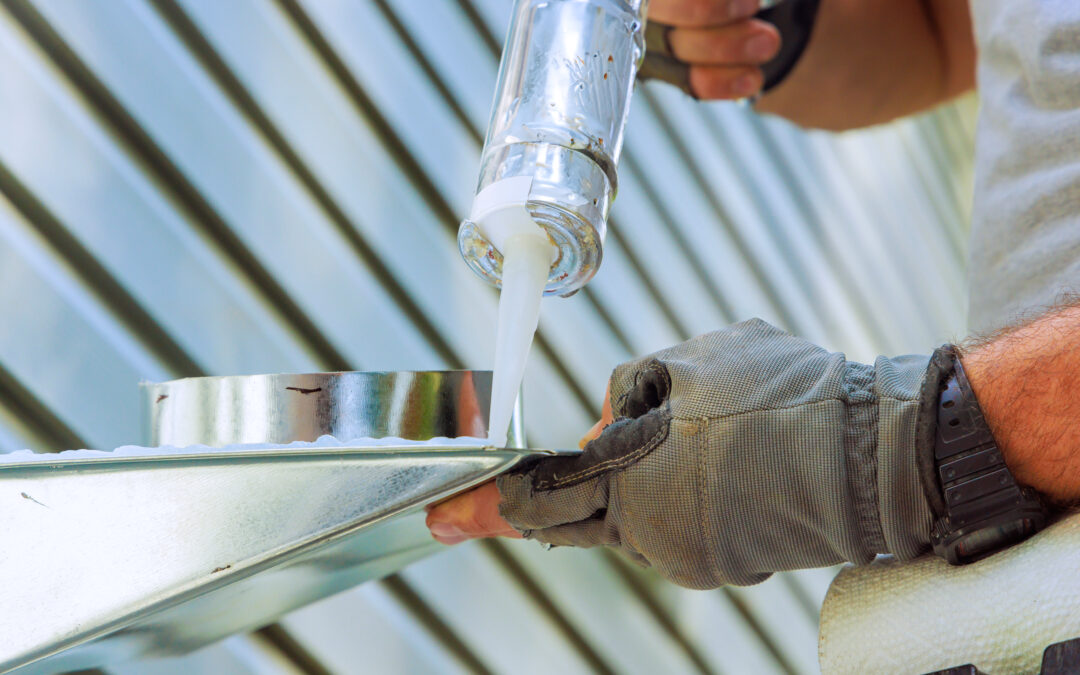
Metal roof sealant helps seal seams, joints, gaps, and other areas where water or air could enter a roofing system. Most gun-grade sealants are applied from a tube and form a bead over or within a joint. Depending on the formulation, the material may remain permanently pliable or cure into a flexible seal.

For metal roofing, flexibility matters. Panels naturally move as temperatures rise and fall, so a sealant used at a moving joint needs to accommodate that movement without losing adhesion. 

The location of the seal matters too. A product used at an exposed seam may need different properties than one placed inside a concealed joint.

Sealant also should not be treated as a substitute for proper flashing, fastening, or panel installation. It works as part of the roofing system, not as a fix for a detail that was built incorrectly.

What Is Butyl Tape for Metal Roofing?

Butyl tape is a preformed sealing material typically installed between two roofing components. Instead of applying a bead from a tube, the installer lays a continuous strip of tape along the joint before the materials are fastened together. That makes it especially useful at concealed laps and other locations where two metal surfaces come together.

Butyl stays flexible, which helps it maintain a seal as a metal building experiences normal movement. There are also expanding sealant tapes that serve a similar purpose while filling irregular gaps and accommodating movement within the joint.

Sealant vs. Butyl Tape

The simplest way to think about the difference is application.

Gun-grade sealant works well when you need to apply a bead into a seam, joint, or gap. Butyl tape works well when you need a continuous seal between overlapping or adjoining components.

One is not automatically better than the other. The roof detail determines which type makes sense.

Metal Roof Sealant vs. Butyl Tape: Which Should You Use?

Different roof details put different demands on the sealing product.

Application

Product Type to Consider

Filling a seam or joint

Gun-grade sealant

Sealing a concealed metal lap

Butyl tape

Joint that moves with expansion and contraction

Flexible sealant or expanding sealant tape

Continuous seal between two components

Butyl tape

Irregular gap that needs to be filled

Gun-grade sealant or expanding tape

Detail exposed to wide temperature changes

Product rated for the expected temperature range

These are general guidelines. Always check the roofing-system requirements and the manufacturer’s installation instructions before choosing a product.

4 of the Top Metal Roof Sealants and Butyl Tapes

The right product depends on the joint, expected movement, temperature conditions, and whether the seal will be exposed or concealed.

Here are four options GNMC has tried, tested, and trusts so much that we chose to carry them at our shop.

1. EMSEAL AST Hi-Acrylic Sealant Tape

Best for: Expansion joints, lap seams, and joints that need to accommodate movement.

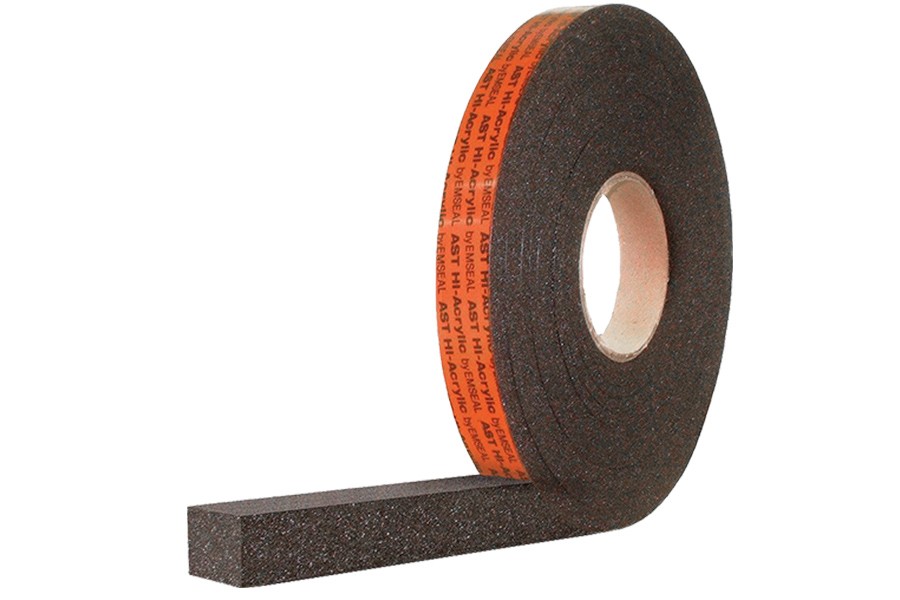
EMSEAL AST Hi-Acrylic Sealant Tape is a self-adhering, open-cell polyurethane foam tape impregnated with acrylic-modified asphalt.

Unlike a standard flat tape, EMSEAL AST gradually expands after it is removed from its packaging. That allows it to conform to the joint and fill gaps along irregular surfaces. For metal roofing and metal buildings, that can be particularly useful around details affected by thermal expansion and contraction.

Emseal AST

Why It Works Well With Metal Roofing

One of EMSEAL AST’s biggest advantages is its ability to move with the building. The tape conforms to contours and maintains a seal as metal panels expand and contract. It is designed to help keep out dust, air, wind-driven snow, and moisture through joint details.

It also does not dry out and become hard or brittle over time. Because the material remains compressed within the joint, it is designed to stay in place rather than squeeze out the way some caulks or butyl products can.

Its resistance to UV exposure, aging, and mildew also makes it well suited to demanding exterior applications.

Common Applications

EMSEAL AST can be useful for:

  • Expansion and compression joints
  • Lap seams
  • Mechanically fastened joints
  • Irregular gaps
  • Metal building details where movement needs to be accommodated

It can also be used alongside several common building materials, including metal, plastic, wood, and concrete.

Interested in EMSEAL AST? Contact GNMC

2. TFC BUTYL™ Sealant

Best for: Metal panel joints that need a permanently pliable, gun-grade sealant.

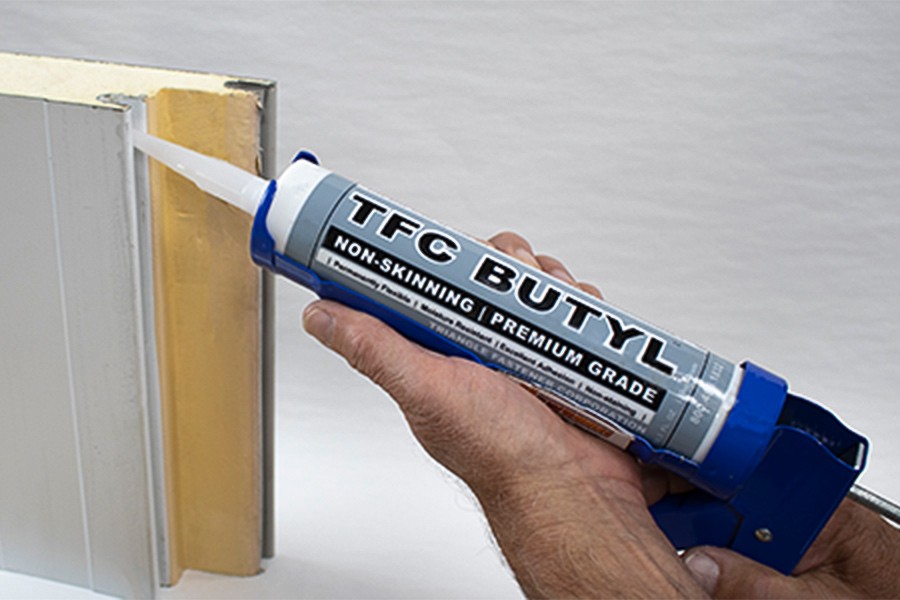
TFC BUTYL™ is a single-component butyl-based sealant designed specifically for strong adhesion to metal panels.

Its biggest distinction is that it remains permanently pliable. It does not skin over into a hard surface, which allows the material to continue moving with the joint after installation.

Why It Works Well With Metal Roofing

Metal panels do not stay perfectly still over the life of a building. Temperature changes create movement, and joints need a sealing product that can handle it.

TFC BUTYL remains flexible and moisture-resistant, which makes it useful for metal panel details where a rigid sealant would not be appropriate.

It also meets or exceeds AAMA 809.2 and is available in gray or white.

Installation Matters

Good adhesion starts with a clean surface. Before applying TFC BUTYL, the substrate should be dry and free from frost, oil, grease, incompatible coatings, or other contaminants that could interfere with adhesion.

The product is applied using a standard caulking gun and can be tooled after application if needed.

It is also worth paying attention to storage. TFC BUTYL should be kept in a controlled, dry environment below 75°F and used within 12 months of manufacture.

One other detail to know before choosing it: TFC BUTYL is not paintable.

Ask GNMC about TFC BUTYL™.

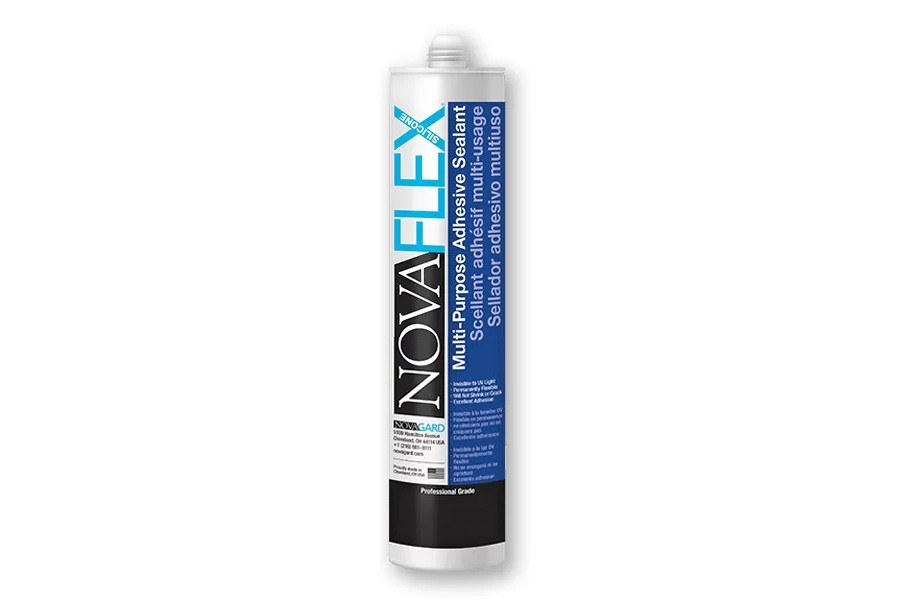
3. NovaFlex Metal Roof & Panel Adhesive Sealant

Best for: Seams, panel joints, and gaps that need a flexible cured sealant.

NovaFlex Metal Roof & Panel Adhesive Sealant is a single-component silicone sealant and adhesive commonly used as a seam sealant or joint filler in metal roofing and panel systems.

It is non-corrosive and non-sag, making it useful where contractors need a gun-grade product that will stay where it is placed.

Why It Works Well With Metal Roofing

Temperature range is one of NovaFlex’s standout characteristics. The product can be applied at temperatures from -20°F to 160°F and has a service temperature range of -40°F to 400°F.

That broad range is useful for metal roofing, where surfaces can experience substantial temperature swings.

NovaFlex also offers good adhesion to common building materials and can bridge gaps up to 3/8 inch. Its exterior weathering and aging performance make it suited to exposed building applications.

Where NovaFlex Makes Sense

Contractors may consider NovaFlex for:

  • Metal roof seams
  • Panel joints
  • Joint filling
  • Small gaps
  • Details exposed to wide temperature swings

It remains flexible at temperatures down to -10°F and is freeze-thaw stable. There are a couple of limitations worth knowing before installation. NovaFlex is not recommended for joints that will be submerged underwater, and it should not be used on surfaces that will later be painted.

Cure time also depends on temperature and humidity, so installers should account for site conditions and follow the product instructions.

Contact GNMC about product availability.

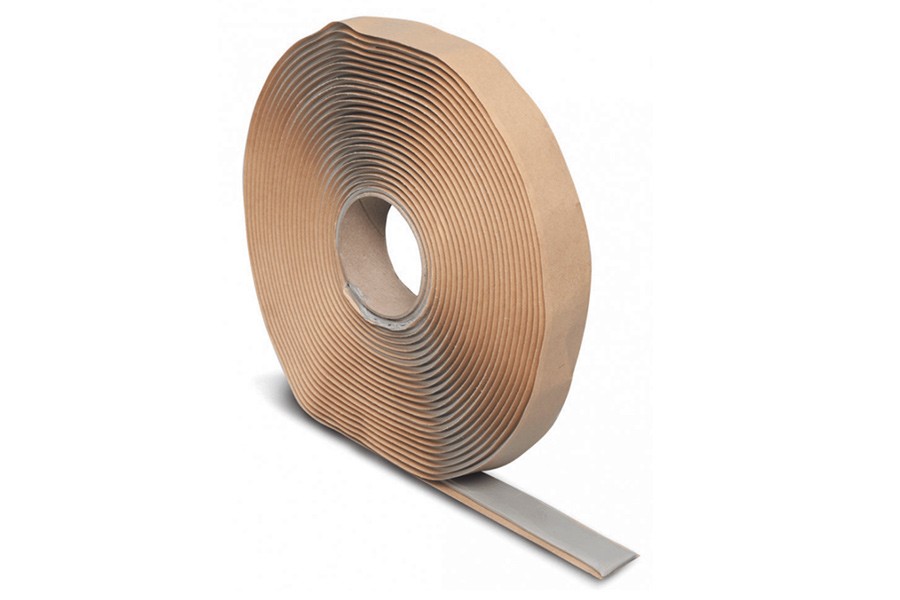
4. MB-10A Butyl Tape

Best for: Concealed metal building joints that need a continuous, flexible seal.

MB-10A Butyl Tape is an elastomeric butyl rubber sealant specifically designed around the requirements of metal buildings.

It comes extruded on silicone-coated release paper, which makes it straightforward to position during installation. It is also produced in different sizes and lengths to suit a range of applications.

Why It Works Well With Metal Roofing

MB-10A is designed to maintain its seal through normal building movement. Its combination of adhesive strength and cohesive strength helps the tape stay together and stay bonded as the assembly moves.

Temperature performance is another important benefit. MB-10A is designed to withstand extreme roof temperatures while maintaining compressibility in colder conditions. It also offers resistance to UV light and cold flow.

Those characteristics matter on metal buildings, where the material may experience a wide range of temperatures throughout the year.

Common Applications

MB-10A may be a good fit for:

  • Concealed panel laps
  • Metal building joints
  • Overlapping components
  • Details requiring a continuous butyl seal
  • Joints affected by normal building movement

Choosing the right tape size is important. The joint needs enough material to create the intended seal without using so much that the tape squeezes excessively out of the detail.

Inquire about MB-10A Butyl Tape

What to Consider Before Choosing a Metal Roof Sealant

Before grabbing a tube or roll, look at what the joint actually needs and ask yourself the following questions:

    1. How Much Will the Joint Move? Metal panels expand and contract as temperatures change. A sealing product at a moving joint needs enough flexibility to accommodate that movement.
    2. What Temperatures Will the Product See? Metal roof surfaces can get hot, and Montana projects can also see very cold conditions. Check the product’s application temperature separately from its service temperature. A sealant may perform across a wide temperature range once cured while still having specific limits for installation.
    3. Is the Joint Exposed or Concealed? A concealed panel lap has different needs than an exposed seam. Butyl tape is often a practical choice where two materials are compressed together. A gun-grade sealant may make more sense when a seam or gap needs to be filled from the outside.
    4. What Materials Is the Product Touching? Always check compatibility with the metal substrate and any adjoining materials. A product that adheres well to bare metal may have different requirements around painted finishes, other coatings, plastics, or masonry.
    5. Will the Surface Be Painted? Some sealants are not paintable. Both TFC BUTYL and NovaFlex have limitations that should be understood before choosing them for a detail that will receive a finish later.
    6. What Does Installation Require? Good products still need good installation. Surface preparation, storage, bead size, compression, and cure time can all affect the finished seal. Read the product instructions before installation instead of assuming every sealant or tape works the same way.

Frequently Asked Questions About Metal Roof Sealants and Butyl Tape

What is the best sealant for a metal roof?

The best metal roof sealant depends on where it will be used. Gun-grade sealants can work well for seams and joints, while butyl tape is commonly used between overlapping components or in concealed joints. Movement, temperature, substrate compatibility, and exposure should all factor into the decision.

Is butyl tape good for metal roofing?

Yes. Butyl tape is well suited to many metal roofing details because it creates a continuous seal between components while remaining flexible enough to accommodate normal building movement.

Is sealant or butyl tape better for a metal roof?

Neither option is better for every application. Butyl tape is often used inside laps and concealed joints, while gun-grade sealants are useful for filling seams, joints, and gaps. Some details may use both as part of the roofing system.

Does metal roof sealant need to stay flexible?

For joints that experience movement, flexibility is important. Metal panels expand and contract as temperatures change, so the sealing product needs to accommodate the expected movement without losing adhesion.

Can you use any silicone sealant on a metal roof?

No. Use a sealant that is compatible with the roofing material, coating, joint design, and expected temperatures. The product instructions and roofing-system requirements should guide the choice.

Need Metal Roof Sealant or Butyl Tape for Your Next Project?

Great Northern Metal Company carries EMSEAL AST, TFC BUTYL™, NovaFlex, and MB-10A Butyl Tape for a range of metal roofing and metal building applications.

Tell our team what detail you are working on and what you need the product to do. We can help you review the options GNMC carries and get the right product information before you place an order.

Inquire About Metal Roof Sealants

Additional Resources

Guides and How-tos
4 Tried and Tested Metal Roof Sealants and Butyl Tapes

4 Tried and Tested Metal Roof Sealants and Butyl Tapes

A metal roof is only as watertight as its details. Seams, laps, joints, penetrations, and other connection points all create places where moisture can work its way into the roofing system if they are not sealed correctly. Metal also expands and contracts as...

We Have Got You Covered

Count on Great Northern Metal Company for Expert Metal Roofing Services

Have Questions? Contact Us