We know cold in Montana. With temperatures dipping below freezing in September and snow falling in June, Montanans face icy weather extremes for the majority of the year. Given our beautiful state’s harsh conditions, property owners must make wise decisions about how their buildings are constructed to ensure they withstand the elements. That includes your choice of roofing materials! Your roof needs to withstand strong winds, not buckle under snow, and keep the heat inside of your home. With that in mind, let’s explore the roofing question that’s on every Montana property owner’s mind. Metal roofs vs. shingles in cold climates: which is better?
While asphalt shingles are a common roofing choice, they definitely aren’t the best choice. When thinking about long-term investment, energy savings, and resilience, metal roofing far surpasses asphalt shingles in its effectiveness in cold climates. Our Bozeman metal roofing experts have seen time and time again how metal roofs perform in extreme Montana weather conditions, and they can vouch for the overwhelming positives of installing a metal roof instead of shingles. So you can make informed decisions for your roofing projects, we’ve outlined the advantages of metal roofing in cold climates and how they outperform their asphalt competition across the board.
Metal Roofs vs. Shingles in Cold Climates
As winter’s icy grip tightens its hold on Bozeman and the Gallatin Valley, Montana homeowners often find themselves facing a critical decision: what type of roofing material can withstand the harsh challenges of frigid temperatures, heavy snow, and ice buildup? In the ongoing debate between metal roofs and traditional asphalt shingles, the choice becomes especially important. However, the clear winner is metal roofing panels across the board. From durability to snow and ice shedding to longevity, let’s dig into why metal roofing is the clear winner in comparison to asphalt shingles.
The Advantages of Metal Roofs in Cold Climates
1. Exceptional Durability Against Harsh Winter Conditions
The way that metal roofs hold up to potential weather damage is unrivaled. Metal roofs will keep their structural integrity when faced with intense weather from pounding hail and ice storms, strong winds, and intense snowfall. Metal roofs are incredibly strong, so they need to be replaced far less than shingles and asphalt. In fact, the average lifespan of a well-maintained metal roof is upwards of 50 years. Because of this durability, metal roofs won’t require regular, expensive repair jobs. Year after year, and decade after decade, they retain their integrity and strength, saving you from costly repair bills.
2. Superior Snow-shedding Capabilities
Another compelling advantage of metal roofing is its remarkable ability to shed snow. Metal roofs are designed with a smooth surface and a steep slope, which enables snow to slide off more easily compared to the textured surface of asphalt shingles. This efficient shedding reduces the risk of structural damage caused by heavy snow loads. Just remember: in some circumstances you may need to install a snow break on your metal roof to help protect property or gutters from damage from shedding snow. By effectively managing snow, metal roofs minimize the potential for leaks and water damage inside the home. Check out the amazing benefits of metal roofing in snow and winter conditions here.
3. Not Noisy When the Cold Weather Hits
There’s a misconception that metal roofs are noisy. People assume that when a strong bout of rain, snow, or hail hits, the impact on the roof must cause a lot of noise. This isn’t true. In fact, metal roofs can be quieter than asphalt shingles, as metal roofs are excellent at dampening any noise pollution in the area.
4. Keeps the Warmth in and the Cold Out
One of the standout advantages of metal roofing in cold climates is its exceptional ability to keep you warm and toasty inside, leaving the cold where it should be: outside. Metal roofs excel in retaining heat due to their low thermal conductivity. This means they conduct less heat than traditional asphalt shingles. This quality helps maintain a cozy interior during frigid winters, reducing the demand on heating systems. This can help you save on monthly energy costs, too! Additionally, like we mentioned earlier, metal roofs shed snow and ice efficiently, preventing the buildup of heavy snow loads that can damage shingles and compromise insulation.
The Shortcomings of Shingle Roofs in Cold Climates
1. Vulnerable to the Challenges of Cold Weather
In contrast to the resilience of metal roofing, asphalt shingles can be a hassle in cold climates. Cold weather can make shingles more brittle and prone to cracking. This can lead to leaks and water infiltration when the snow and ice on the roof begins to thaw. Unlike durable metal panel profiles, asphalt shingles can become structurally unsound after exposure to the harsh elements of cold climates.
2. Cannot Effectively Handle Snow Buildup
While metal roofing’s naturally slick surface helps guide snow off the roof, the textured surface of shingles can trap snow and ice. Trapped snow can lead to roof damage and water seeping into your home.
3. Shortened Lifespan & Lengthy Maintenance
The lifespan of asphalt shingles can be short and sweet in cold climates, which is the last thing you need! Extreme temperature fluctuations—like experiencing heavy snowfall in 30-degree weather one day to temperatures dropping below zero the next—can accelerate the aging process of shingles. Especially in winter weather conditions like we experience in Montana, asphalt shingles can quickly turn brittle and crack, which means you need to go through the hassle and cost of replacing them sooner than expected.
Maintaining asphalt shingles in cold climates is no picnic, either. It often involves regular snow and ice removal to prevent ice dams and structural damage. These ongoing maintenance demands not only require time and effort but also add to the long-term cost of owning a shingle roof, making metal roofs a more practical and cost-effective choice in frigid climates.
4. Limited Heat Retention in the Winter
One significant drawback of asphalt shingles is their limited heat retention abilities in cold climates. Asphalt shingles do not possess the same insulating properties as metal roofs, and they can allow heat to escape more easily. As a result, homes with asphalt shingle roofs may experience greater heat loss during winter months, requiring increased heating efforts to maintain comfortable indoor temperatures. This reduced heat retention not only results in higher energy bills but also contributes to a less energy-efficient and environmentally-friendly home. In contrast, metal roofs excel at keeping warmth inside, creating a more comfortable and cost-effective living environment in the coldest of climates.
Cost Comparison: Metal Roofing vs Shingles
When it comes to metal roofs vs. shingles in cold climates, think of it as a long-term investment. Metal roofs might cost more upfront, but they more than make up for that cost in longevity and durability. They last a really long time, often more than 50 years, while asphalt shingles might need replacing every 15 to 20 years in cold weather. So, with a metal roof, you’re not shelling out for repairs and replacements all the time, and you might even save on heating bills thanks to better insulation. Ultimately, choosing a metal roof is like putting your money where it counts, making it a smart and wallet-friendly move for homeowners in cold climates.
Got Questions? Chat with Our Metal Roofing and Siding Pros
If you’re curious as to how metal roofs compare to shingles in hot climates (the other extreme we face in Montana), visit our resource on how the two roofing materials compare here. Or, if you’re just starting to research the benefits of installing metal panels on your next project, check out our comprehensive FAQs here. If you have a specific metal roofing or siding project in mind, don’t hesitate to contact us with any questions here or call (406) 624-0435. With over two decades of experience in the roofing industry, our Bozeman metal roofing experts can help guide you through any questions or concerns you may have.
Have a Project in Mind? Get a Quote Today!
If you’re looking to choose metal panels for a commercial metal roofing or residential metal roofing project, look no further than Great Northern Metal Company. We’re your local metal roofing experts and can make informed recommendations to ensure your metal roofing project has the best materials possible. Get a quote for your project today.
What Is Sealant for Metal Roofing?
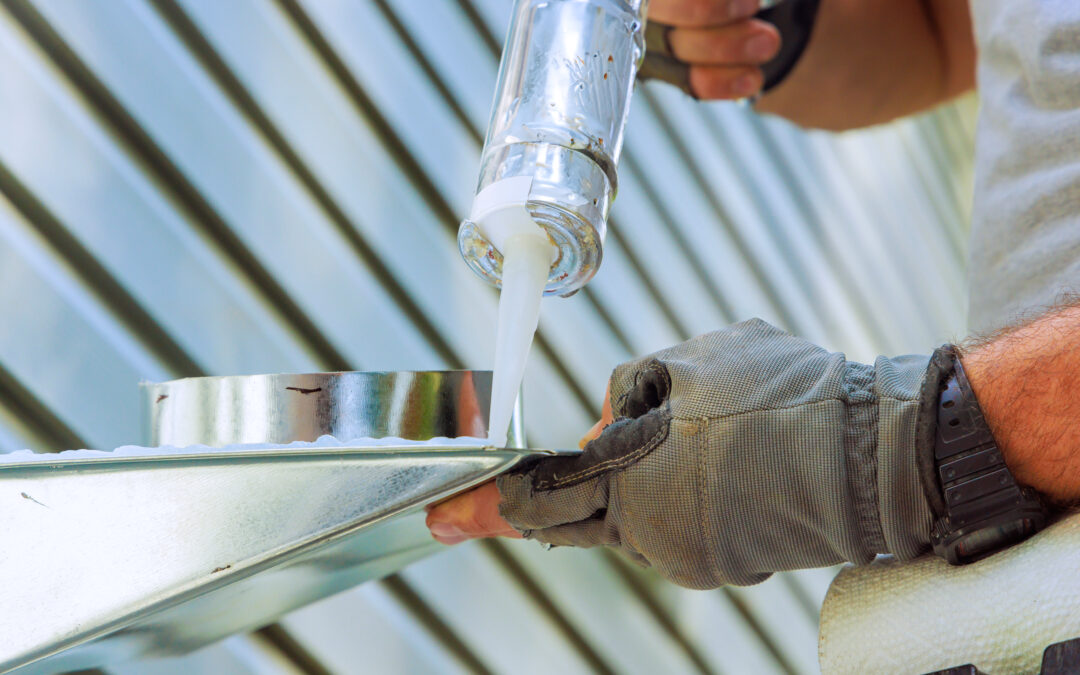
Metal roof sealant helps seal seams, joints, gaps, and other areas where water or air could enter a roofing system. Most gun-grade sealants are applied from a tube and form a bead over or within a joint. Depending on the formulation, the material may remain permanently pliable or cure into a flexible seal.
For metal roofing, flexibility matters. Panels naturally move as temperatures rise and fall, so a sealant used at a moving joint needs to accommodate that movement without losing adhesion.
The location of the seal matters too. A product used at an exposed seam may need different properties than one placed inside a concealed joint.
Sealant also should not be treated as a substitute for proper flashing, fastening, or panel installation. It works as part of the roofing system, not as a fix for a detail that was built incorrectly.
What Is Butyl Tape for Metal Roofing?
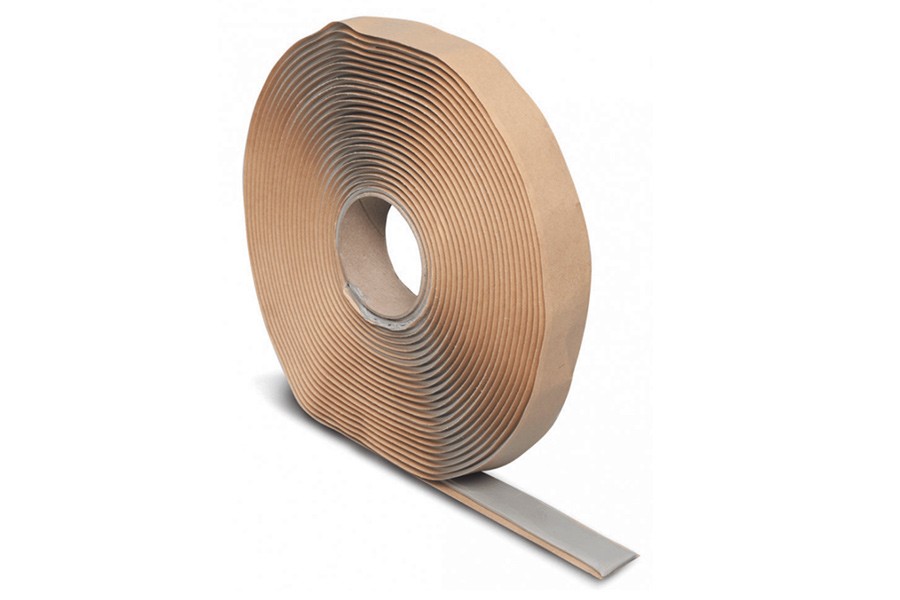
Butyl tape is a preformed sealing material typically installed between two roofing components. Instead of applying a bead from a tube, the installer lays a continuous strip of tape along the joint before the materials are fastened together. That makes it especially useful at concealed laps and other locations where two metal surfaces come together.
Butyl stays flexible, which helps it maintain a seal as a metal building experiences normal movement. There are also expanding sealant tapes that serve a similar purpose while filling irregular gaps and accommodating movement within the joint.
Sealant vs. Butyl Tape
The simplest way to think about the difference is application.
Gun-grade sealant works well when you need to apply a bead into a seam, joint, or gap. Butyl tape works well when you need a continuous seal between overlapping or adjoining components.
One is not automatically better than the other. The roof detail determines which type makes sense.
4 of the Top Metal Roof Sealants and Butyl Tapes
The right product depends on the joint, expected movement, temperature conditions, and whether the seal will be exposed or concealed.
Here are four options GNMC has tried, tested, and trusts so much that we chose to carry them at our shop.
Best for: Expansion joints, lap seams, and joints that need to accommodate movement.
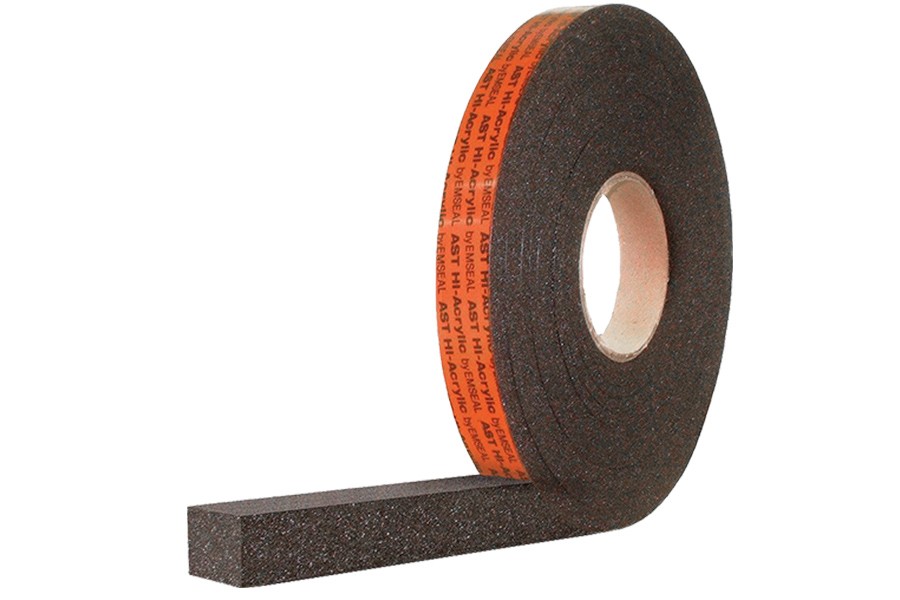
EMSEAL AST Hi-Acrylic Sealant Tape is a self-adhering, open-cell polyurethane foam tape impregnated with acrylic-modified asphalt.
Unlike a standard flat tape, EMSEAL AST gradually expands after it is removed from its packaging. That allows it to conform to the joint and fill gaps along irregular surfaces. For metal roofing and metal buildings, that can be particularly useful around details affected by thermal expansion and contraction.
Why It Works Well With Metal Roofing
One of EMSEAL AST’s biggest advantages is its ability to move with the building. The tape conforms to contours and maintains a seal as metal panels expand and contract. It is designed to help keep out dust, air, wind-driven snow, and moisture through joint details.
It also does not dry out and become hard or brittle over time. Because the material remains compressed within the joint, it is designed to stay in place rather than squeeze out the way some caulks or butyl products can.
Its resistance to UV exposure, aging, and mildew also makes it well suited to demanding exterior applications.
Best for: Metal panel joints that need a permanently pliable, gun-grade sealant.
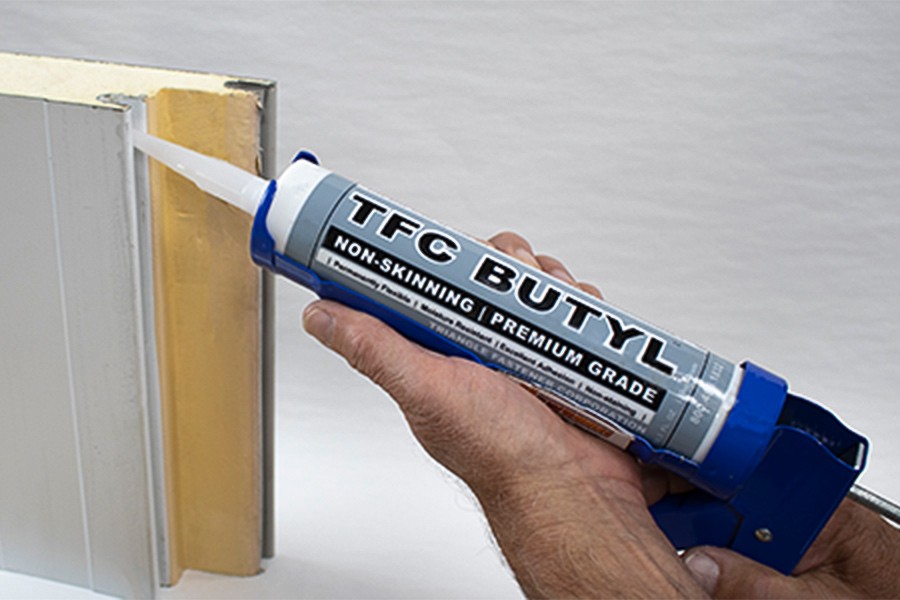
TFC BUTYL™ is a single-component butyl-based sealant designed specifically for strong adhesion to metal panels.
Its biggest distinction is that it remains permanently pliable. It does not skin over into a hard surface, which allows the material to continue moving with the joint after installation.
Why It Works Well With Metal Roofing
Metal panels do not stay perfectly still over the life of a building. Temperature changes create movement, and joints need a sealing product that can handle it.
TFC BUTYL remains flexible and moisture-resistant, which makes it useful for metal panel details where a rigid sealant would not be appropriate.
It also meets or exceeds AAMA 809.2 and is available in gray or white.
Installation Matters
Good adhesion starts with a clean surface. Before applying TFC BUTYL, the substrate should be dry and free from frost, oil, grease, incompatible coatings, or other contaminants that could interfere with adhesion.
The product is applied using a standard caulking gun and can be tooled after application if needed.
It is also worth paying attention to storage. TFC BUTYL should be kept in a controlled, dry environment below 75°F and used within 12 months of manufacture.
One other detail to know before choosing it: TFC BUTYL is not paintable.
Ask GNMC about TFC BUTYL™.
Why It Works Well With Metal Roofing
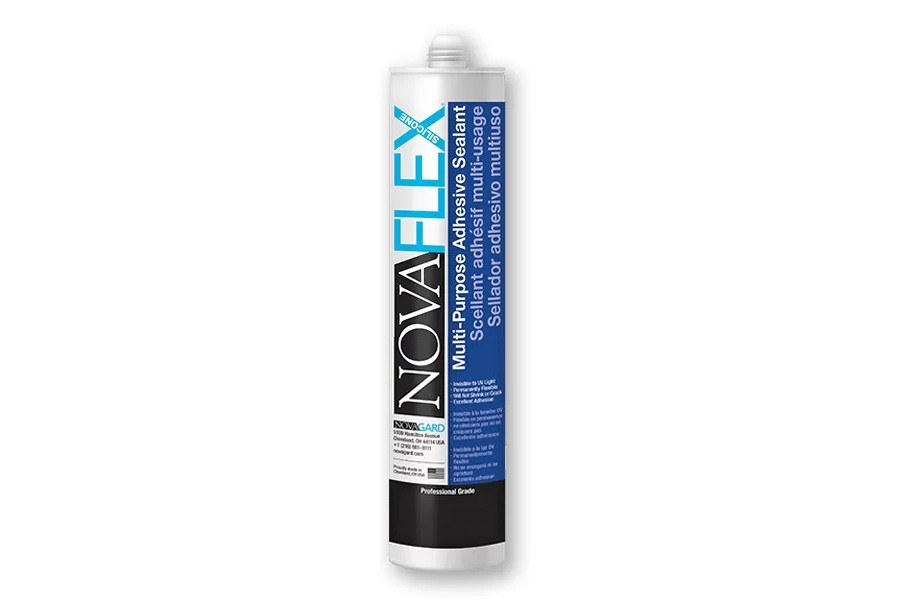
Temperature range is one of NovaFlex’s standout characteristics. The product can be applied at temperatures from -20°F to 160°F and has a service temperature range of -40°F to 400°F.
That broad range is useful for metal roofing, where surfaces can experience substantial temperature swings.
NovaFlex also offers good adhesion to common building materials and can bridge gaps up to 3/8 inch. Its exterior weathering and aging performance make it suited to exposed building applications.
Where NovaFlex Makes Sense
Contractors may consider NovaFlex for:
- Metal roof seams
- Panel joints
- Joint filling
- Small gaps
- Details exposed to wide temperature swings
It remains flexible at temperatures down to -10°F and is freeze-thaw stable. There are a couple of limitations worth knowing before installation. NovaFlex is not recommended for joints that will be submerged underwater, and it should not be used on surfaces that will later be painted.
Cure time also depends on temperature and humidity, so installers should account for site conditions and follow the product instructions.
Contact GNMC about product availability.
Best for: Concealed metal building joints that need a continuous, flexible seal.
MB-10A Butyl Tape is an elastomeric butyl rubber sealant specifically designed around the requirements of metal buildings.
It comes extruded on silicone-coated release paper, which makes it straightforward to position during installation. It is also produced in different sizes and lengths to suit a range of applications.
Why It Works Well With Metal Roofing
MB-10A is designed to maintain its seal through normal building movement. Its combination of adhesive strength and cohesive strength helps the tape stay together and stay bonded as the assembly moves.
Temperature performance is another important benefit. MB-10A is designed to withstand extreme roof temperatures while maintaining compressibility in colder conditions. It also offers resistance to UV light and cold flow.
Those characteristics matter on metal buildings, where the material may experience a wide range of temperatures throughout the year.
Frequently Asked Questions About Metal Roof Sealants and Butyl Tape
What is the best sealant for a metal roof?
The best metal roof sealant depends on where it will be used. Gun-grade sealants can work well for seams and joints, while butyl tape is commonly used between overlapping components or in concealed joints. Movement, temperature, substrate compatibility, and exposure should all factor into the decision.
Is butyl tape good for metal roofing?
Yes. Butyl tape is well suited to many metal roofing details because it creates a continuous seal between components while remaining flexible enough to accommodate normal building movement.
Is sealant or butyl tape better for a metal roof?
Neither option is better for every application. Butyl tape is often used inside laps and concealed joints, while gun-grade sealants are useful for filling seams, joints, and gaps. Some details may use both as part of the roofing system.
Does metal roof sealant need to stay flexible?
For joints that experience movement, flexibility is important. Metal panels expand and contract as temperatures change, so the sealing product needs to accommodate the expected movement without losing adhesion.
Can you use any silicone sealant on a metal roof?
No. Use a sealant that is compatible with the roofing material, coating, joint design, and expected temperatures. The product instructions and roofing-system requirements should guide the choice.
Need Metal Roof Sealant or Butyl Tape for Your Next Project?
Great Northern Metal Company carries EMSEAL AST, TFC BUTYL™, NovaFlex, and MB-10A Butyl Tape for a range of metal roofing and metal building applications.
Tell our team what detail you are working on and what you need the product to do. We can help you review the options GNMC carries and get the right product information before you place an order.
Inquire About Metal Roof Sealants