The word “oil canning” often sends shudders down contractors’ spines or makes homeowners flinch. That’s because this minor deformation to metal panels is not only hard to avoid but can vary from project to project, making it hard to pin down a single cause.
But, we promise you, there’s nothing to be afraid of with oil canning! With metal roofs, it’s only natural for oil canning to appear. Most importantly, it isn’t a reason to reject metal roofing panels or categorize your metal roofing and siding project as a failure. Metal panels are incredibly durable and long-lasting, and this minor aesthetic issue does not impact the inherent value of your metal panels.
Read on to learn more about what oil canning is, our Bozeman metal roofing experts’ insights on the topic, and why oil canning is no reason to run to the nearest phone for a refund.
What is Oil Canning?
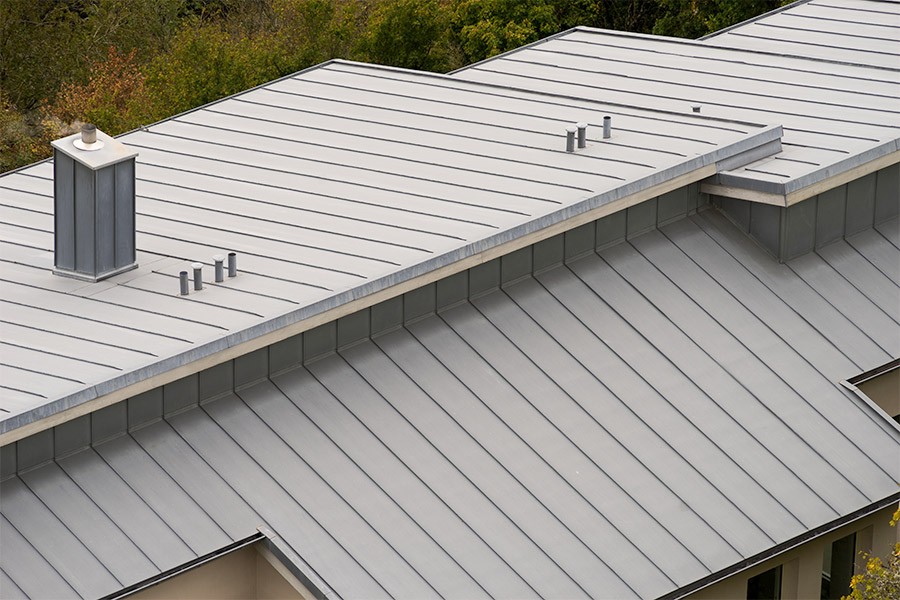
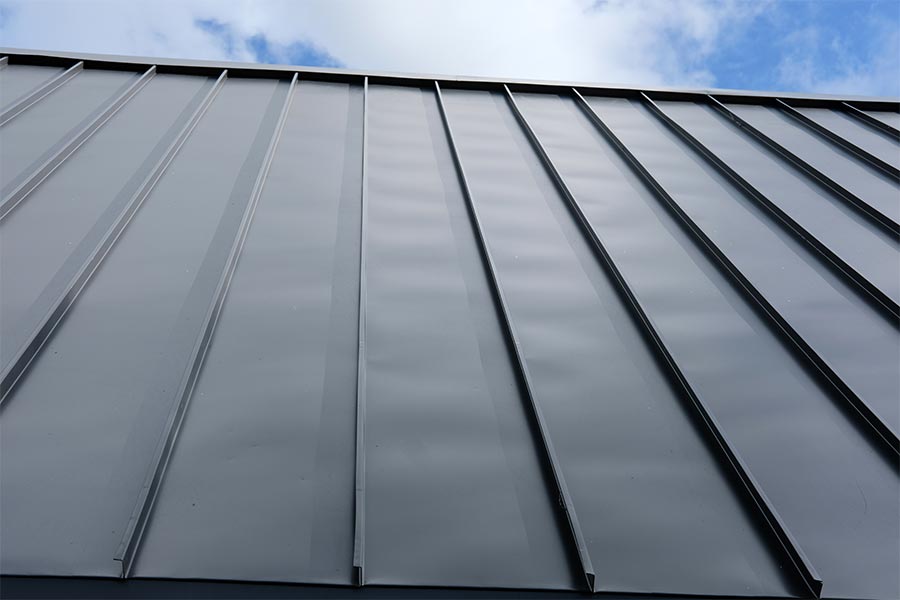
Oil canning is an aesthetic distortion that can appear on light-gauge, cold-rolled metal products. It usually appears as a waviness, rippling, or slight buckling on the broad section of a metal panel, whether the panel is used for roofing or siding. All types of metal products are impacted by oil canning, including aluminum, copper, steel, and zinc metal panels.
The intensity of the visual waviness depends on the type of metal, gauge, weather, color, finish, and even the angle from which the metal is viewed. So, the perception of oil canning can vary from person to person.
What Causes Oil Canning?
Oil canning cannot be boiled down to one singular cause; there are a number of factors that can cause a metal roof to experience oil canning. Here are a few of the primary ones we see in Montana:
1. Thermal contraction & expansion
Thermal contraction and expansion is one of the major reasons why metal roofs in Montana experience oil canning. When our temperatures swing from below zero at night to the upper 40s during the day, this sharp fluctuation in temperature causes metal panels to expand and contract. This movement can cause additional stress on panels, leading to oil canning.
2. Incorrect installation
Correct installation is crucial in every aspect of a metal roofing project, and sometimes mistakes in the installation can make oil canning more pronounced. Whether it’s using the wrong clips or driving a fastener in at the wrong angle, improper installation can add extra stress to metal panels, resulting in oil canning. Like any metal roofing project, make sure you follow the installation guide to mitigate any problems.
3. Choice in color and gloss
No matter what metal roof color or gloss you choose, you run the risk of developing oil canning. However, lighter paint colors and low-gloss finishes tend to show the oil canning effect less because they help reduce metal’s reflectivity, making any waviness less visible.
4. Improper handling or storing of metal panels
Storing and carrying metal panels with care can help diminish the risk of oil canning. To prevent panels from bowing, ensure your metal panels are carried perpendicular to the ground. So panels do not sink in the middle when they are stored, support panels every 12 feet or so to keep the panels even.
The Good News about Oil Canning
While oil canning may seem like a problematic issue, we promise that it is no cause for concern and does not impact the success of your metal roofing and siding project. When it comes to oil canning, here’s the good news:
- It’s purely a cosmetic issue – Like a skin blemish or a scratch on a book cover, oil canning is a purely aesthetic issue.
- It isn’t a sign of a failed metal panel – Oil canning does not signal that your metal panel’s structural integrity is compromised. Even the National Roofing Contractors Association doesn’t consider oil canning to be a cause for rejection or a sign that the panel is failing.
- It doesn’t impact the benefits of metal panels – Oil canning does not take away any of the excellent benefits you get by choosing a metal panel. It doesn’t impact a metal panel’s longevity, durability, weather resistance, ability to shed snow, energy efficiency, etc.
How to Mitigate Oil Canning Risks
It’s important to know that no matter how careful you are or how much thought you put into your panel selection, there’s no guarantee that your panels will not experience oil canning. That being said, there are several steps you can take to minimize the role oil canning plays in a metal roofing or siding project—it doesn’t have to be the main character!
1. Choose a striated panel
Striated panels have a series of waves, ribs, or ridges on them to add texture and visual appeal to the panel. While striations don’t remove the risk of oil canning, they can make oil canning less noticeable. Talk to one of our metal panel experts to hear your options for striated panels.
2. Select a narrower panel width
Oil canning tends to be seen the most on the wider width, flat areas of metal panels, so selecting a narrower width panel can help lessen the risk of oil canning.
3.Go for a thicker gauge
Metal panels will experience thermal expansion and contraction no matter what gauge you choose. However, a thicker gauge can lessen the risk of a metal panel expressing the oil canning look. Thicker gauges won’t show the waviness or bubbling in the middle of a panels as much as a thinner gauge would. Consult with one of our experts at Great Northern Metal Company to discuss which gauge of panel may be the best fit for your project.
4. Follow recommended installation procedures
Just like with any metal roofing or siding project, following the recommended installation procedures is key to setting up your project for success. Faulty installation practices can increase the risk of oil canning, so handling and installing panels with care and the proper techniques is crucial.
5. Get a consultation before your order
When in doubt, talk to one of our Bozeman metal roofing experts to get seasoned advice on how to mitigate oil canning’s impact on your project. We’ve spent decades in the metal roofing industry, so we’re no stranger to oil canning. There’s no one-size-fits-all solution to oil canning, so we take the time to get to know the details of your metal roofing project so we can make insightful, educated recommendations. We’ll likely ask you the following questions to get to know your project’s unique specifications:
- What’s the elevation?
- What’s the aspect?
- What’s the snow load?
- What’s the longest panel?
- What’s the shortest panel?
- Where are you located?
Each of these questions plays a role in selecting the best panel for your project, and we’re here to help you make informed decisions for your project. Contact our team today to schedule a consultation.
Have Questions about Oil Canning?
If you have more questions about oil canning, don’t hesitate to drop us a line. Our Bozeman residential and commercial metal roofing experts have over a decade of industry experience, and we’re always happy to lend a hand and point you in the right direction.
If you’re ready to get started on your next roofing project and would like a consultation to pick the best metal panel for your needs, contact us here—let’s get started scoping out your metal roof!
What Is Sealant for Metal Roofing?
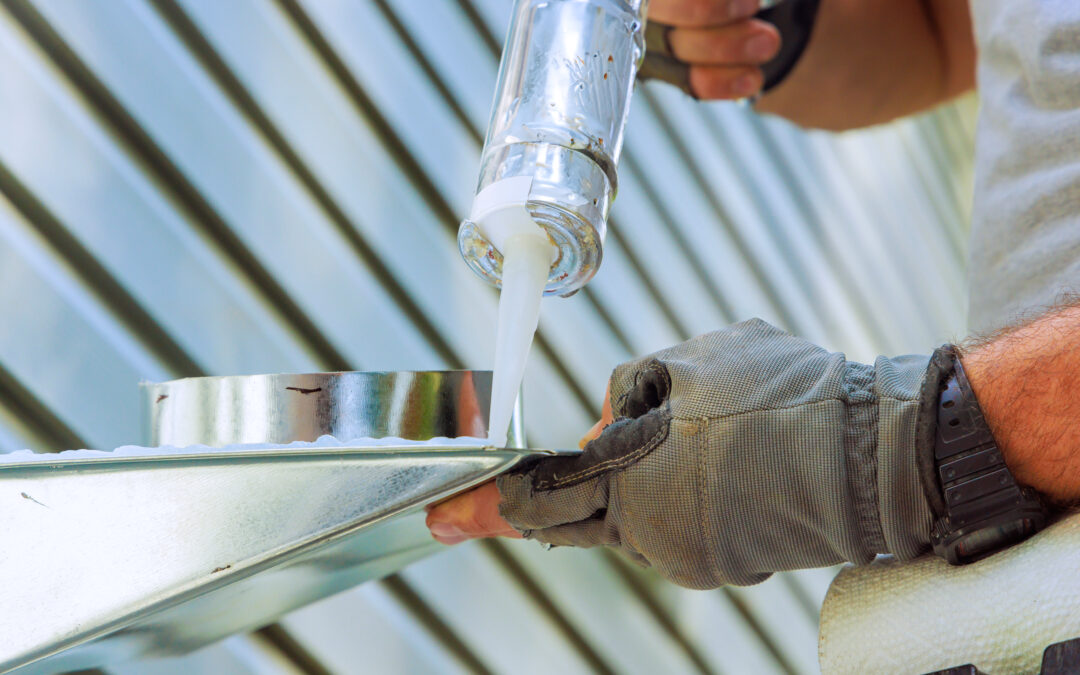
Metal roof sealant helps seal seams, joints, gaps, and other areas where water or air could enter a roofing system. Most gun-grade sealants are applied from a tube and form a bead over or within a joint. Depending on the formulation, the material may remain permanently pliable or cure into a flexible seal.
For metal roofing, flexibility matters. Panels naturally move as temperatures rise and fall, so a sealant used at a moving joint needs to accommodate that movement without losing adhesion.
The location of the seal matters too. A product used at an exposed seam may need different properties than one placed inside a concealed joint.
Sealant also should not be treated as a substitute for proper flashing, fastening, or panel installation. It works as part of the roofing system, not as a fix for a detail that was built incorrectly.
What Is Butyl Tape for Metal Roofing?
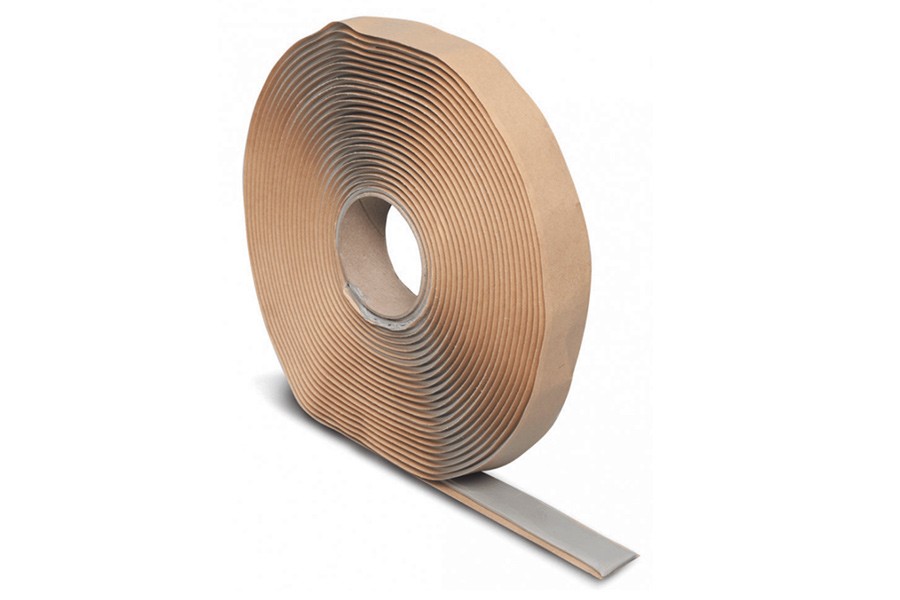
Butyl tape is a preformed sealing material typically installed between two roofing components. Instead of applying a bead from a tube, the installer lays a continuous strip of tape along the joint before the materials are fastened together. That makes it especially useful at concealed laps and other locations where two metal surfaces come together.
Butyl stays flexible, which helps it maintain a seal as a metal building experiences normal movement. There are also expanding sealant tapes that serve a similar purpose while filling irregular gaps and accommodating movement within the joint.
Sealant vs. Butyl Tape
The simplest way to think about the difference is application.
Gun-grade sealant works well when you need to apply a bead into a seam, joint, or gap. Butyl tape works well when you need a continuous seal between overlapping or adjoining components.
One is not automatically better than the other. The roof detail determines which type makes sense.
4 of the Top Metal Roof Sealants and Butyl Tapes
The right product depends on the joint, expected movement, temperature conditions, and whether the seal will be exposed or concealed.
Here are four options GNMC has tried, tested, and trusts so much that we chose to carry them at our shop.
Best for: Expansion joints, lap seams, and joints that need to accommodate movement.
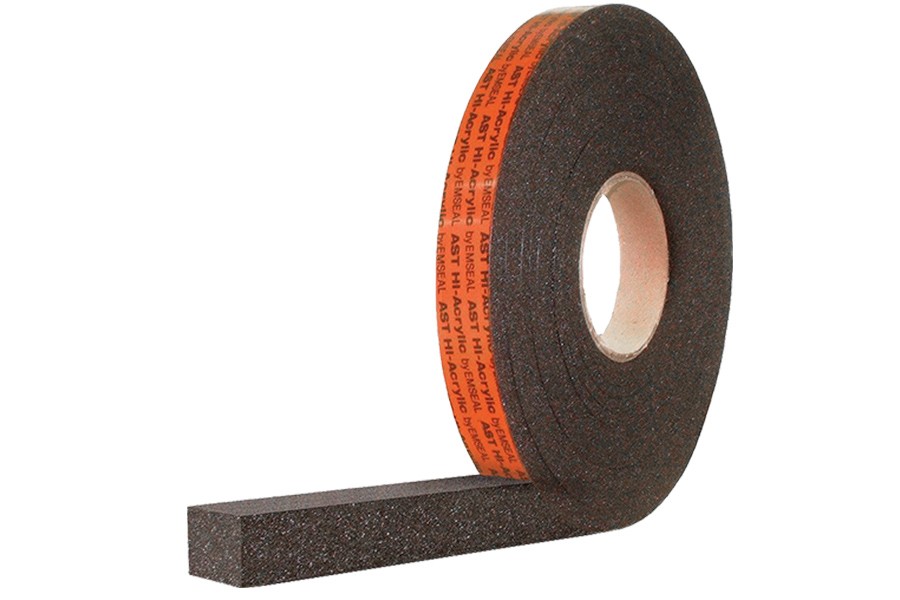
EMSEAL AST Hi-Acrylic Sealant Tape is a self-adhering, open-cell polyurethane foam tape impregnated with acrylic-modified asphalt.
Unlike a standard flat tape, EMSEAL AST gradually expands after it is removed from its packaging. That allows it to conform to the joint and fill gaps along irregular surfaces. For metal roofing and metal buildings, that can be particularly useful around details affected by thermal expansion and contraction.
Why It Works Well With Metal Roofing
One of EMSEAL AST’s biggest advantages is its ability to move with the building. The tape conforms to contours and maintains a seal as metal panels expand and contract. It is designed to help keep out dust, air, wind-driven snow, and moisture through joint details.
It also does not dry out and become hard or brittle over time. Because the material remains compressed within the joint, it is designed to stay in place rather than squeeze out the way some caulks or butyl products can.
Its resistance to UV exposure, aging, and mildew also makes it well suited to demanding exterior applications.
Best for: Metal panel joints that need a permanently pliable, gun-grade sealant.
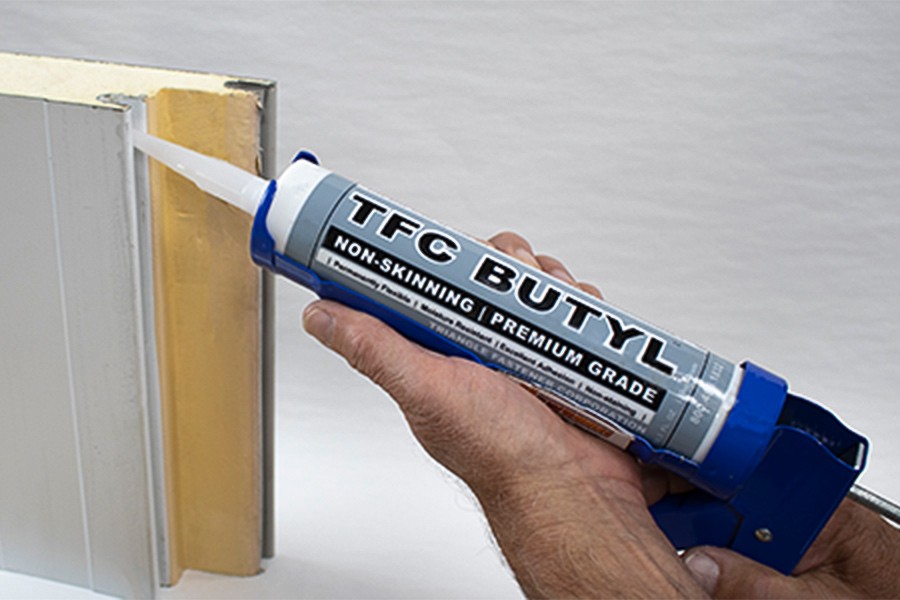
TFC BUTYL™ is a single-component butyl-based sealant designed specifically for strong adhesion to metal panels.
Its biggest distinction is that it remains permanently pliable. It does not skin over into a hard surface, which allows the material to continue moving with the joint after installation.
Why It Works Well With Metal Roofing
Metal panels do not stay perfectly still over the life of a building. Temperature changes create movement, and joints need a sealing product that can handle it.
TFC BUTYL remains flexible and moisture-resistant, which makes it useful for metal panel details where a rigid sealant would not be appropriate.
It also meets or exceeds AAMA 809.2 and is available in gray or white.
Installation Matters
Good adhesion starts with a clean surface. Before applying TFC BUTYL, the substrate should be dry and free from frost, oil, grease, incompatible coatings, or other contaminants that could interfere with adhesion.
The product is applied using a standard caulking gun and can be tooled after application if needed.
It is also worth paying attention to storage. TFC BUTYL should be kept in a controlled, dry environment below 75°F and used within 12 months of manufacture.
One other detail to know before choosing it: TFC BUTYL is not paintable.
Ask GNMC about TFC BUTYL™.
Why It Works Well With Metal Roofing
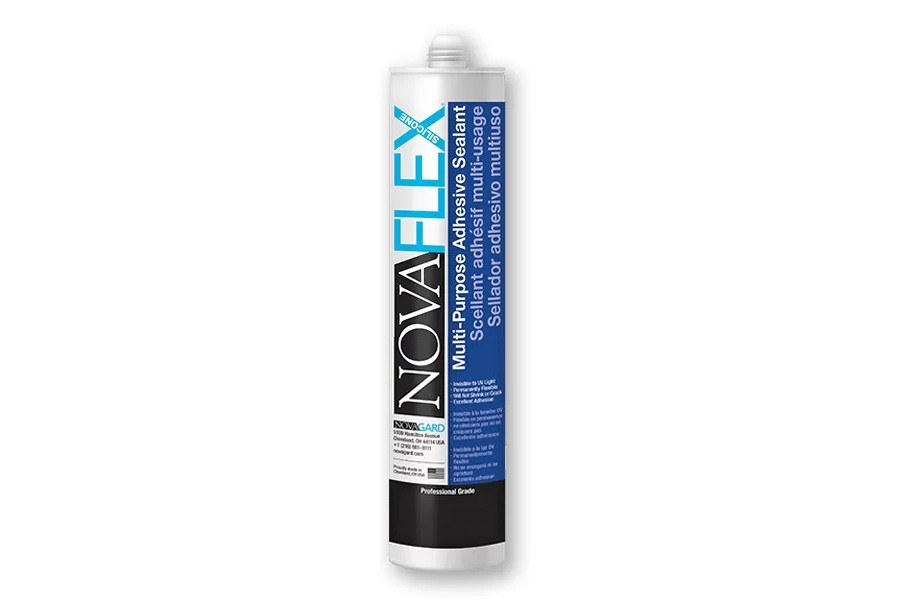
Temperature range is one of NovaFlex’s standout characteristics. The product can be applied at temperatures from -20°F to 160°F and has a service temperature range of -40°F to 400°F.
That broad range is useful for metal roofing, where surfaces can experience substantial temperature swings.
NovaFlex also offers good adhesion to common building materials and can bridge gaps up to 3/8 inch. Its exterior weathering and aging performance make it suited to exposed building applications.
Where NovaFlex Makes Sense
Contractors may consider NovaFlex for:
- Metal roof seams
- Panel joints
- Joint filling
- Small gaps
- Details exposed to wide temperature swings
It remains flexible at temperatures down to -10°F and is freeze-thaw stable. There are a couple of limitations worth knowing before installation. NovaFlex is not recommended for joints that will be submerged underwater, and it should not be used on surfaces that will later be painted.
Cure time also depends on temperature and humidity, so installers should account for site conditions and follow the product instructions.
Contact GNMC about product availability.
Best for: Concealed metal building joints that need a continuous, flexible seal.
MB-10A Butyl Tape is an elastomeric butyl rubber sealant specifically designed around the requirements of metal buildings.
It comes extruded on silicone-coated release paper, which makes it straightforward to position during installation. It is also produced in different sizes and lengths to suit a range of applications.
Why It Works Well With Metal Roofing
MB-10A is designed to maintain its seal through normal building movement. Its combination of adhesive strength and cohesive strength helps the tape stay together and stay bonded as the assembly moves.
Temperature performance is another important benefit. MB-10A is designed to withstand extreme roof temperatures while maintaining compressibility in colder conditions. It also offers resistance to UV light and cold flow.
Those characteristics matter on metal buildings, where the material may experience a wide range of temperatures throughout the year.
Frequently Asked Questions About Metal Roof Sealants and Butyl Tape
What is the best sealant for a metal roof?
The best metal roof sealant depends on where it will be used. Gun-grade sealants can work well for seams and joints, while butyl tape is commonly used between overlapping components or in concealed joints. Movement, temperature, substrate compatibility, and exposure should all factor into the decision.
Is butyl tape good for metal roofing?
Yes. Butyl tape is well suited to many metal roofing details because it creates a continuous seal between components while remaining flexible enough to accommodate normal building movement.
Is sealant or butyl tape better for a metal roof?
Neither option is better for every application. Butyl tape is often used inside laps and concealed joints, while gun-grade sealants are useful for filling seams, joints, and gaps. Some details may use both as part of the roofing system.
Does metal roof sealant need to stay flexible?
For joints that experience movement, flexibility is important. Metal panels expand and contract as temperatures change, so the sealing product needs to accommodate the expected movement without losing adhesion.
Can you use any silicone sealant on a metal roof?
No. Use a sealant that is compatible with the roofing material, coating, joint design, and expected temperatures. The product instructions and roofing-system requirements should guide the choice.
Need Metal Roof Sealant or Butyl Tape for Your Next Project?
Great Northern Metal Company carries EMSEAL AST, TFC BUTYL™, NovaFlex, and MB-10A Butyl Tape for a range of metal roofing and metal building applications.
Tell our team what detail you are working on and what you need the product to do. We can help you review the options GNMC carries and get the right product information before you place an order.
Inquire About Metal Roof Sealants