Single vs Double Seam Mechanical Lock Standing Seam: Which is Best?

Single vs Double Seam Mechanical Lock Standing Seam

Whether you’re an architect outlining specs or a contractor getting ready to install metal panels, you need to understand the difference between single seam vs double seam mechanical lock standing seams. With this roofing system, single vs double seam is more than a trivial detail. Your choice has real consequences for a project’s durability, weather performance, installation process, and aesthetics​. Especially in Montana’s tough climate, the type of seam you select impacts how well a metal roof or siding stands up to harsh conditions and how challenging it is to install or repair.

From structural performance to installation challenges, here’s what you need to know about single vs. double seam mechanical lock standing seam systems—so you can make the right choice with confidence.

Understanding Mechanical Lock Standing Seam Systems

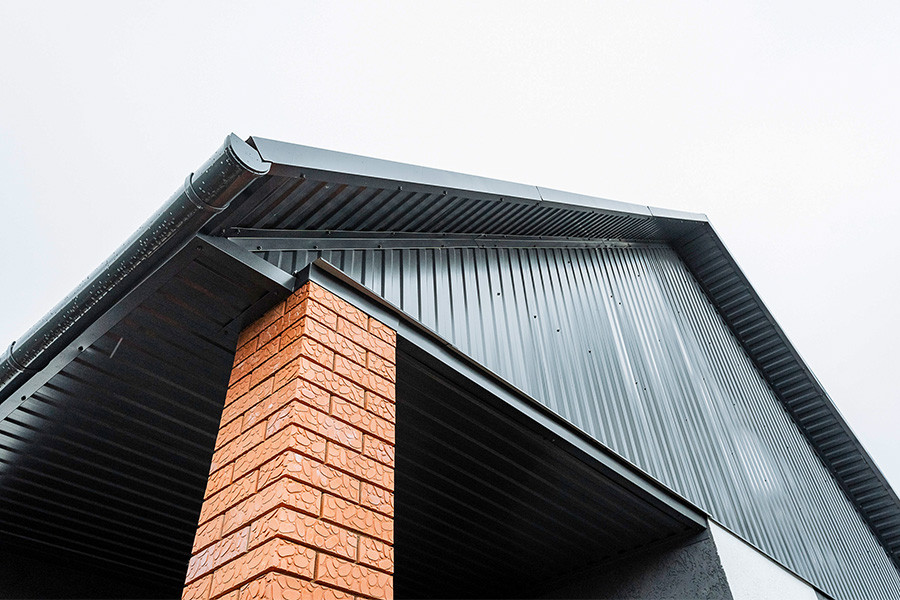
Mechanical lock panel systems are a type of standing seam metal roofing/siding known for their rugged performance in industrial and commercial roofing projects. These systems use concealed fasteners and specialized seamers to crimp panel edges together into a continuous seam.

In a mechanical lock profile, one panel’s male leg is aligned with the adjacent panel’s female leg with a clip in between; then the seam is mechanically crimped to secure the two panels into one interlocking unit. This crimping can be done in two ways: a single fold (single lock) or a double fold (double lock) seam.

Mechanical lock seams can be done in two ways, each with distinct structural characteristics and ideal applications:

Single Lock (90° Seam)

A single lock seam involves one fold of the metal seam (bent to about 90 degrees). This creates a reliable but less rigid connection between panels. Single locks are quicker and easier to install, and they perform well in milder environments and with steep pitches​.

Architects sometimes use single locks on steeper roofs or wall cladding where extreme water-tightness is not as critical. For example, in zinc façade systems, single (angle) locks may be recommended to achieve a flatter appearance with less visible folding of the metal​.

Double Lock (180° Seam)

A double lock seam folds the metal over itself twice, a full 180 degrees, resulting in a very tight, robust seam. Double lock seams are significantly stronger and more water-tight than single locks, making them ideal for low-slope roofs and cold or wet climates​ (like Montana’s).

This is the go-to seam type for areas that see heavy rain or snow, as the second fold provides extra fortification against leaks. In fact, for most standing seam roofing applications (as opposed to vertical wall panels), industry guidelines generally require the use of double lock seams to ensure true weatherproof performance​. At Great Northern Metal Company, we always recommend using a double seam for Montana roofing projects. While double locks can be more challenging to install or repair, they offer superior long-term durability in demanding conditions.

Industry Testing & Structural Performance for Single vs Double Seams

Mechanical lock systems are among the highest-performing standing seam roofs when it comes to engineering and testing standards​. Between the two seam types, double lock systems consistently show better results in industry tests for wind uplift, water penetration, and structural load. Many manufacturers note that double-lock seams are more commonly used today specifically because of their superior weather-tightness and strength, whereas single-lock seams are now rarely chosen except in limited scenarios​.

For example, a 180° double-lock seam is far less likely to unfurl or fail under extreme wind pressures compared to a 90° single lock. Mechanically seamed roofs (especially double-locked) often achieve the highest wind uplift ratings in testing; this is why such systems can carry stringent certifications​. View Great Northern Metal Company’s 1.5” Mechanical Standing Seam Panel Testing.

Most engineers and building codes will call for a double-seamed panel when maximum structural performance is needed. It’s telling that in project specifications, most of the time, double seams are required to meet performance requirements​.

Single-lock seams might pass codes in mild conditions, but they often cannot meet the same high wind or snow load criteria that a double lock can. For architects and contractors, the takeaway is clear: if your project demands top structural performance or will undergo rigorous testing for warranty or code, a double seam mechanical lock system is the recommended choice for peace of mind​.

Single vs Double Seam: Key Considerations for Architects & Contractors

1. Aesthetic Differences

Beyond performance, the choice between a single and double seam can subtly impact the visual appearance of the finished metal roof or wall. Single seams create a clean, vertical rib with a fully closed hem, which makes the seam itself less noticeable​. Many designers appreciate that crisp, flat look. Double lock seams, by contrast, have a portion of the metal leg folded twice, resulting in a visible seam along a roof. Not everyone likes this look, as the visible seam can catch the light differently and is a bit more pronounced up close.

However, in most roofing scenarios, the aesthetic difference is minor, and the priority leans toward performance. It’s worth noting that mechanical lock panels in general have an industrial, rugged look due to their prominent ribs and heavy-duty folds. On residential projects, that can overwhelm the design – in fact, we often steer homeowners away from true mechanical seams as they can dwarf a home’s softer aesthetic.

But on commercial or modern industrial-style buildings, that bold standing seam profile (single or double) can complement the architecture nicely. The key is to decide if the seam profile will enhance or detract from your design vision and choose accordingly.

2. Installation Complexity

From a contractor’s standpoint, installation requirements are a major factor in this decision. Mechanical lock systems are by nature more labor-intensive to install than simpler standing seam systems. Plus, going from a single to a double seam adds another layer of effort.

A single-lock mechanical seam requires using a power seamer (or hand seaming tool) to fold each seam once along the roof. A double-lock seam typically means you or your crew will need to run the seamer twice (or use a specialized dual-stage seamer) to crimp that seam completely flat. This additional seaming operation translates to more time on the roof and calls for a skilled installer who knows how to adjust the seaming equipment properly.

Our team rates mechanical lock panel installations as the most difficult metal roofing jobs – a “5 out of 5” in terms of skill and labor required. If an inexperienced installer attempts a double seam or the seamer tool is misaligned, it’s easy to damage the panels or not achieve a proper lock.

Single lock systems do have the advantage of being a bit more forgiving and faster to complete, requiring less labor and fewer tool passes. Double lock, on the other hand, is more complex and time-consuming, necessitating highly trained labor and often specialized tools or seamer rentals​. Contractors should plan for the extra man-hours and ensure the crew is trained for whichever system is specified.

Also, consider the logistics: if you choose a mechanical lock profile, you’ll need access to a seaming machine on-site (these can be rented if you don’t own one). We’ve partnered with D.I. Roof Seamers to help supply the proper equipment when a project calls for it, because having the right tool and know-how is critical for a successful mechanical lock panel installation.

3. Performance in Montana Climates

In Montana’s challenging climate, the seam choice becomes even more crucial. Our region sees heavy snowfall, high winds, and frequent freeze-thaw cycles—conditions that will test any roof system to its limits.

Double-lock mechanical seams excel in this environment. The extra fold in the seam provides superior weather resistance, guarding against wind-driven rain and preventing water infiltration even when snow sits on the roof for extended periods​. Perhaps most importantly, a 180° seam is far less likely to bend open or “unzip” due to the expansion and contraction stresses that occur with Montana’s big temperature swings​

In freezing conditions, moisture that creeps into a partially folded single seam could freeze and pry the seam apart over time; a double seam, fully crimped, greatly minimizes that risk. That’s why Great Northern highly recommends double lock panel systems for our cold-weather region​

Single lock seams can perform adequately in milder climates or on walls, but in Montana’s harsh winters, they might not provide the same long-term security. The peace of mind that comes with a fully seamed 180° lock often outweighs the small cost or effort savings of a single seam in this part of the country.

For architects designing in snowy mountain areas and contractors bidding projects at high elevations, opting for the double seam is generally a wise choice to ensure the roof or siding can handle the climate for decades to come​.

What to Know Before Ordering Mechanical Lock Panels

Before you order mechanical lock standing seam panels for your project, keep the following considerations in mind to avoid surprises down the line:

1. Seam Type and Snow Retention Accessories

If your roof will require snow guards, solar panel mounts, or other attachments (like the popular S-5!® clamp systems), you must match the clamp/attachment type to your seam profile. Certain snow break systems are designed specifically for double-lock (vertical) seams, while others are made for single-lock (angled) seams​. Using the wrong type can result in a poor fit or even damage the seam. Double-check that your snow guard manufacturer offers a solution for the seam you plan to use. In heavy snow areas, double-lock seams often pair better with clamp-on snow retention because they provide a more secure hold under load. In short: plan your seam type and your snow retention system together, so that your panel order, seam profile, and accessories all align.

2. Cost and Labor Implications

The seam you choose will affect project cost and timeline. Double-lock panels typically incur higher labor costs because of the extra seaming work and the need for skilled installation​. There’s also the consideration of renting or purchasing a seaming machine if you don’t already have one, which adds to the project expenses. When budgeting, factor in that a crew might take almost twice as long to seam a double-lock roof compared to a single-lock roof of the same size.

On the flip side, single-lock systems can save time and money on installation, but remember that any savings should be weighed against the performance requirements of the job. It can be more expensive in the long run if a cheaper single seam fails where a double seam would have held strong. Align with your contractor early about the cost difference and make sure the bid or quote reflects the correct seam type. You don’t want to budget for a single seam and then find out mid-project that a double seam (and a change order) is needed to meet engineering specs.

The GNMC Difference — Why Consult with Us?

Choosing the right standing seam system means balancing design, structure, climate, and budget. At Great Northern Metal Company, we help clients navigate these decisions to ensure the best outcome for their project. With extensive experience in metal roofing and siding—especially in Montana’s demanding conditions—we guide architects and contractors through engineering requirements, climate considerations, and aesthetic goals to determine the right system from the start.

One of the biggest advantages of working with GNMC is avoiding costly mistakes. We’ve seen projects where the wrong seam type was specified or where installation teams lacked the guidance to handle a complex panel profile—both of which can lead to last-minute changes and unnecessary expenses. By consulting with us early, you’ll get expert insights that help prevent these issues, ensuring a metal roof or siding system that looks great, performs well, and stands the test of time.

Consult with Our Experts Today

A strong metal roof starts with the right supplier. At GNMC, we bring expert guidance, top-quality materials, and real-world experience to every project. Whether you’re planning, specifying, or installing, we’re here to help you get it right the first time. Let’s talk—reach out today for a free consultation and/or quote!
What Is Sealant for Metal Roofing?

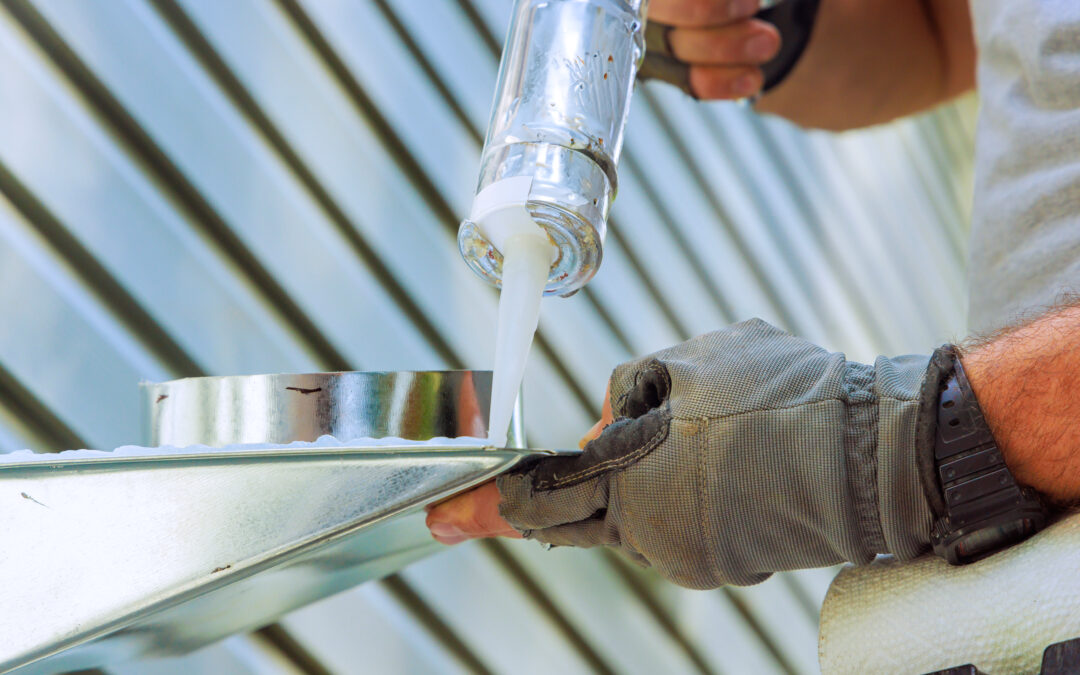
Metal roof sealant helps seal seams, joints, gaps, and other areas where water or air could enter a roofing system. Most gun-grade sealants are applied from a tube and form a bead over or within a joint. Depending on the formulation, the material may remain permanently pliable or cure into a flexible seal.

For metal roofing, flexibility matters. Panels naturally move as temperatures rise and fall, so a sealant used at a moving joint needs to accommodate that movement without losing adhesion. 

The location of the seal matters too. A product used at an exposed seam may need different properties than one placed inside a concealed joint.

Sealant also should not be treated as a substitute for proper flashing, fastening, or panel installation. It works as part of the roofing system, not as a fix for a detail that was built incorrectly.

What Is Butyl Tape for Metal Roofing?

Butyl tape is a preformed sealing material typically installed between two roofing components. Instead of applying a bead from a tube, the installer lays a continuous strip of tape along the joint before the materials are fastened together. That makes it especially useful at concealed laps and other locations where two metal surfaces come together.

Butyl stays flexible, which helps it maintain a seal as a metal building experiences normal movement. There are also expanding sealant tapes that serve a similar purpose while filling irregular gaps and accommodating movement within the joint.

Sealant vs. Butyl Tape

The simplest way to think about the difference is application.

Gun-grade sealant works well when you need to apply a bead into a seam, joint, or gap. Butyl tape works well when you need a continuous seal between overlapping or adjoining components.

One is not automatically better than the other. The roof detail determines which type makes sense.

Metal Roof Sealant vs. Butyl Tape: Which Should You Use?

Different roof details put different demands on the sealing product.

Application

Product Type to Consider

Filling a seam or joint

Gun-grade sealant

Sealing a concealed metal lap

Butyl tape

Joint that moves with expansion and contraction

Flexible sealant or expanding sealant tape

Continuous seal between two components

Butyl tape

Irregular gap that needs to be filled

Gun-grade sealant or expanding tape

Detail exposed to wide temperature changes

Product rated for the expected temperature range

These are general guidelines. Always check the roofing-system requirements and the manufacturer’s installation instructions before choosing a product.

4 of the Top Metal Roof Sealants and Butyl Tapes

The right product depends on the joint, expected movement, temperature conditions, and whether the seal will be exposed or concealed.

Here are four options GNMC has tried, tested, and trusts so much that we chose to carry them at our shop.

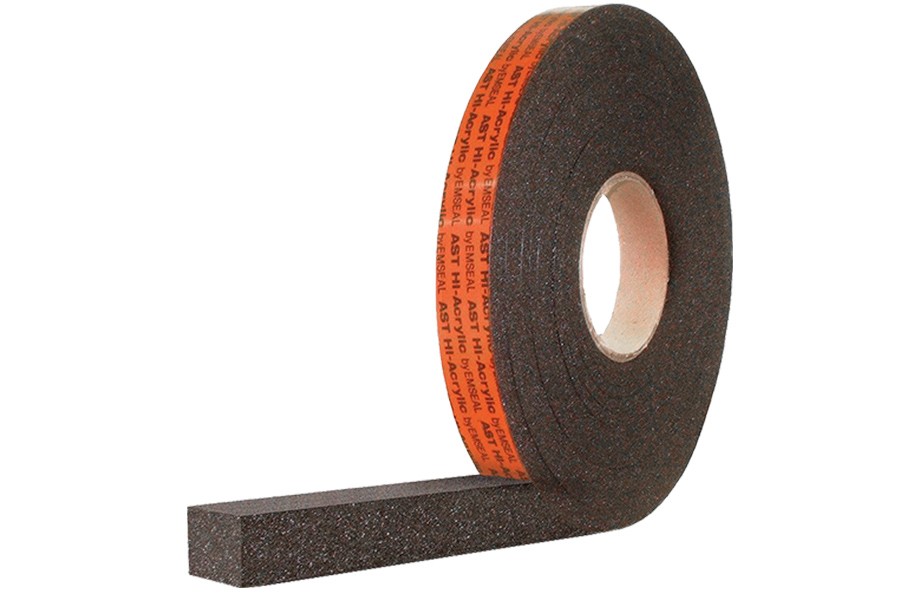
1. EMSEAL AST Hi-Acrylic Sealant Tape

Best for: Expansion joints, lap seams, and joints that need to accommodate movement.

EMSEAL AST Hi-Acrylic Sealant Tape is a self-adhering, open-cell polyurethane foam tape impregnated with acrylic-modified asphalt.

Unlike a standard flat tape, EMSEAL AST gradually expands after it is removed from its packaging. That allows it to conform to the joint and fill gaps along irregular surfaces. For metal roofing and metal buildings, that can be particularly useful around details affected by thermal expansion and contraction.

Emseal AST

Why It Works Well With Metal Roofing

One of EMSEAL AST’s biggest advantages is its ability to move with the building. The tape conforms to contours and maintains a seal as metal panels expand and contract. It is designed to help keep out dust, air, wind-driven snow, and moisture through joint details.

It also does not dry out and become hard or brittle over time. Because the material remains compressed within the joint, it is designed to stay in place rather than squeeze out the way some caulks or butyl products can.

Its resistance to UV exposure, aging, and mildew also makes it well suited to demanding exterior applications.

Common Applications

EMSEAL AST can be useful for:

  • Expansion and compression joints
  • Lap seams
  • Mechanically fastened joints
  • Irregular gaps
  • Metal building details where movement needs to be accommodated

It can also be used alongside several common building materials, including metal, plastic, wood, and concrete.

Interested in EMSEAL AST? Contact GNMC

2. TFC BUTYL™ Sealant

Best for: Metal panel joints that need a permanently pliable, gun-grade sealant.

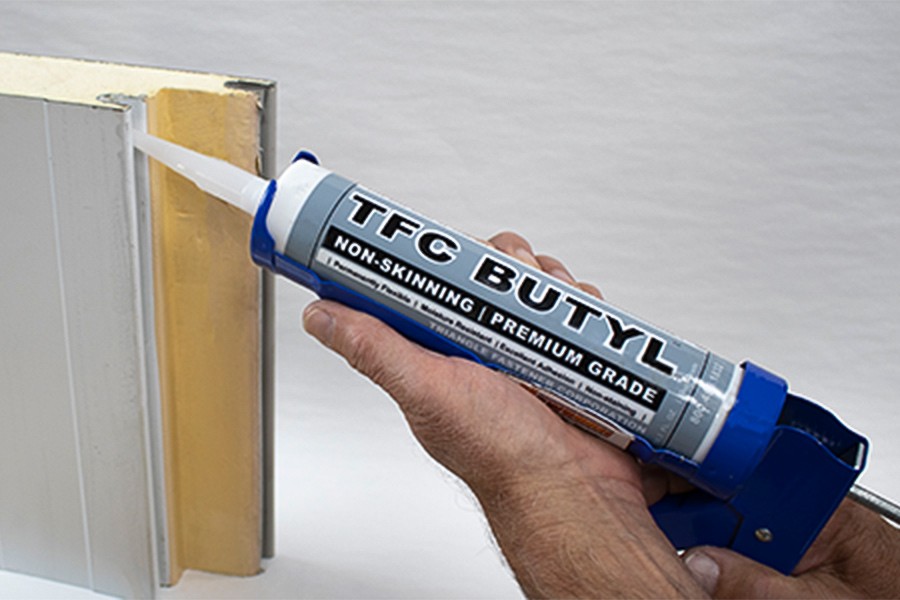
TFC BUTYL™ is a single-component butyl-based sealant designed specifically for strong adhesion to metal panels.

Its biggest distinction is that it remains permanently pliable. It does not skin over into a hard surface, which allows the material to continue moving with the joint after installation.

Why It Works Well With Metal Roofing

Metal panels do not stay perfectly still over the life of a building. Temperature changes create movement, and joints need a sealing product that can handle it.

TFC BUTYL remains flexible and moisture-resistant, which makes it useful for metal panel details where a rigid sealant would not be appropriate.

It also meets or exceeds AAMA 809.2 and is available in gray or white.

Installation Matters

Good adhesion starts with a clean surface. Before applying TFC BUTYL, the substrate should be dry and free from frost, oil, grease, incompatible coatings, or other contaminants that could interfere with adhesion.

The product is applied using a standard caulking gun and can be tooled after application if needed.

It is also worth paying attention to storage. TFC BUTYL should be kept in a controlled, dry environment below 75°F and used within 12 months of manufacture.

One other detail to know before choosing it: TFC BUTYL is not paintable.

Ask GNMC about TFC BUTYL™.

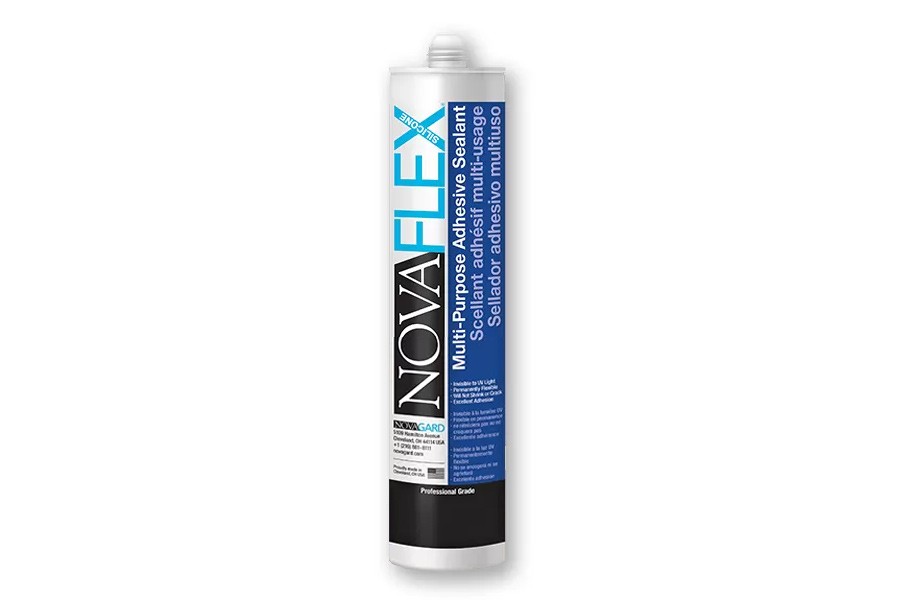
3. NovaFlex Metal Roof & Panel Adhesive Sealant

Best for: Seams, panel joints, and gaps that need a flexible cured sealant.

NovaFlex Metal Roof & Panel Adhesive Sealant is a single-component silicone sealant and adhesive commonly used as a seam sealant or joint filler in metal roofing and panel systems.

It is non-corrosive and non-sag, making it useful where contractors need a gun-grade product that will stay where it is placed.

Why It Works Well With Metal Roofing

Temperature range is one of NovaFlex’s standout characteristics. The product can be applied at temperatures from -20°F to 160°F and has a service temperature range of -40°F to 400°F.

That broad range is useful for metal roofing, where surfaces can experience substantial temperature swings.

NovaFlex also offers good adhesion to common building materials and can bridge gaps up to 3/8 inch. Its exterior weathering and aging performance make it suited to exposed building applications.

Where NovaFlex Makes Sense

Contractors may consider NovaFlex for:

  • Metal roof seams
  • Panel joints
  • Joint filling
  • Small gaps
  • Details exposed to wide temperature swings

It remains flexible at temperatures down to -10°F and is freeze-thaw stable. There are a couple of limitations worth knowing before installation. NovaFlex is not recommended for joints that will be submerged underwater, and it should not be used on surfaces that will later be painted.

Cure time also depends on temperature and humidity, so installers should account for site conditions and follow the product instructions.

Contact GNMC about product availability.

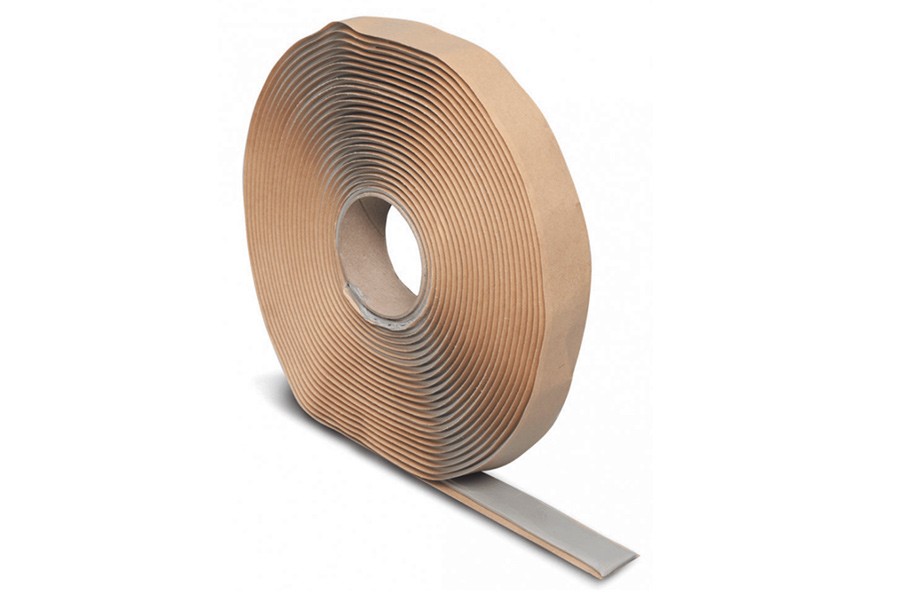
4. MB-10A Butyl Tape

Best for: Concealed metal building joints that need a continuous, flexible seal.

MB-10A Butyl Tape is an elastomeric butyl rubber sealant specifically designed around the requirements of metal buildings.

It comes extruded on silicone-coated release paper, which makes it straightforward to position during installation. It is also produced in different sizes and lengths to suit a range of applications.

Why It Works Well With Metal Roofing

MB-10A is designed to maintain its seal through normal building movement. Its combination of adhesive strength and cohesive strength helps the tape stay together and stay bonded as the assembly moves.

Temperature performance is another important benefit. MB-10A is designed to withstand extreme roof temperatures while maintaining compressibility in colder conditions. It also offers resistance to UV light and cold flow.

Those characteristics matter on metal buildings, where the material may experience a wide range of temperatures throughout the year.

Common Applications

MB-10A may be a good fit for:

  • Concealed panel laps
  • Metal building joints
  • Overlapping components
  • Details requiring a continuous butyl seal
  • Joints affected by normal building movement

Choosing the right tape size is important. The joint needs enough material to create the intended seal without using so much that the tape squeezes excessively out of the detail.

Inquire about MB-10A Butyl Tape

What to Consider Before Choosing a Metal Roof Sealant

Before grabbing a tube or roll, look at what the joint actually needs and ask yourself the following questions:

    1. How Much Will the Joint Move? Metal panels expand and contract as temperatures change. A sealing product at a moving joint needs enough flexibility to accommodate that movement.
    2. What Temperatures Will the Product See? Metal roof surfaces can get hot, and Montana projects can also see very cold conditions. Check the product’s application temperature separately from its service temperature. A sealant may perform across a wide temperature range once cured while still having specific limits for installation.
    3. Is the Joint Exposed or Concealed? A concealed panel lap has different needs than an exposed seam. Butyl tape is often a practical choice where two materials are compressed together. A gun-grade sealant may make more sense when a seam or gap needs to be filled from the outside.
    4. What Materials Is the Product Touching? Always check compatibility with the metal substrate and any adjoining materials. A product that adheres well to bare metal may have different requirements around painted finishes, other coatings, plastics, or masonry.
    5. Will the Surface Be Painted? Some sealants are not paintable. Both TFC BUTYL and NovaFlex have limitations that should be understood before choosing them for a detail that will receive a finish later.
    6. What Does Installation Require? Good products still need good installation. Surface preparation, storage, bead size, compression, and cure time can all affect the finished seal. Read the product instructions before installation instead of assuming every sealant or tape works the same way.

Frequently Asked Questions About Metal Roof Sealants and Butyl Tape

What is the best sealant for a metal roof?

The best metal roof sealant depends on where it will be used. Gun-grade sealants can work well for seams and joints, while butyl tape is commonly used between overlapping components or in concealed joints. Movement, temperature, substrate compatibility, and exposure should all factor into the decision.

Is butyl tape good for metal roofing?

Yes. Butyl tape is well suited to many metal roofing details because it creates a continuous seal between components while remaining flexible enough to accommodate normal building movement.

Is sealant or butyl tape better for a metal roof?

Neither option is better for every application. Butyl tape is often used inside laps and concealed joints, while gun-grade sealants are useful for filling seams, joints, and gaps. Some details may use both as part of the roofing system.

Does metal roof sealant need to stay flexible?

For joints that experience movement, flexibility is important. Metal panels expand and contract as temperatures change, so the sealing product needs to accommodate the expected movement without losing adhesion.

Can you use any silicone sealant on a metal roof?

No. Use a sealant that is compatible with the roofing material, coating, joint design, and expected temperatures. The product instructions and roofing-system requirements should guide the choice.

Need Metal Roof Sealant or Butyl Tape for Your Next Project?

Great Northern Metal Company carries EMSEAL AST, TFC BUTYL™, NovaFlex, and MB-10A Butyl Tape for a range of metal roofing and metal building applications.

Tell our team what detail you are working on and what you need the product to do. We can help you review the options GNMC carries and get the right product information before you place an order.

Inquire About Metal Roof Sealants

Additional Resources

Guides and How-tos
4 Tried and Tested Metal Roof Sealants and Butyl Tapes

4 Tried and Tested Metal Roof Sealants and Butyl Tapes

A metal roof is only as watertight as its details. Seams, laps, joints, penetrations, and other connection points all create places where moisture can work its way into the roofing system if they are not sealed correctly. Metal also expands and contracts as...

We Have Got You Covered

Count on Great Northern Metal Company for Expert Metal Roofing Services

Have Questions? Contact Us