Everything You Need to Know About Snow Breaks and Metal Roofs

In Montana, we often face massive bouts of snowfall, sometimes as much as two feet in a single day! Snow can accumulate on your roof very quickly, and, in the case of some metal roofs, the snow can fall off the roof unexpectedly. These “roof avalanches” happen because metal roofs—unlike shingle roofs—are very smooth, so they do not provide any resistance to keep snow from sliding off abruptly.

In the case of a roof avalanche, the heavy and rapid snowfall can cause damage to property and hurt people. If you have a metal roof in a wintery landscape like Montana, having snow breaks can save you a lot of hassle and money later on. We’ve been in the metal roofing industry for several decades, so we’ve seen the value snow breaks can add to your property. Below we’ll lay out the ins-and-outs of snow breaks, their benefits, and common questions people have about snow breaks so you can feel confident in deciding whether snow breaks are right for your metal roofing project.

What is a Snow Break?

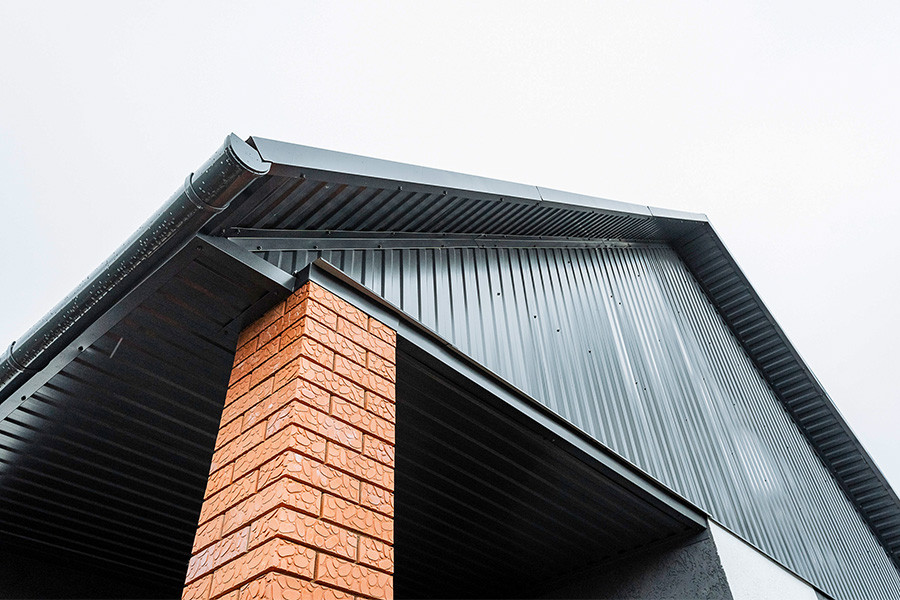
A snow break (sometimes called a snow stop or a snow guard) is a device installed on a roof to help snow and ice melt off slowly and in an organized way. They are often attached in a pattern, usually to the flat part of a metal roof panel, or clamped to the seam.

Snow breaks increase friction between the metal roof and the snow, which helps them retain snowpack. This way, the snow will evacuate in a predictable manner, not a sudden, sometimes deadly, roof avalanche.

Types of Snow Breaks

A roof snow break comes in two different categories: small profile (which is less than four square inches) and large profile (which is more than 4 square inches). Within these two categories, there are different styles of snow breaks you can choose from, including bar, fence, pad, and rail styles. Depending on how you want the snow breaks attached to your roof or the aesthetic you want, you may select either kind of profile or style for your home. If you need a hand choosing the best profile and style for your home/business’s metal roof, you can always reach out to one of our professionals for expert advice.

Top Benefits of Snow Breaks

Protection for Building Occupants and Pedestrians

Snow breaks can help protect your home/business’s occupants and the surrounding people who walk below your roof. Roof avalanches can be deadly, so it’s best to put safety first and install snow breaks. Protect the “danger zones” around your home/business, such as the entrance/exit doors or areas where pedestrians walk or vehicles load.

Protection for Surrounding Property

After steady accumulation, snow falling off the roof can be so heavy that it damages the surrounding property. Whether it’s a vehicle, patio furniture, or equipment, a roof avalanche can destroy whatever it lands on. Snow breaks can help you avoid this damage by diverting the snowfall from your property and breaking it up into manageable, lighter pieces of snowfall.

Reduce Roof Maintenance Costs

Did you know snow breaks can actually help you save money? Heavy snowfall can sometimes cause needless wear and tear on a metal roof or damage they were never designed to handle. This can lead to unplanned roof maintenance and unplanned bills. A properly installed snow guard system can help reduce your future maintenance costs.

Common Questions about Snow Breaks

Do snow breaks impact the overall look of a metal roof?

The impact of snow breaks on the overall look of a metal roof depends on the design and aesthetics of the snow breaks themselves, as well as the overall architectural style of the building. Snow breaks come in different shapes, sizes, and materials, and some are designed to be more discreet or visually appealing than others. When chosen and installed thoughtfully, snow breaks can blend seamlessly with the roof. In fact, some snow breaks are designed to complement the architecture, adding a decorative element. However, if the snow breaks are not carefully selected or if their installation is not well-executed, they could potentially affect the roof’s appearance. It’s advisable to consult with our professionals or consider aesthetically pleasing snow break options to ensure they enhance rather than detract from the overall look of the metal roof.

How much do snow breaks cost?

There isn’t a set price for snow breaks, as several factors impact the overall cost. Prices vary based on the style and material of the snow break you choose. For example, snow breaks often come in plastic, metal, and rubber varieties. They also come in a spectrum of styles, like bar, clamp, bracket, or rib to name a few. Additionally, some snow breaks are mechanically fixed onto the roof while others are fixed using adhesive strips. These factors all lend to the price tag on a set of snow breaks. Installation time may impact the overall cost, as well. With these factors in mind, snow breaks can cost between five dollars and several hundred dollars.

Should I get snow breaks for my property if I live in Montana?

Snow breaks are excellent for climates like Montana’s. In the Northwestern United States, we often face heavy snowfall from as early as September to as late as June. To avoid unexpected snow avalanches or damage to people and property, consider adding snow breaks to your property’s metal roof.

Can homeowners install snow breaks themselves, or should they be professionally installed?

We recommend having snow breaks professionally installed rather than a homeowner installing them on their own due to their expertise, experience, and commitment to safety regulations. They possess the necessary knowledge to properly assess roof designs, slopes, and local building codes, ensuring optimal placement of snow guards. Additionally, professionals understand material compatibility, recommending and installing guards suitable for metal roofs without compromising structural integrity. Compliance with building codes is a priority, and their work may preserve the roof warranty. Beyond efficiency and time savings, professionals prioritize safety at heights and have the appropriate tools for a successful installation. While homeowners may attempt installation, the complexities involved make professional assistance advisable for a safe, effective, and code-compliant outcome.

How to Install Snow Breaks on Metal Roof Panels?

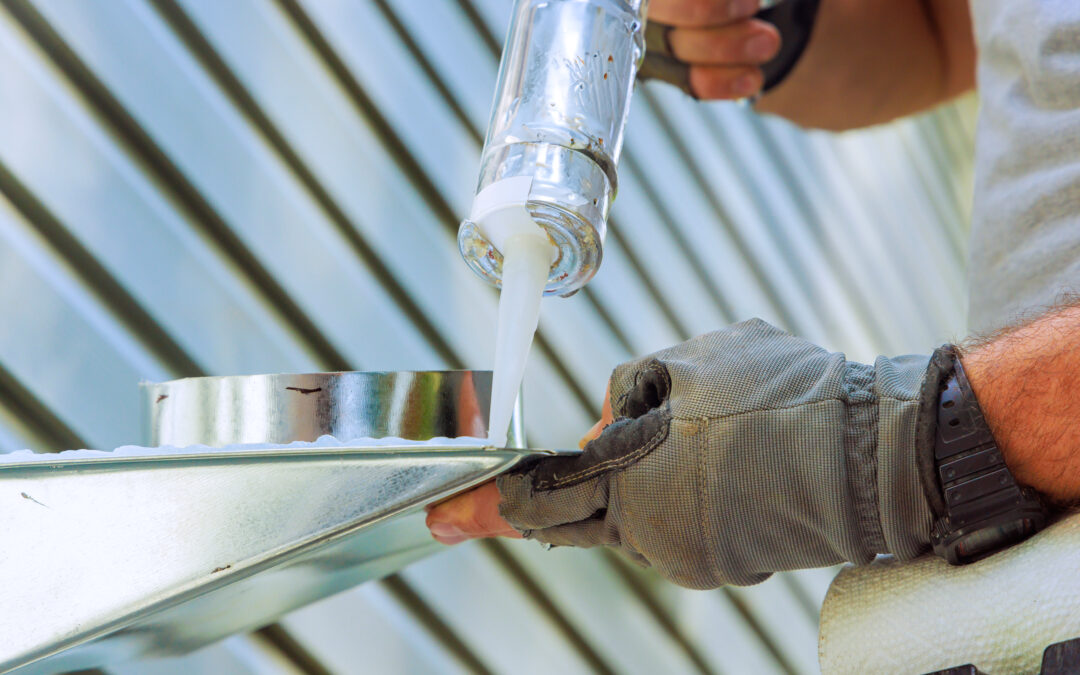
A snow break is attached to a metal roof’s surface through adhering with a liquid adhesive, tape, mechanically with screws, or with clamps. Depending on the style of snow break you get, you will want to refer to the instructions and installation guides provided by the manufacturer.

When installing snow breaks, remember to position them on the lower half of the roof. You will typically place them in a single line or multiple rows, depending on the type of snow break you get. One thing to keep in mind when installing snow breaks is ensuring the overall spacing of snow breaks on the roof is done properly. If the breaks are not spaced equally or in a pattern to equally distribute the snow, the ice and snow may shift suddenly and create a snow avalanche.

When Should Snow Breaks be Installed?

It’s a good idea to get snow breaks for metal roofs installed before the snowy season hits. Many people either manually install or schedule installations in the late spring or summer so they can be prepared for the fall and winter seasons.

Looking to Install Metal Roof Snow Stops on Your Home?

It can be tricky knowing how to precisely install snow breaks or decide which kind is the best for your home or business’s needs. For an expert opinion on metal roof snow guards, reach out to our professionals at Great Northern Metal Company today. We take the time to know your home and business’s needs and will lay out all of the options so you can make an informed and confident decision for your metal roof. For more information, give us a call at (406) 624-0435 or fill out a contact form. We’re happy to help!

Find Us on Facebook

Connect with us on Facebook to stay in the loop on our latest projects, weekly roundups, lead times, and much more! Our Facebook community is the go-to place for exclusive updates and behind-the-scenes glimpses into our metal roofing and siding projects. Whether you’re a homeowner looking for inspiration or a contractor seeking valuable insights, our Facebook page is your direct link to the latest happenings. Follow us today and be the first to know about our developments in the world of metal roofing and siding!
What Is Sealant for Metal Roofing?

Metal roof sealant helps seal seams, joints, gaps, and other areas where water or air could enter a roofing system. Most gun-grade sealants are applied from a tube and form a bead over or within a joint. Depending on the formulation, the material may remain permanently pliable or cure into a flexible seal.

For metal roofing, flexibility matters. Panels naturally move as temperatures rise and fall, so a sealant used at a moving joint needs to accommodate that movement without losing adhesion. 

The location of the seal matters too. A product used at an exposed seam may need different properties than one placed inside a concealed joint.

Sealant also should not be treated as a substitute for proper flashing, fastening, or panel installation. It works as part of the roofing system, not as a fix for a detail that was built incorrectly.

What Is Butyl Tape for Metal Roofing?

Butyl tape is a preformed sealing material typically installed between two roofing components. Instead of applying a bead from a tube, the installer lays a continuous strip of tape along the joint before the materials are fastened together. That makes it especially useful at concealed laps and other locations where two metal surfaces come together.

Butyl stays flexible, which helps it maintain a seal as a metal building experiences normal movement. There are also expanding sealant tapes that serve a similar purpose while filling irregular gaps and accommodating movement within the joint.

Sealant vs. Butyl Tape

The simplest way to think about the difference is application.

Gun-grade sealant works well when you need to apply a bead into a seam, joint, or gap. Butyl tape works well when you need a continuous seal between overlapping or adjoining components.

One is not automatically better than the other. The roof detail determines which type makes sense.

Metal Roof Sealant vs. Butyl Tape: Which Should You Use?

Different roof details put different demands on the sealing product.

Application

Product Type to Consider

Filling a seam or joint

Gun-grade sealant

Sealing a concealed metal lap

Butyl tape

Joint that moves with expansion and contraction

Flexible sealant or expanding sealant tape

Continuous seal between two components

Butyl tape

Irregular gap that needs to be filled

Gun-grade sealant or expanding tape

Detail exposed to wide temperature changes

Product rated for the expected temperature range

These are general guidelines. Always check the roofing-system requirements and the manufacturer’s installation instructions before choosing a product.

4 of the Top Metal Roof Sealants and Butyl Tapes

The right product depends on the joint, expected movement, temperature conditions, and whether the seal will be exposed or concealed.

Here are four options GNMC has tried, tested, and trusts so much that we chose to carry them at our shop.

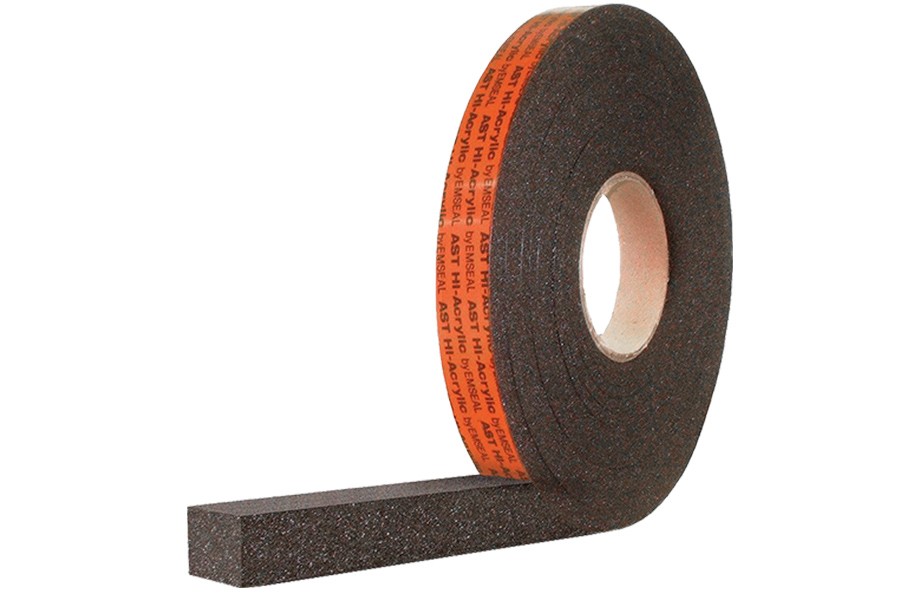
1. EMSEAL AST Hi-Acrylic Sealant Tape

Best for: Expansion joints, lap seams, and joints that need to accommodate movement.

EMSEAL AST Hi-Acrylic Sealant Tape is a self-adhering, open-cell polyurethane foam tape impregnated with acrylic-modified asphalt.

Unlike a standard flat tape, EMSEAL AST gradually expands after it is removed from its packaging. That allows it to conform to the joint and fill gaps along irregular surfaces. For metal roofing and metal buildings, that can be particularly useful around details affected by thermal expansion and contraction.

Emseal AST

Why It Works Well With Metal Roofing

One of EMSEAL AST’s biggest advantages is its ability to move with the building. The tape conforms to contours and maintains a seal as metal panels expand and contract. It is designed to help keep out dust, air, wind-driven snow, and moisture through joint details.

It also does not dry out and become hard or brittle over time. Because the material remains compressed within the joint, it is designed to stay in place rather than squeeze out the way some caulks or butyl products can.

Its resistance to UV exposure, aging, and mildew also makes it well suited to demanding exterior applications.

Common Applications

EMSEAL AST can be useful for:

  • Expansion and compression joints
  • Lap seams
  • Mechanically fastened joints
  • Irregular gaps
  • Metal building details where movement needs to be accommodated

It can also be used alongside several common building materials, including metal, plastic, wood, and concrete.

Interested in EMSEAL AST? Contact GNMC

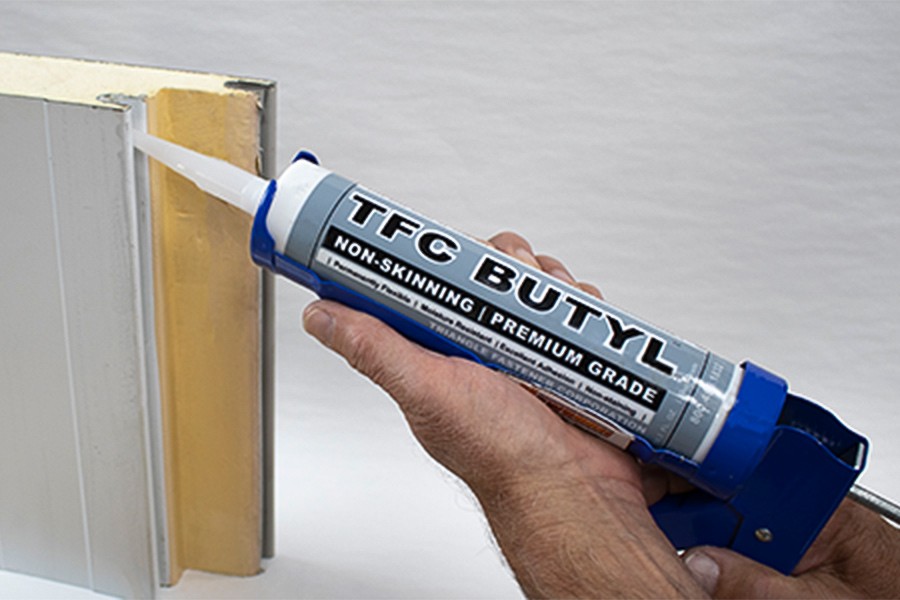
2. TFC BUTYL™ Sealant

Best for: Metal panel joints that need a permanently pliable, gun-grade sealant.

TFC BUTYL™ is a single-component butyl-based sealant designed specifically for strong adhesion to metal panels.

Its biggest distinction is that it remains permanently pliable. It does not skin over into a hard surface, which allows the material to continue moving with the joint after installation.

Why It Works Well With Metal Roofing

Metal panels do not stay perfectly still over the life of a building. Temperature changes create movement, and joints need a sealing product that can handle it.

TFC BUTYL remains flexible and moisture-resistant, which makes it useful for metal panel details where a rigid sealant would not be appropriate.

It also meets or exceeds AAMA 809.2 and is available in gray or white.

Installation Matters

Good adhesion starts with a clean surface. Before applying TFC BUTYL, the substrate should be dry and free from frost, oil, grease, incompatible coatings, or other contaminants that could interfere with adhesion.

The product is applied using a standard caulking gun and can be tooled after application if needed.

It is also worth paying attention to storage. TFC BUTYL should be kept in a controlled, dry environment below 75°F and used within 12 months of manufacture.

One other detail to know before choosing it: TFC BUTYL is not paintable.

Ask GNMC about TFC BUTYL™.

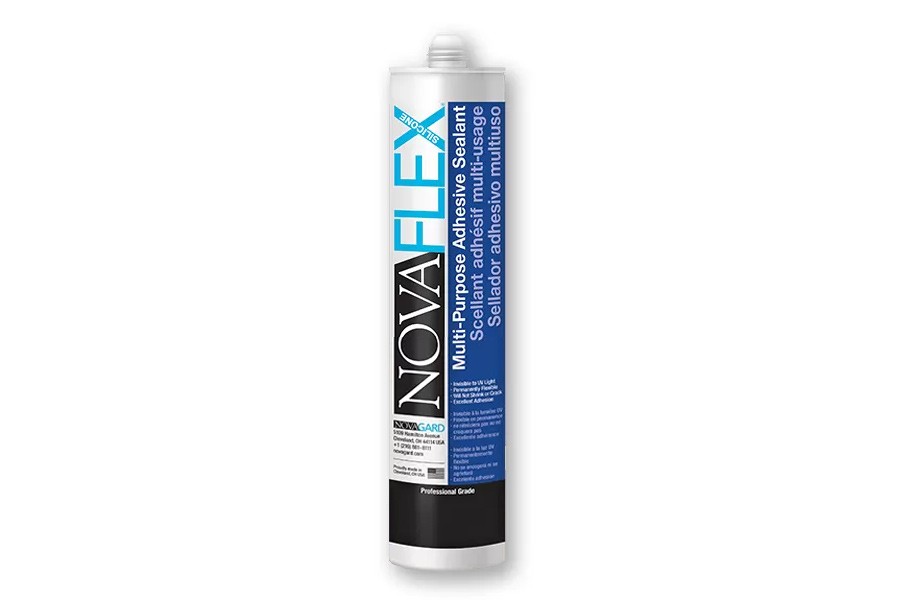
3. NovaFlex Metal Roof & Panel Adhesive Sealant

Best for: Seams, panel joints, and gaps that need a flexible cured sealant.

NovaFlex Metal Roof & Panel Adhesive Sealant is a single-component silicone sealant and adhesive commonly used as a seam sealant or joint filler in metal roofing and panel systems.

It is non-corrosive and non-sag, making it useful where contractors need a gun-grade product that will stay where it is placed.

Why It Works Well With Metal Roofing

Temperature range is one of NovaFlex’s standout characteristics. The product can be applied at temperatures from -20°F to 160°F and has a service temperature range of -40°F to 400°F.

That broad range is useful for metal roofing, where surfaces can experience substantial temperature swings.

NovaFlex also offers good adhesion to common building materials and can bridge gaps up to 3/8 inch. Its exterior weathering and aging performance make it suited to exposed building applications.

Where NovaFlex Makes Sense

Contractors may consider NovaFlex for:

  • Metal roof seams
  • Panel joints
  • Joint filling
  • Small gaps
  • Details exposed to wide temperature swings

It remains flexible at temperatures down to -10°F and is freeze-thaw stable. There are a couple of limitations worth knowing before installation. NovaFlex is not recommended for joints that will be submerged underwater, and it should not be used on surfaces that will later be painted.

Cure time also depends on temperature and humidity, so installers should account for site conditions and follow the product instructions.

Contact GNMC about product availability.

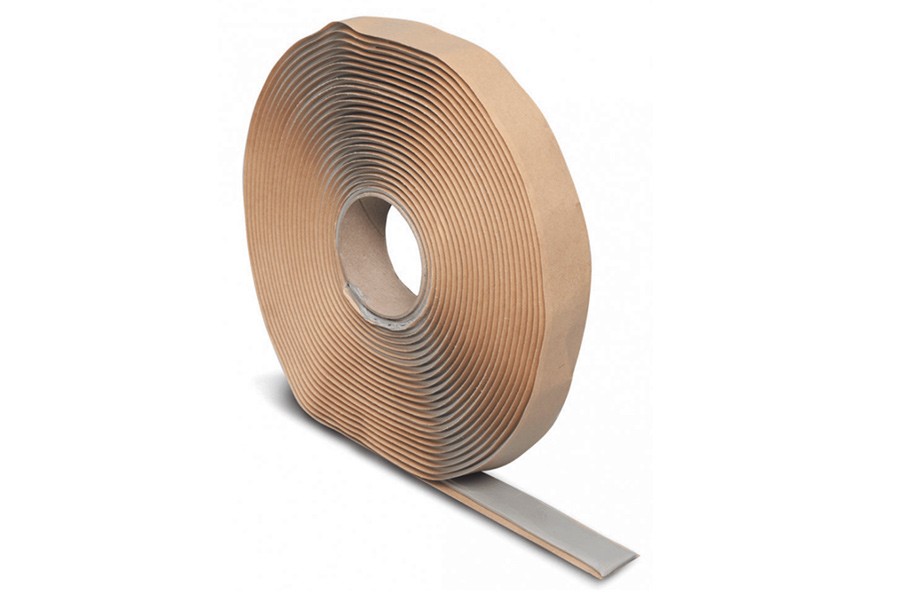
4. MB-10A Butyl Tape

Best for: Concealed metal building joints that need a continuous, flexible seal.

MB-10A Butyl Tape is an elastomeric butyl rubber sealant specifically designed around the requirements of metal buildings.

It comes extruded on silicone-coated release paper, which makes it straightforward to position during installation. It is also produced in different sizes and lengths to suit a range of applications.

Why It Works Well With Metal Roofing

MB-10A is designed to maintain its seal through normal building movement. Its combination of adhesive strength and cohesive strength helps the tape stay together and stay bonded as the assembly moves.

Temperature performance is another important benefit. MB-10A is designed to withstand extreme roof temperatures while maintaining compressibility in colder conditions. It also offers resistance to UV light and cold flow.

Those characteristics matter on metal buildings, where the material may experience a wide range of temperatures throughout the year.

Common Applications

MB-10A may be a good fit for:

  • Concealed panel laps
  • Metal building joints
  • Overlapping components
  • Details requiring a continuous butyl seal
  • Joints affected by normal building movement

Choosing the right tape size is important. The joint needs enough material to create the intended seal without using so much that the tape squeezes excessively out of the detail.

Inquire about MB-10A Butyl Tape

What to Consider Before Choosing a Metal Roof Sealant

Before grabbing a tube or roll, look at what the joint actually needs and ask yourself the following questions:

    1. How Much Will the Joint Move? Metal panels expand and contract as temperatures change. A sealing product at a moving joint needs enough flexibility to accommodate that movement.
    2. What Temperatures Will the Product See? Metal roof surfaces can get hot, and Montana projects can also see very cold conditions. Check the product’s application temperature separately from its service temperature. A sealant may perform across a wide temperature range once cured while still having specific limits for installation.
    3. Is the Joint Exposed or Concealed? A concealed panel lap has different needs than an exposed seam. Butyl tape is often a practical choice where two materials are compressed together. A gun-grade sealant may make more sense when a seam or gap needs to be filled from the outside.
    4. What Materials Is the Product Touching? Always check compatibility with the metal substrate and any adjoining materials. A product that adheres well to bare metal may have different requirements around painted finishes, other coatings, plastics, or masonry.
    5. Will the Surface Be Painted? Some sealants are not paintable. Both TFC BUTYL and NovaFlex have limitations that should be understood before choosing them for a detail that will receive a finish later.
    6. What Does Installation Require? Good products still need good installation. Surface preparation, storage, bead size, compression, and cure time can all affect the finished seal. Read the product instructions before installation instead of assuming every sealant or tape works the same way.

Frequently Asked Questions About Metal Roof Sealants and Butyl Tape

What is the best sealant for a metal roof?

The best metal roof sealant depends on where it will be used. Gun-grade sealants can work well for seams and joints, while butyl tape is commonly used between overlapping components or in concealed joints. Movement, temperature, substrate compatibility, and exposure should all factor into the decision.

Is butyl tape good for metal roofing?

Yes. Butyl tape is well suited to many metal roofing details because it creates a continuous seal between components while remaining flexible enough to accommodate normal building movement.

Is sealant or butyl tape better for a metal roof?

Neither option is better for every application. Butyl tape is often used inside laps and concealed joints, while gun-grade sealants are useful for filling seams, joints, and gaps. Some details may use both as part of the roofing system.

Does metal roof sealant need to stay flexible?

For joints that experience movement, flexibility is important. Metal panels expand and contract as temperatures change, so the sealing product needs to accommodate the expected movement without losing adhesion.

Can you use any silicone sealant on a metal roof?

No. Use a sealant that is compatible with the roofing material, coating, joint design, and expected temperatures. The product instructions and roofing-system requirements should guide the choice.

Need Metal Roof Sealant or Butyl Tape for Your Next Project?

Great Northern Metal Company carries EMSEAL AST, TFC BUTYL™, NovaFlex, and MB-10A Butyl Tape for a range of metal roofing and metal building applications.

Tell our team what detail you are working on and what you need the product to do. We can help you review the options GNMC carries and get the right product information before you place an order.

Inquire About Metal Roof Sealants

Additional Resources

Guides and How-tos
4 Tried and Tested Metal Roof Sealants and Butyl Tapes

4 Tried and Tested Metal Roof Sealants and Butyl Tapes

A metal roof is only as watertight as its details. Seams, laps, joints, penetrations, and other connection points all create places where moisture can work its way into the roofing system if they are not sealed correctly. Metal also expands and contracts as...

We Have Got You Covered

Count on Great Northern Metal Company for Expert Metal Roofing Services

Have Questions? Contact Us