Soffit Metal Panels: Harness Their Benefits & Style for Your Building
Soffit Metal Panels
When it comes to metal roofing and siding projects, most of your time and energy goes into making sure the surface and structural aspects of the roof are ship-shape. You make sure every angle is measured perfectly, materials are ordered correctly, and panels are installed properly. But how often do you think about the areas underneath the roof, the nooks and crannies that connect your roof to the rest of the building? You’d be surprised to hear how often contractors and architects forget to account for metal soffit panels on a project.
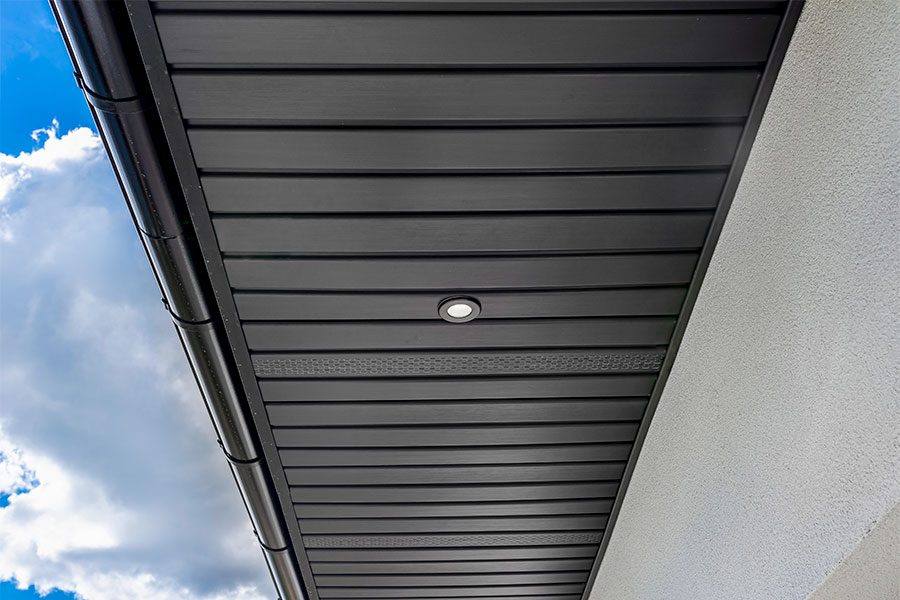
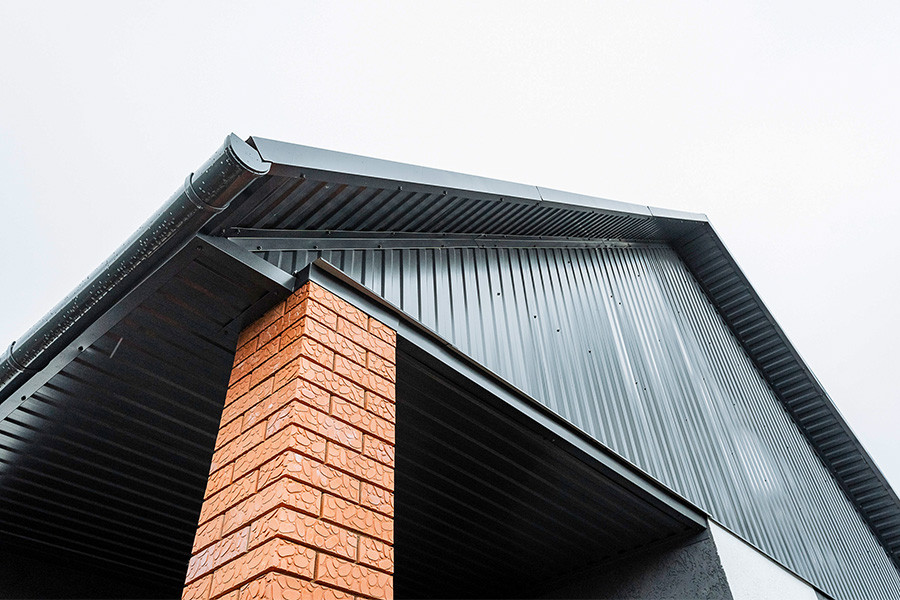
Soffit panels are architectural elements designed to cover the underside of roofs, overhangs, porches, and ceilings. These metal panels are often crafted from thick aluminum, steel, or copper and add structural integrity and aesthetic appeal to any structure. From weather resistance to durability to a sleek, finished look, never overlook the value metal soffit panels add to a building. Below, we will cover the advantages of soffit metal panels, applications, pros and cons, panel installation difficulty, and more to set you up for success on your next build.
Metal Soffit Panel Overview
The soffit is essential for building safety and overall appearance. Without soffits, your project would have open eaves with exposed rafters. This can let pests and insects creep into the interior of the structure. A lack of soffit can also expose a building to weather damage from rain or snow, as too much moisture can impact a building’s structural integrity.
With soffit metal panels, you not only get the protection of regular soffit but also additional durability from the panel’s naturally resistant design. Additionally, thanks to the soffit metal’s concealed fasteners, you get a building with a sleek, finished look.
The soffit can come in vented and non-vented profiles, each with its own distinct advantages. Vented metal soffit panels come with tiny openings that allow air to flow through, promoting better ventilation in the building’s eaves and attics. These panels help regulate temperature and prevent moisture buildup. Non-vented metal soffit panels lack these openings, providing a solid barrier that contributes to the structure’s aesthetics while still offering protection.
Some contractors wonder why they should go through the hassle of ordering custom metal soffit panels rather than getting a roll of thin aluminum soffit from a lumber yard. However, custom metal soffit panels from a shop like Great Northern Metal Company offer distinct advantages over lumber yard aluminum soffit. The panels are designed for easy installation, saving time and effort. They look better, have more aesthetic options, and are definitely more durable. Our metal soffit panels come in a thicker gauge than generic aluminum soffits, so it will hold up against harsh elements and offer better energy efficiency. Check out our 1″ Flush Wall/Soffit and our 0.5″ V Soffit to see your options for customization.
Advantages of Metal Soffit Panels
1. Durability and Longevity
Because they’re made from materials like steel and thick aluminum, soffit metal panels are really tough. They are inherently resistant to weather extremes, corrosion, and pests. Metal soffit also maintains its structural integrity over time, so you don’t have to worry about unexpected damage.
2. Low Maintenance
Taking care of metal soffit panels is easy. They don’t need a lot of attention because they stay shiny and strong without much work. Unlike some other materials, you won’t have to paint or fix them often, which means you can enjoy their sleek look without a ton of effort.
3. Enhanced Energy Efficiency
Metal soffit panels can naturally help boost a building’s energy efficiency. By providing effective insulation, they create a thermal barrier and minimize heat transfer, which helps keep indoor spaces comfortable. This feature can help you save on monthly energy bills and put less strain on your building’s HVAC system.
4. Design Flexibility and Aesthetic Appeal
Metal soffit panels are like design chameleons, coming in many colors and styles to match your building’s personality. Whether sleek and modern or classic and elegant, they can be customized to fit the look you want. So not only do they make your place look great, but they also add a touch of your unique style.
Installation Difficulty
Installing metal soffit panels is a breeze! With their simple setup process, professionals can quickly attach them to the underside of structures. Thanks to their lightweight nature and designed attachments, getting them in place is straightforward, making the installation process efficient and hassle-free.
Applications for Metal Soffit
While the most common application for metal soffit panels is covering the exposed underbelly of roofs, it can also be used to secure porches or finish the look of a deck. It can even be installed as a wall accent panel (as long as it is not perforated).
Pros of Metal Soffit Panels
- You can match the soffit panel color to the color of the roof.
- Our metal soffit is more durable than thinner-grade aluminum soffit.
- Aside from roofing, metal soffit is incredibly versatile in applications.
- It doesn’t require a lot of maintenance.
- Metal soffit comes in a range of colors, so you have a lot of aesthetic options.
- Metal soffit is available in a range of grades and thicknesses.
- Easy to install.
Cons of Metal Soffit Panels
- If metal soffit is used as a wall panel, it’s offset from your wall, which must be accounted for in measuring, installation, and overall aesthetic.
- Metal soffit needs to be cut specifically for your project’s needs. So always account for soffits with your project and include those measurements in your metal roofing and siding order.
Consult with Our Metal Experts
Thinking about using metal soffit panels for your next home or business project? Get in touch with our team today and chat with our experts at Great Northern Metal Company! Our Bozeman-based team has decades of combined experience with a variety of metal roofing systems and panel profiles. We can help you find the right options and materials for your project. If you want to talk to a metal roofing and siding expert or get a price quote, send us a message or call us at (406) 624-0435.
What Is Sealant for Metal Roofing?
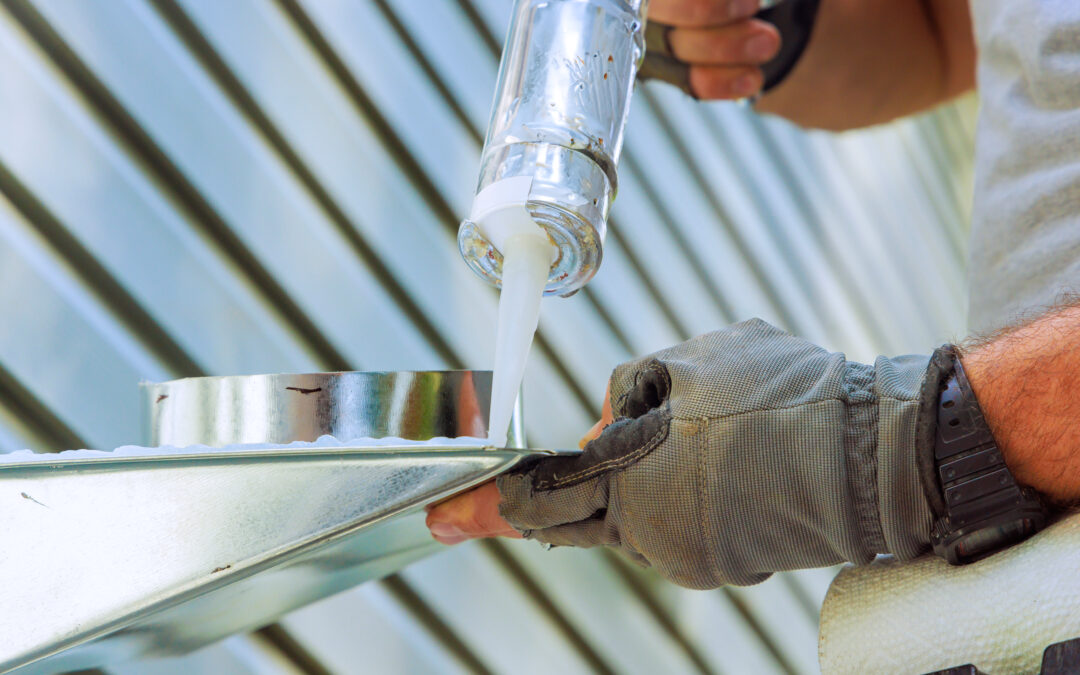
Metal roof sealant helps seal seams, joints, gaps, and other areas where water or air could enter a roofing system. Most gun-grade sealants are applied from a tube and form a bead over or within a joint. Depending on the formulation, the material may remain permanently pliable or cure into a flexible seal.
For metal roofing, flexibility matters. Panels naturally move as temperatures rise and fall, so a sealant used at a moving joint needs to accommodate that movement without losing adhesion.
The location of the seal matters too. A product used at an exposed seam may need different properties than one placed inside a concealed joint.
Sealant also should not be treated as a substitute for proper flashing, fastening, or panel installation. It works as part of the roofing system, not as a fix for a detail that was built incorrectly.
What Is Butyl Tape for Metal Roofing?
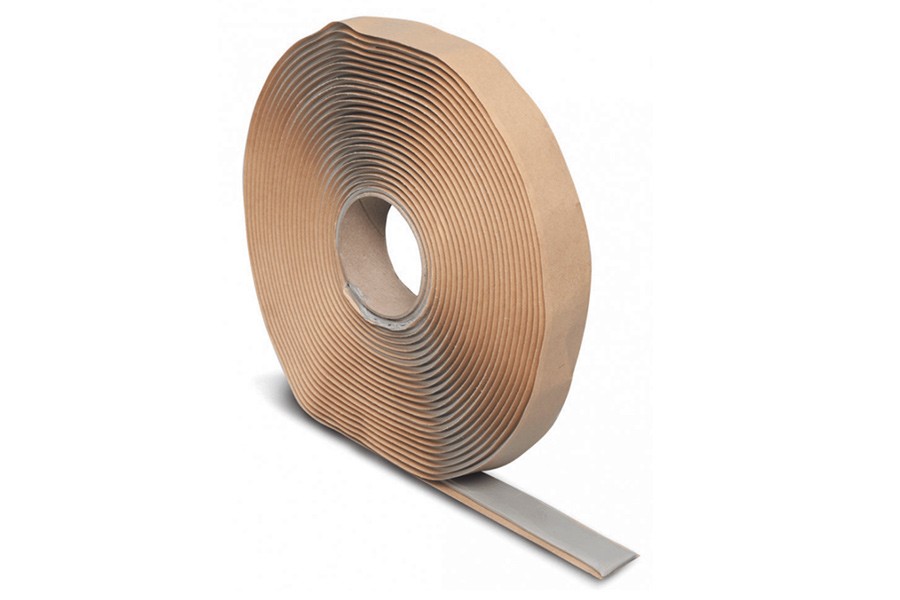
Butyl tape is a preformed sealing material typically installed between two roofing components. Instead of applying a bead from a tube, the installer lays a continuous strip of tape along the joint before the materials are fastened together. That makes it especially useful at concealed laps and other locations where two metal surfaces come together.
Butyl stays flexible, which helps it maintain a seal as a metal building experiences normal movement. There are also expanding sealant tapes that serve a similar purpose while filling irregular gaps and accommodating movement within the joint.
Sealant vs. Butyl Tape
The simplest way to think about the difference is application.
Gun-grade sealant works well when you need to apply a bead into a seam, joint, or gap. Butyl tape works well when you need a continuous seal between overlapping or adjoining components.
One is not automatically better than the other. The roof detail determines which type makes sense.
Metal Roof Sealant vs. Butyl Tape: Which Should You Use?
Different roof details put different demands on the sealing product.
These are general guidelines. Always check the roofing-system requirements and the manufacturer’s installation instructions before choosing a product.
4 of the Top Metal Roof Sealants and Butyl Tapes
The right product depends on the joint, expected movement, temperature conditions, and whether the seal will be exposed or concealed.
Here are four options GNMC has tried, tested, and trusts so much that we chose to carry them at our shop.
Best for: Expansion joints, lap seams, and joints that need to accommodate movement.
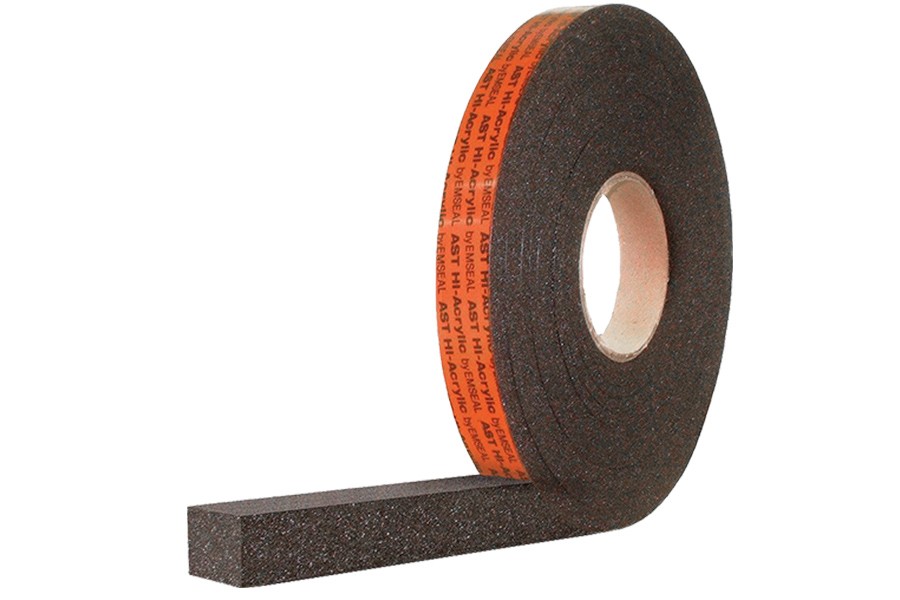
EMSEAL AST Hi-Acrylic Sealant Tape is a self-adhering, open-cell polyurethane foam tape impregnated with acrylic-modified asphalt.
Unlike a standard flat tape, EMSEAL AST gradually expands after it is removed from its packaging. That allows it to conform to the joint and fill gaps along irregular surfaces. For metal roofing and metal buildings, that can be particularly useful around details affected by thermal expansion and contraction.
Why It Works Well With Metal Roofing
One of EMSEAL AST’s biggest advantages is its ability to move with the building. The tape conforms to contours and maintains a seal as metal panels expand and contract. It is designed to help keep out dust, air, wind-driven snow, and moisture through joint details.
It also does not dry out and become hard or brittle over time. Because the material remains compressed within the joint, it is designed to stay in place rather than squeeze out the way some caulks or butyl products can.
Its resistance to UV exposure, aging, and mildew also makes it well suited to demanding exterior applications.
Common Applications
EMSEAL AST can be useful for:
- Expansion and compression joints
- Lap seams
- Mechanically fastened joints
- Irregular gaps
- Metal building details where movement needs to be accommodated
It can also be used alongside several common building materials, including metal, plastic, wood, and concrete.
Interested in EMSEAL AST? Contact GNMC
Best for: Metal panel joints that need a permanently pliable, gun-grade sealant.
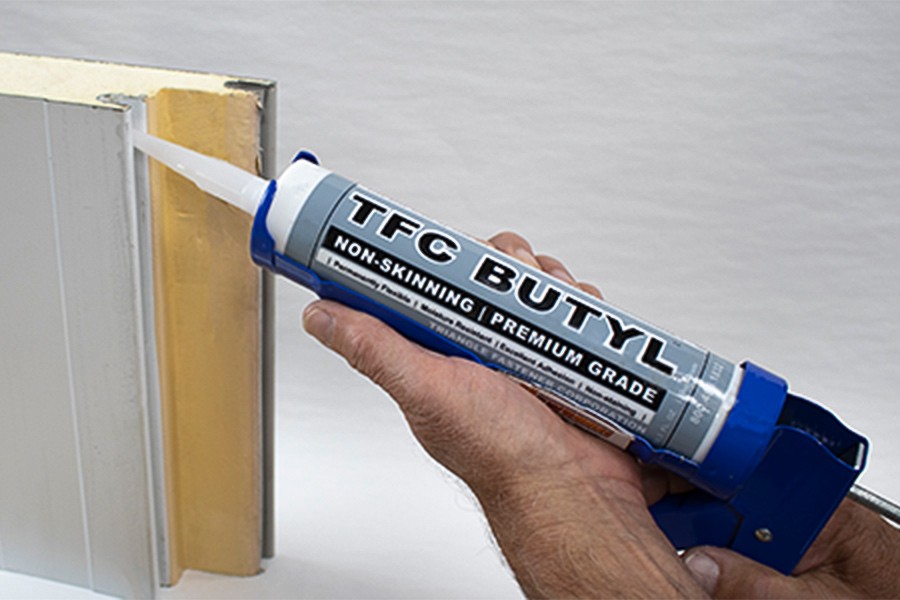
TFC BUTYL™ is a single-component butyl-based sealant designed specifically for strong adhesion to metal panels.
Its biggest distinction is that it remains permanently pliable. It does not skin over into a hard surface, which allows the material to continue moving with the joint after installation.
Why It Works Well With Metal Roofing
Metal panels do not stay perfectly still over the life of a building. Temperature changes create movement, and joints need a sealing product that can handle it.
TFC BUTYL remains flexible and moisture-resistant, which makes it useful for metal panel details where a rigid sealant would not be appropriate.
It also meets or exceeds AAMA 809.2 and is available in gray or white.
Installation Matters
Good adhesion starts with a clean surface. Before applying TFC BUTYL, the substrate should be dry and free from frost, oil, grease, incompatible coatings, or other contaminants that could interfere with adhesion.
The product is applied using a standard caulking gun and can be tooled after application if needed.
It is also worth paying attention to storage. TFC BUTYL should be kept in a controlled, dry environment below 75°F and used within 12 months of manufacture.
One other detail to know before choosing it: TFC BUTYL is not paintable.
Ask GNMC about TFC BUTYL™.
Best for: Seams, panel joints, and gaps that need a flexible cured sealant.
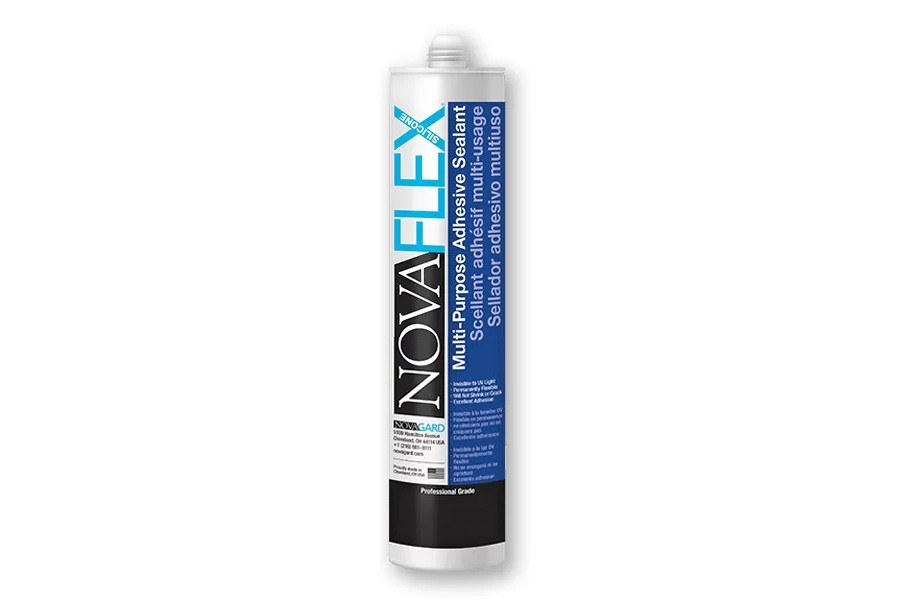
NovaFlex Metal Roof & Panel Adhesive Sealant is a single-component silicone sealant and adhesive commonly used as a seam sealant or joint filler in metal roofing and panel systems.
It is non-corrosive and non-sag, making it useful where contractors need a gun-grade product that will stay where it is placed.
Why It Works Well With Metal Roofing
Temperature range is one of NovaFlex’s standout characteristics. The product can be applied at temperatures from -20°F to 160°F and has a service temperature range of -40°F to 400°F.
That broad range is useful for metal roofing, where surfaces can experience substantial temperature swings.
NovaFlex also offers good adhesion to common building materials and can bridge gaps up to 3/8 inch. Its exterior weathering and aging performance make it suited to exposed building applications.
Where NovaFlex Makes Sense
Contractors may consider NovaFlex for:
- Metal roof seams
- Panel joints
- Joint filling
- Small gaps
- Details exposed to wide temperature swings
It remains flexible at temperatures down to -10°F and is freeze-thaw stable. There are a couple of limitations worth knowing before installation. NovaFlex is not recommended for joints that will be submerged underwater, and it should not be used on surfaces that will later be painted.
Cure time also depends on temperature and humidity, so installers should account for site conditions and follow the product instructions.
Contact GNMC about product availability.
Best for: Concealed metal building joints that need a continuous, flexible seal.
MB-10A Butyl Tape is an elastomeric butyl rubber sealant specifically designed around the requirements of metal buildings.
It comes extruded on silicone-coated release paper, which makes it straightforward to position during installation. It is also produced in different sizes and lengths to suit a range of applications.
Why It Works Well With Metal Roofing
MB-10A is designed to maintain its seal through normal building movement. Its combination of adhesive strength and cohesive strength helps the tape stay together and stay bonded as the assembly moves.
Temperature performance is another important benefit. MB-10A is designed to withstand extreme roof temperatures while maintaining compressibility in colder conditions. It also offers resistance to UV light and cold flow.
Those characteristics matter on metal buildings, where the material may experience a wide range of temperatures throughout the year.
Common Applications
MB-10A may be a good fit for:
- Concealed panel laps
- Metal building joints
- Overlapping components
- Details requiring a continuous butyl seal
- Joints affected by normal building movement
Choosing the right tape size is important. The joint needs enough material to create the intended seal without using so much that the tape squeezes excessively out of the detail.
Inquire about MB-10A Butyl Tape
What to Consider Before Choosing a Metal Roof Sealant
Before grabbing a tube or roll, look at what the joint actually needs and ask yourself the following questions:
- How Much Will the Joint Move? Metal panels expand and contract as temperatures change. A sealing product at a moving joint needs enough flexibility to accommodate that movement.
- What Temperatures Will the Product See? Metal roof surfaces can get hot, and Montana projects can also see very cold conditions. Check the product’s application temperature separately from its service temperature. A sealant may perform across a wide temperature range once cured while still having specific limits for installation.
- Is the Joint Exposed or Concealed? A concealed panel lap has different needs than an exposed seam. Butyl tape is often a practical choice where two materials are compressed together. A gun-grade sealant may make more sense when a seam or gap needs to be filled from the outside.
- What Materials Is the Product Touching? Always check compatibility with the metal substrate and any adjoining materials. A product that adheres well to bare metal may have different requirements around painted finishes, other coatings, plastics, or masonry.
- Will the Surface Be Painted? Some sealants are not paintable. Both TFC BUTYL and NovaFlex have limitations that should be understood before choosing them for a detail that will receive a finish later.
- What Does Installation Require? Good products still need good installation. Surface preparation, storage, bead size, compression, and cure time can all affect the finished seal. Read the product instructions before installation instead of assuming every sealant or tape works the same way.
Frequently Asked Questions About Metal Roof Sealants and Butyl Tape
What is the best sealant for a metal roof?
The best metal roof sealant depends on where it will be used. Gun-grade sealants can work well for seams and joints, while butyl tape is commonly used between overlapping components or in concealed joints. Movement, temperature, substrate compatibility, and exposure should all factor into the decision.
Is butyl tape good for metal roofing?
Yes. Butyl tape is well suited to many metal roofing details because it creates a continuous seal between components while remaining flexible enough to accommodate normal building movement.
Is sealant or butyl tape better for a metal roof?
Neither option is better for every application. Butyl tape is often used inside laps and concealed joints, while gun-grade sealants are useful for filling seams, joints, and gaps. Some details may use both as part of the roofing system.
Does metal roof sealant need to stay flexible?
For joints that experience movement, flexibility is important. Metal panels expand and contract as temperatures change, so the sealing product needs to accommodate the expected movement without losing adhesion.
Can you use any silicone sealant on a metal roof?
No. Use a sealant that is compatible with the roofing material, coating, joint design, and expected temperatures. The product instructions and roofing-system requirements should guide the choice.
Need Metal Roof Sealant or Butyl Tape for Your Next Project?
Great Northern Metal Company carries EMSEAL AST, TFC BUTYL™, NovaFlex, and MB-10A Butyl Tape for a range of metal roofing and metal building applications.
Tell our team what detail you are working on and what you need the product to do. We can help you review the options GNMC carries and get the right product information before you place an order.
Inquire About Metal Roof Sealants