When people talk about metal roofing, most focus on the panel profile, finish, color, or gauge. Underlayment usually gets less attention, but it still plays a crucial role in how the roof system performs.
If the wrong underlayment is used under metal, or if the right product is installed the wrong way, it can create problems that show up during installation or long after the job is complete. These problems can range from visible defects and callbacks to moisture issues and warranty complications that could have been avoided.
As your local metal roofing experts, we want to see your project succeed from underlayment to metal roof finish. And with decades in the metal roofing industry, we’ve noticed five common mistakes contractors, GCs, architects, and subcontractors make with underlayment that cause issues with the metal roofing system in the long run.
So you can approach your next metal roofing project with confidence from the start, we’ve outlined the top five mistakes made when choosing metal roof underlayment, how you can avoid them, and how you can better stay prepared no matter what type of underlayment a project throws your way.
Let’s Start with the Basics: What Is Metal Roof Underlayment?
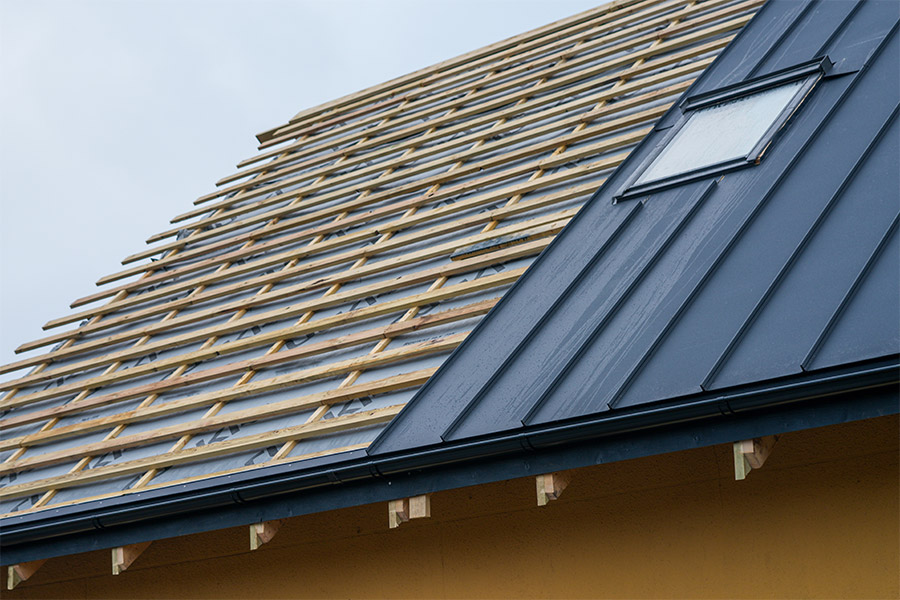
Metal roof underlayment is the layer installed between the roof deck and the metal panels. It acts as a secondary moisture barrier and helps protect the roof deck from water intrusion.
Along with adding a necessary level of protection, underlayment needs to withstand the natural behavior of metal roofing systems. This is what makes them a little different than underlayment used for typical asphalt shingle roofs. Metal roof underlayment needs to stand up to the high levels of heat that metal roofs generate, the natural expansion and contraction of panels, and long-term exposure beneath the panel system.
Remember: underlayment is not just a box to check. It is part of the roof assembly, and the wrong choice can affect how that assembly performs.
The Two Main Types of Underlayment Used Under Metal Roofing
For most metal roofing projects, synthetic underlayment and peel-and-stick underlayment are the most common types of underlayment. Here’s how each type stacks up against each other:
Synthetic underlayment
Synthetic underlayment is a tightly-woven material made of synthetic fibers. Because of the durable nature of the synthetic fibers, this type of underlayment has a high tear strength, making it hard for moisture or foot traffic to penetrate. Synthetic underlayment is typically lightweight and available in larger rolls, meaning more roof coverage per roll. Often, manufacturers print markings for fasteners on the exterior of the underlayment, making it easier for contractors to install correct, consistent fasteners. Some types of synthetic underlayment are rated for long UV exposure during installation and for temperatures up to 260°F.
Peel-and-stick underlayment
Peel-and-stick is a self-adhering underlayment with sticky backing that adheres to the roof deck. This backing creates a waterproof seal between the roof deck and metal panels, creating a durable defense against moisture, ice dams, and leaks. Peel-and-stick underlayment can be used across the entire roofing system or just fastened around areas where leaks are more of a concern, like eaves, valleys, and dormers. Peel-and-stick has an incredibly flexible application, but it can be difficult to install if you don’t follow installation guides; once it sticks, it stays! Also, it usually comes in smaller rolls, meaning it can cost more than the standard synthetic underlayment. However, with the right application, it can often outperform synthetic underlayment, providing better long-term value down the road.
The Top Mistakes We See When Choosing Metal Roof Underlayment
After years of supplying metal panels to contractors, GC’s, and architects across Montana, we’ve seen a thing or two with metal roof underlayment. More specifically, we’ve seen what not to do if you want your metal roofing system to stand the test of time. Here are the top mistakes we’ve seen and how you can avoid them with your metal roofing project:
Mistake #1: Treating All Underlayment the Same
This is one of the biggest (and easiest) mistakes people make.
A lot of underlayment products can look similar at first glance, but they do not all perform the same way under metal roofing. With metal roofing, heat considerations, roof design, and slope all factors into what underlayment you choose for the roofing system. And if the underlayment is not a good fit for the system, that can show up in performance issues later.
That is part of why underlayment selection under metal should not be treated like a throw-in item. A standard synthetic product may work fine in some applications, but there are cases where a self-adhered product makes more sense, especially on lower-slope roofs or areas that need stronger protection. Some products also handle heat and exposure better than others, which matters during installation and over the life of the roof.
The point is simple: underlayment is not one-size-fits-all. If you choose it like it is, you are more likely to create problems you did not need to have in the first place.
Mistake #2: Ignoring Roof Pitch, Code Requirements, and Warranty Requirements
Underlayment selection is not always just a preference call. In some projects, the roof design itself narrows the options before the first panel is ever ordered.
For low-slope standing seam applications, peel-and-stick is the better choice. And when a project is pursuing a weathertight warranty, the underlayment requirement becomes even more specific. Some warranted assemblies require at a minimum a synthetic-and-peel-and-stick combination, while many require full peel-and-stick underlayment for approval.
That changes the conversation. At that point, underlayment is not just about cost or habit. It is part of whether the system qualifies for the protection, approval, and performance expectations tied to the roof assembly.
This is one area where it helps to ask questions early. Before the panel order is finalized, it is worth confirming the roof slope, the code requirements, and whether the project is pursuing a weather-tight warranty that calls for specific underlayment.
Mistake #3: Overlooking Storage, Shelf Life, and Jobsite Handling
Choosing the right underlayment is only part of the job. How it is stored and handled matters too. A product can be technically correct for the application and still cause problems if it was stored poorly, used outside its recommended window, or handled carelessly on site.
Underlayment has shelf life limitations. It can also be affected by where and how it is stored before installation. If the material sits too long, gets damaged, or is exposed to the wrong conditions, performance can suffer before it ever goes on the roof.
This is especially important with peel-and-stick products. Peel-and-stick underlayment can be more sensitive to handling and storage conditions than contractors expect. If they are not stored properly or if the material becomes difficult to work with, installation can get frustrating fast.
Mistake #4: Installing It Incorrectly
Even if you choose the right underlayment, bad installation can still cause trouble.
With metal roofing, the underlayment below the panels needs to lay flat and stay flat. If it wrinkles, bunches up, or gets damaged during install, that can affect the finished roof. In some cases, imperfections below the panel can contribute to visible issues above it, which is the last thing anyone wants after the roof is complete.
This is also where field handling matters. Some self-adhered products can crease, stick to themselves, or become difficult to work with if they are not handled carefully. Synthetic products can create their own issues too if the fastening method or installation approach is wrong for the roof system.
That is why this part cannot be rushed. Underlayment may sit below the metal, but it still affects how the roof looks and performs. If it goes down poorly, that mistake does not always stay hidden.
Mistake #5: Choosing Based on Upfront Cost Alone
It is easy to look at underlayment as a place to save money. It is not the most visible part of the roof, and on paper, the cheaper option can seem good enough.
That is where people get into trouble.
Lower cost does not always mean better value. Some underlayments cost more because they offer better heat resistance, better durability during installation, or better protection in the areas where roofs are more likely to leak. In some cases, they are also part of what is needed to meet project requirements or support weathertight warranty approval. That makes them a system decision, not just a price decision.
It is also worth looking at the cost the right way. Some higher-performing products cost more per roll, but they also cover more area and can reduce risk later. If the cheaper option leads to a callback, leak repair, or missed warranty requirement, it was not really the cheaper option after all.
At the end of the day, if you are only comparing price tags, you are probably missing the bigger roofing decision.
When in Doubt, Consult before You Install
If the underlayment choice helps the roof perform better and keeps the project from running into avoidable issues, then it is worth getting right. If you have any questions about what underlayment to choose for a metal roofing project, make time for a quick consultation with your metal roofing or underlayment supplier to see which specs best align with your metal roof’s needs. A good supplier will direct you toward the correct installation guides, recommend products that align with your project’s specs, and weigh the pros and cons of each product for you.
Have Questions About Underlayment for Your Next Metal Roofing Project?
Talk with Great Northern Metal Company about your panel system, roof slope, and project requirements before installation starts. We can help you think through the details so the underlayment supports the roof instead of creating problems later.