Metal Shiplap vs Board and Batten: How Do They Compare?

board and batten and shiplap metal panels home

Functional. Stylish. Durable.

Metal siding panels can easily be described with these words and more. Using metal panels as siding has grown in popularity over the years, offering sleek, long-lasting value to commercial and residential properties.

Notably, two styles have stood out amongst the crowd are shiplap metal panels, also known as flush wall panels, and board and batten metal panels. Both offer a timeless, polished aesthetic for properties. Both have the trademark strength and durability that metal panels are famous for. Both are incredibly versatile for indoor and outdoor applications.

So, how do you choose between the two?

Making an informed decision is crucial for every metal siding project. Let’s dive into the details of metal shiplap vs board and batten and see how these metal panel profiles stack up against each other.

metal shiplap panel and board and batten panel

Understanding the Basics: Shiplap Metal Panels

Traditionally, shiplap refers to a type of wood paneling where the panels overlap with a recessed joint that helps to seal out moisture. In metal shiplap panels, this design is mimicked by creating panels that overlap in a similar fashion, providing a sleek, smooth appearance with enhanced water resistance.

Shiplap panels are concealed fasteners that, at Great Northern Metal Company, we call flush wall panels. These panels are typically used in residential projects for their elegant appearance, but they are increasingly popular in commercial buildings due to their modern look and excellent durability.

Shiplap metal panels vertical

Aesthetic

Shiplap offers a clean, contemporary look with its seamless joints and minimalistic profile. It’s particularly favored in modern architectural designs where a smooth exterior facade is desired, blending beautifully with glass, stone, and wood.

Durability and Maintenance

Like metal roofing panels, metal shiplap siding panels are highly durable and resistant to harsh weather conditions, including heavy rains, winds, and snow. The interlocking design helps prevent moisture ingress, making it less prone to rust and decay. Bonus: maintenance is straightforward, typically requiring only regular cleaning to maintain its appearance.

Installation

Despite their interlocking design, the installation of shiplap metal panels is quite complex and ranks as a five on our installation difficulty scale, with one being the easiest and five being the most difficult. This rating reflects the precision and careful handling required to ensure that the panels align seamlessly and snap into place correctly. The intricate nature of this installation often extends the time spent on site and may increase labor costs.

Cost Effectiveness

While the initial cost of shiplap metal panels can be higher than some other siding options, their longevity and low maintenance requirements offer cost savings over time. They are an excellent investment for those looking for a balance of style and durability.

Board and Batten Metal Panels: A Closer Look

Traditional board and batten panels feature alternating wide boards and narrow wooden strips, known as battens, creating a raised, framed look. The metal version of board and batten siding maintains this aesthetic with metal panels designed to mimic this pattern, providing a more dimensional and textured façade. This concealed fastener panel is ideal for adding dimension and visual interest to the exterior of a building and is often used in more traditional or rustic designs.

Board and batten panels on home

Aesthetic

Board and batten brings a classic, time-honored aesthetic with its pronounced seams that cast shadows and create depth. It’s well-suited for historic renovations or new buildings seeking a traditional feel with the benefits of modern materials.

Durability and Maintenance

Like shiplap, and really any metal panel, board and batten metal panels are built to last. They withstand harsh climates and resist common issues like pest infestations and moisture damage. However, regular inspections are recommended to ensure the battens remain sealed and free from debris.

Installation

Board and batten panels are slightly easier than shiplap to install. On our installation difficulty scale, they rank at about a three in terms of difficulty. Because of the installation complexity, this can lead to higher labor costs and a longer installation timeframe, but less so than shiplap.

Cost Effectiveness

Because of its lower installation difficulty, board and batten can be less expensive to install than shiplap. Bonus, its durability and the distinctive look it provides can enhance property value, making it a worthwhile long-term investment.

Comparing the Two: Shiplap vs Board and Batten

Choosing the right metal siding—whether it’s shiplap or board and batten—requires careful consideration of each factor. These considerations ensure that the selected style not only meets aesthetic desires but also performs well under specific environmental and architectural conditions. Here’s a detailed comparison of shiplap vs board and batten to help guide your decision:

Aesthetic Impact

Shiplap provides a sleek, modern look with smooth, continuous lines. This style is ideal for contemporary designs or for creating a subtle backdrop that doesn’t distract from other architectural features. Its minimalist profile is particularly effective in urban settings or commercial properties where a clean, streamlined appearance is desired.

On the other hand, board and batten offers a more pronounced, textured look that can add character and visual interest to a structure. Its alternating wide and narrow panels create a striking pattern of shadows and highlights, lending a rustic or traditional charm that is perfect for country homes, barns, or historical buildings. This style can also be adapted to suit more modern designs by varying the widths of the battens and boards.

Installation Complexity

Contrary to what might be expected, shiplap panels, despite their interlocking design, rank high on the difficulty scale for installation. The installation of shiplap panels requires precise alignment and meticulous handling, making the process challenging and time-intensive. The panels must align seamlessly to maintain the integrity of their appearance and function, necessitating precise measurements and adjustments during mounting.

On the other hand, board and batten, while also challenging, involves a slightly less complex installation process. This can mean less labor and costs associated with installation, making it a simpler option than shiplap.

Durability and Weather Resistance

Both styles are made from durable metal materials that withstand severe weather conditions. However, the design of each can affect their performance.

Shiplap’s tight overlap helps shield the seams from water ingress, making it exceptionally good at preventing leaks and water damage. Board and batten has a naturally good drainage system due to its vertical design, which helps prevent water accumulation. However, proper installation is crucial to seal the areas where battens cover the board joints to avoid potential water penetration.

Maintenance Needs

Maintenance for these two panels is relatively the same for both. They both offer the benefits of metal panels, meaning they shed water and debris with ease. Only the occasional maintenance check is needed to keep these panels looking bright and new.

Cost Considerations

The cost of shiplap and board and batten can vary depending on the material used and the specific product line. Generally, board and batten may be more cost-effective upfront due to its slightly easier installation, while shiplap might offer a greater increase in property value due to its classic appearance.

How to Choose the Right Style for Your Project

Since both panels offer the inherent benefits of metal panels, a lot boils down to personal preference when choosing between shiplap and board and batten metal panels. However, if you have a tight budget and installation limitations, you may want to consider the price point of each panel type and their installation difficulty levels. Here’s a more detailed walkthrough to help you decide which siding style best fits your project:

  1. Consider the Architectural Style of the Building: Think about the impression you want to make with the siding and what your desired “curb appeal” is.
  2. Evaluate the Building’s Environmental Exposure: In Montana, our weather changes like, well, the weather. So, considering your area’s local weather conditions can impact which panel profile you choose.
  3. Consider Your Budget, Including the Cost of Supplies, Installation, and Maintenance: Upfront costs and long-term value all play a part in your budget, so consider which panel profile best fits your financial situation.
  4. Future Considerations: Think about how each option will age with the building and whether it can adapt to possible future changes in use or expansions.

Need a Hand Choosing Between Shiplap and Board and Batten?

Whether you’re drawn to the sleek appearance of metal shiplap or the classic charm of board and batten, both materials offer durable, long-lasting solutions for any Montana construction or renovation project. Consider how each option would blend with your property’s style and meet your performance expectations.

Are you ready to choose the perfect metal siding for your project? Contact our team for a quote! At Great Northern Metal Company, we have decades of combined experience in the Montana metal roofing and siding industry. We aim to match your project with the panel profile that will give you the best performance for your budget and goals. Let us help you make your vision a reality—today
What Is Sealant for Metal Roofing?

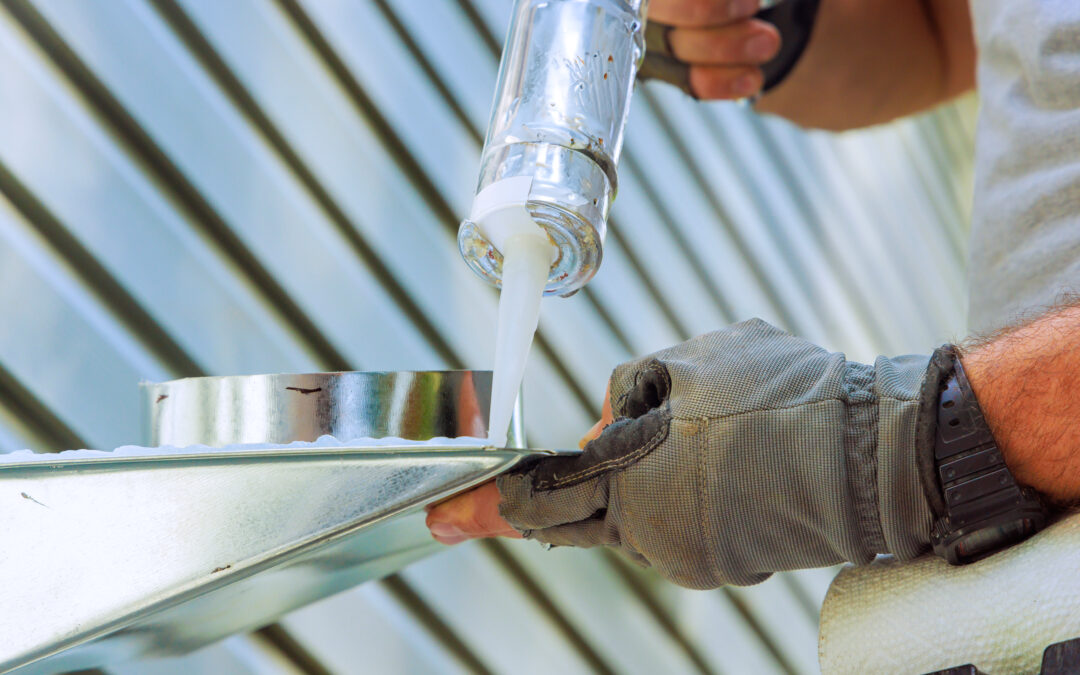
Metal roof sealant helps seal seams, joints, gaps, and other areas where water or air could enter a roofing system. Most gun-grade sealants are applied from a tube and form a bead over or within a joint. Depending on the formulation, the material may remain permanently pliable or cure into a flexible seal.

For metal roofing, flexibility matters. Panels naturally move as temperatures rise and fall, so a sealant used at a moving joint needs to accommodate that movement without losing adhesion. 

The location of the seal matters too. A product used at an exposed seam may need different properties than one placed inside a concealed joint.

Sealant also should not be treated as a substitute for proper flashing, fastening, or panel installation. It works as part of the roofing system, not as a fix for a detail that was built incorrectly.

What Is Butyl Tape for Metal Roofing?

Butyl tape is a preformed sealing material typically installed between two roofing components. Instead of applying a bead from a tube, the installer lays a continuous strip of tape along the joint before the materials are fastened together. That makes it especially useful at concealed laps and other locations where two metal surfaces come together.

Butyl stays flexible, which helps it maintain a seal as a metal building experiences normal movement. There are also expanding sealant tapes that serve a similar purpose while filling irregular gaps and accommodating movement within the joint.

Sealant vs. Butyl Tape

The simplest way to think about the difference is application.

Gun-grade sealant works well when you need to apply a bead into a seam, joint, or gap. Butyl tape works well when you need a continuous seal between overlapping or adjoining components.

One is not automatically better than the other. The roof detail determines which type makes sense.

Metal Roof Sealant vs. Butyl Tape: Which Should You Use?

Different roof details put different demands on the sealing product.

Application

Product Type to Consider

Filling a seam or joint

Gun-grade sealant

Sealing a concealed metal lap

Butyl tape

Joint that moves with expansion and contraction

Flexible sealant or expanding sealant tape

Continuous seal between two components

Butyl tape

Irregular gap that needs to be filled

Gun-grade sealant or expanding tape

Detail exposed to wide temperature changes

Product rated for the expected temperature range

These are general guidelines. Always check the roofing-system requirements and the manufacturer’s installation instructions before choosing a product.

4 of the Top Metal Roof Sealants and Butyl Tapes

The right product depends on the joint, expected movement, temperature conditions, and whether the seal will be exposed or concealed.

Here are four options GNMC has tried, tested, and trusts so much that we chose to carry them at our shop.

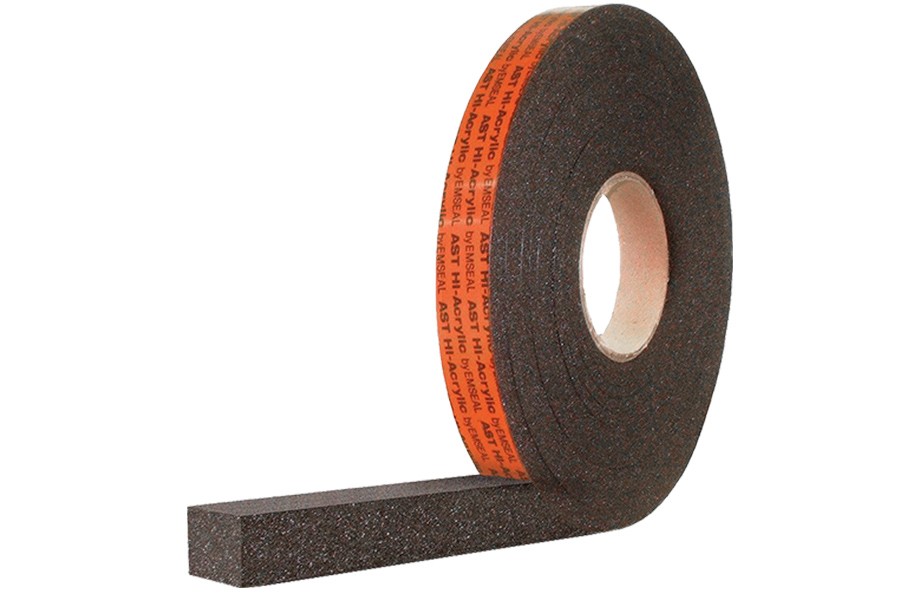
1. EMSEAL AST Hi-Acrylic Sealant Tape

Best for: Expansion joints, lap seams, and joints that need to accommodate movement.

EMSEAL AST Hi-Acrylic Sealant Tape is a self-adhering, open-cell polyurethane foam tape impregnated with acrylic-modified asphalt.

Unlike a standard flat tape, EMSEAL AST gradually expands after it is removed from its packaging. That allows it to conform to the joint and fill gaps along irregular surfaces. For metal roofing and metal buildings, that can be particularly useful around details affected by thermal expansion and contraction.

Emseal AST

Why It Works Well With Metal Roofing

One of EMSEAL AST’s biggest advantages is its ability to move with the building. The tape conforms to contours and maintains a seal as metal panels expand and contract. It is designed to help keep out dust, air, wind-driven snow, and moisture through joint details.

It also does not dry out and become hard or brittle over time. Because the material remains compressed within the joint, it is designed to stay in place rather than squeeze out the way some caulks or butyl products can.

Its resistance to UV exposure, aging, and mildew also makes it well suited to demanding exterior applications.

Common Applications

EMSEAL AST can be useful for:

  • Expansion and compression joints
  • Lap seams
  • Mechanically fastened joints
  • Irregular gaps
  • Metal building details where movement needs to be accommodated

It can also be used alongside several common building materials, including metal, plastic, wood, and concrete.

Interested in EMSEAL AST? Contact GNMC

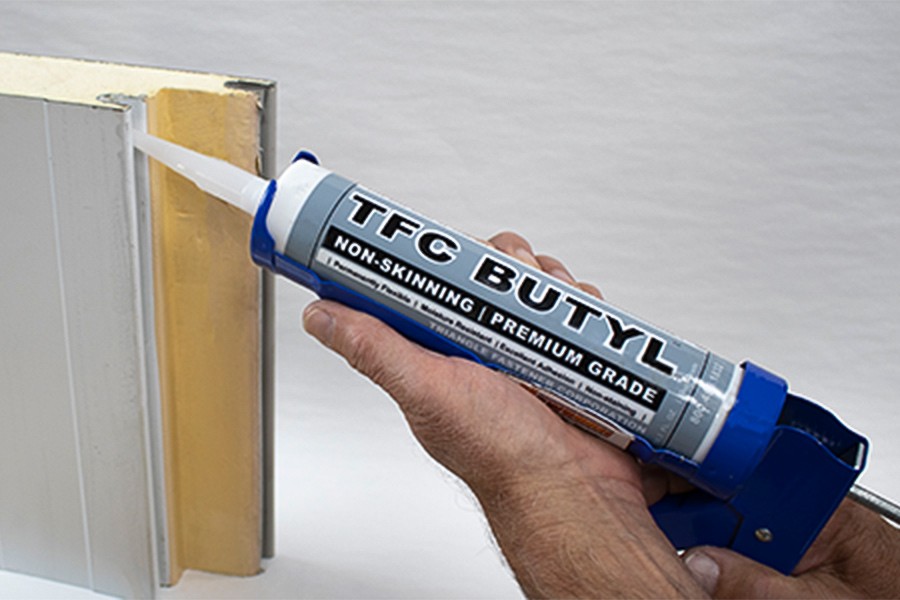
2. TFC BUTYL™ Sealant

Best for: Metal panel joints that need a permanently pliable, gun-grade sealant.

TFC BUTYL™ is a single-component butyl-based sealant designed specifically for strong adhesion to metal panels.

Its biggest distinction is that it remains permanently pliable. It does not skin over into a hard surface, which allows the material to continue moving with the joint after installation.

Why It Works Well With Metal Roofing

Metal panels do not stay perfectly still over the life of a building. Temperature changes create movement, and joints need a sealing product that can handle it.

TFC BUTYL remains flexible and moisture-resistant, which makes it useful for metal panel details where a rigid sealant would not be appropriate.

It also meets or exceeds AAMA 809.2 and is available in gray or white.

Installation Matters

Good adhesion starts with a clean surface. Before applying TFC BUTYL, the substrate should be dry and free from frost, oil, grease, incompatible coatings, or other contaminants that could interfere with adhesion.

The product is applied using a standard caulking gun and can be tooled after application if needed.

It is also worth paying attention to storage. TFC BUTYL should be kept in a controlled, dry environment below 75°F and used within 12 months of manufacture.

One other detail to know before choosing it: TFC BUTYL is not paintable.

Ask GNMC about TFC BUTYL™.

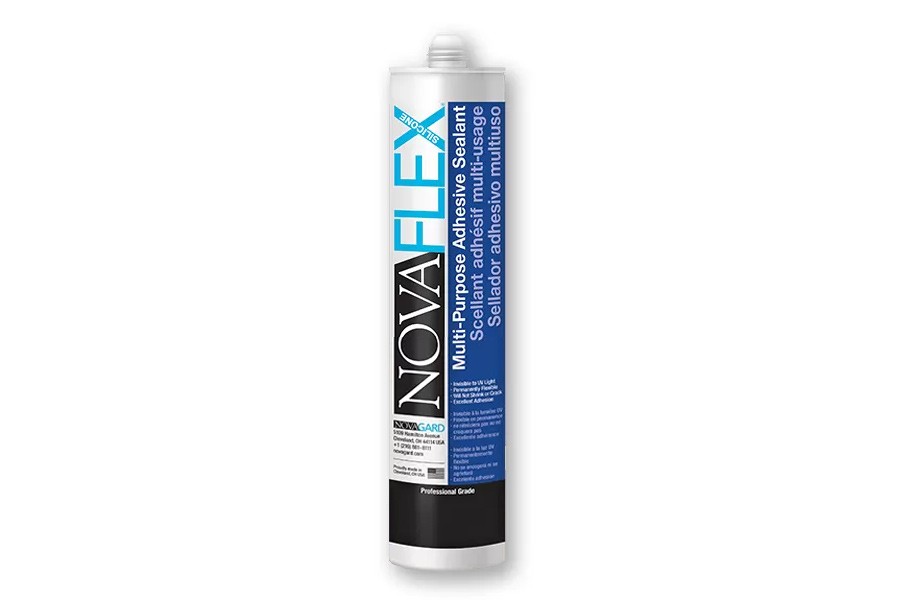
3. NovaFlex Metal Roof & Panel Adhesive Sealant

Best for: Seams, panel joints, and gaps that need a flexible cured sealant.

NovaFlex Metal Roof & Panel Adhesive Sealant is a single-component silicone sealant and adhesive commonly used as a seam sealant or joint filler in metal roofing and panel systems.

It is non-corrosive and non-sag, making it useful where contractors need a gun-grade product that will stay where it is placed.

Why It Works Well With Metal Roofing

Temperature range is one of NovaFlex’s standout characteristics. The product can be applied at temperatures from -20°F to 160°F and has a service temperature range of -40°F to 400°F.

That broad range is useful for metal roofing, where surfaces can experience substantial temperature swings.

NovaFlex also offers good adhesion to common building materials and can bridge gaps up to 3/8 inch. Its exterior weathering and aging performance make it suited to exposed building applications.

Where NovaFlex Makes Sense

Contractors may consider NovaFlex for:

  • Metal roof seams
  • Panel joints
  • Joint filling
  • Small gaps
  • Details exposed to wide temperature swings

It remains flexible at temperatures down to -10°F and is freeze-thaw stable. There are a couple of limitations worth knowing before installation. NovaFlex is not recommended for joints that will be submerged underwater, and it should not be used on surfaces that will later be painted.

Cure time also depends on temperature and humidity, so installers should account for site conditions and follow the product instructions.

Contact GNMC about product availability.

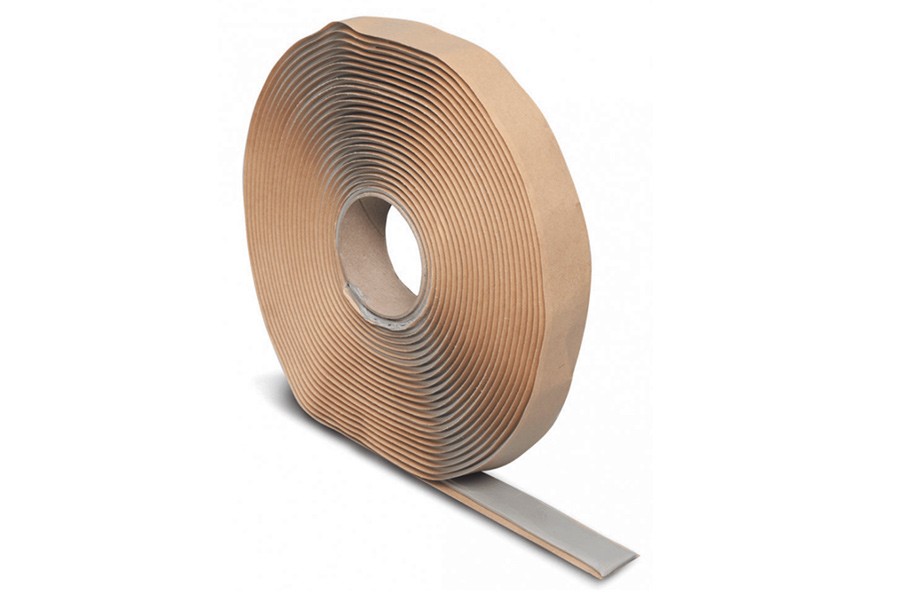
4. MB-10A Butyl Tape

Best for: Concealed metal building joints that need a continuous, flexible seal.

MB-10A Butyl Tape is an elastomeric butyl rubber sealant specifically designed around the requirements of metal buildings.

It comes extruded on silicone-coated release paper, which makes it straightforward to position during installation. It is also produced in different sizes and lengths to suit a range of applications.

Why It Works Well With Metal Roofing

MB-10A is designed to maintain its seal through normal building movement. Its combination of adhesive strength and cohesive strength helps the tape stay together and stay bonded as the assembly moves.

Temperature performance is another important benefit. MB-10A is designed to withstand extreme roof temperatures while maintaining compressibility in colder conditions. It also offers resistance to UV light and cold flow.

Those characteristics matter on metal buildings, where the material may experience a wide range of temperatures throughout the year.

Common Applications

MB-10A may be a good fit for:

  • Concealed panel laps
  • Metal building joints
  • Overlapping components
  • Details requiring a continuous butyl seal
  • Joints affected by normal building movement

Choosing the right tape size is important. The joint needs enough material to create the intended seal without using so much that the tape squeezes excessively out of the detail.

Inquire about MB-10A Butyl Tape

What to Consider Before Choosing a Metal Roof Sealant

Before grabbing a tube or roll, look at what the joint actually needs and ask yourself the following questions:

    1. How Much Will the Joint Move? Metal panels expand and contract as temperatures change. A sealing product at a moving joint needs enough flexibility to accommodate that movement.
    2. What Temperatures Will the Product See? Metal roof surfaces can get hot, and Montana projects can also see very cold conditions. Check the product’s application temperature separately from its service temperature. A sealant may perform across a wide temperature range once cured while still having specific limits for installation.
    3. Is the Joint Exposed or Concealed? A concealed panel lap has different needs than an exposed seam. Butyl tape is often a practical choice where two materials are compressed together. A gun-grade sealant may make more sense when a seam or gap needs to be filled from the outside.
    4. What Materials Is the Product Touching? Always check compatibility with the metal substrate and any adjoining materials. A product that adheres well to bare metal may have different requirements around painted finishes, other coatings, plastics, or masonry.
    5. Will the Surface Be Painted? Some sealants are not paintable. Both TFC BUTYL and NovaFlex have limitations that should be understood before choosing them for a detail that will receive a finish later.
    6. What Does Installation Require? Good products still need good installation. Surface preparation, storage, bead size, compression, and cure time can all affect the finished seal. Read the product instructions before installation instead of assuming every sealant or tape works the same way.

Frequently Asked Questions About Metal Roof Sealants and Butyl Tape

What is the best sealant for a metal roof?

The best metal roof sealant depends on where it will be used. Gun-grade sealants can work well for seams and joints, while butyl tape is commonly used between overlapping components or in concealed joints. Movement, temperature, substrate compatibility, and exposure should all factor into the decision.

Is butyl tape good for metal roofing?

Yes. Butyl tape is well suited to many metal roofing details because it creates a continuous seal between components while remaining flexible enough to accommodate normal building movement.

Is sealant or butyl tape better for a metal roof?

Neither option is better for every application. Butyl tape is often used inside laps and concealed joints, while gun-grade sealants are useful for filling seams, joints, and gaps. Some details may use both as part of the roofing system.

Does metal roof sealant need to stay flexible?

For joints that experience movement, flexibility is important. Metal panels expand and contract as temperatures change, so the sealing product needs to accommodate the expected movement without losing adhesion.

Can you use any silicone sealant on a metal roof?

No. Use a sealant that is compatible with the roofing material, coating, joint design, and expected temperatures. The product instructions and roofing-system requirements should guide the choice.

Need Metal Roof Sealant or Butyl Tape for Your Next Project?

Great Northern Metal Company carries EMSEAL AST, TFC BUTYL™, NovaFlex, and MB-10A Butyl Tape for a range of metal roofing and metal building applications.

Tell our team what detail you are working on and what you need the product to do. We can help you review the options GNMC carries and get the right product information before you place an order.

Inquire About Metal Roof Sealants

Additional Resources

Guides and How-tos
4 Tried and Tested Metal Roof Sealants and Butyl Tapes

4 Tried and Tested Metal Roof Sealants and Butyl Tapes

A metal roof is only as watertight as its details. Seams, laps, joints, penetrations, and other connection points all create places where moisture can work its way into the roofing system if they are not sealed correctly. Metal also expands and contracts as...

We Have Got You Covered

Count on Great Northern Metal Company for Expert Metal Roofing Services

Have Questions? Contact Us