Surviving Building Season Surge: How to Stay On-Top & On-Schedule
The peak of building season has arrived in Montana! In the Big Sky State, building season can start as early as March and end as late as November. However, the busiest time of the season happens between late July and early September. Right now, contractors across our great state are wading through a myriad of construction processes, facing long hours and tight deadlines. In the midst of the organized chaos, it can be easy for details to get forgotten on task lists—that includes all things related to metal roofing.
Precision and timing are key when ordering and installing metal roofing supplies, but both can get neglected with busy schedules and restrictive deadlines. Order too late, and your supplies might not arrive exactly when you need them, which pushes out your schedule even longer. Miss a measurement on your project’s roof, and you might end up with not enough metal panels to cover your commercial metal roofing project. At Great Northern Metal Company, we want our customers to thrive during the building season surge and not feel panicked about their metal roofing and siding orders. In this blog post, we’ll cover our top recommendations for how contractors can prepare for this busy building season and ensure their metal roofing and siding projects stay on-time, on-budget, and hassle-free.
5 Tips for Surviving Building Season: Metal Roofing & Siding Edition
1. Don’t Order Materials Off the Plans
This is the number one mistake we see at our shop, which can cost a pretty penny to fix. When you order off the plans or the eagle view without actually measuring the structure, you will always have inaccurate measurements. When you measure off of plans or eagle view, you are not taking into account the actual, built dimensions of the building. This can lead to over or under-ordering materials, which wastes your time, materials, and money.
If you make an error with your measurements, you might need to order smaller orders to make up for the mistake instead of getting the entire order ready to go when you need it. Unlike asphalt shingle roofing, metal panels cannot be easily cut or adjusted to fit a roof. Metal roofing panels are custom-made and cut for your project.
Simply, when you order your metal roofing materials, make sure to put in the dimensions that are actually built on the building, not in the plans. Check out our guide for how to measure a metal roof to get accurate dimensions and measurements for your metal roofing order.
2. Don’t Order Too Early or Too Late
While we generally applaud doing tasks ahead of time, we don’t recommend doing that when ordering metal roofing materials. If you order your materials too soon, you risk them sitting around on your job site for too long, where they can be damaged by subcontractors or harsh elements. On the other side of the spectrum, we don’t recommend ordering too late, either. Depending on when you order your materials and our lead times, you might not get your metal materials exactly when you need them. This can lead to hassles in scheduling and negotiating new deadlines for your project.
3. Pay Attention to Lead Times
Staying on top of our lead times is one of the best ways you get the edge on the building season surge. Lead times refer to the time it takes from placing an order with Great Northern Metal Company or the availability of roofing materials. Our lead times can be impacted by factors like the manufacturer’s production schedule, the quantity of metal roofing being ordered, customization, etc. In some cases, popular or specialized metal roofing options may have longer lead times. To ensure you get your metal roofing order when you need it, check our lead times, which are posted on our social media channels weekly.
4. Check Installation Guides
Metal panel installation guides are the equivalent of a holy writ for contractors. These guides are developed by manufacturers with extensive knowledge and expertise in metal roofing systems. By following these guidelines, contractors can ensure they are following proper installation techniques. This helps cut the risk of installation errors and long-term roofing issues, like leaks or structural damage. If panels are installed inaccurately, you may need to order more supplies and labor, spending more time and money on the project than you anticipated.
5. Get a Consultation & Provide as Much Information as You Can
As the saying goes, two heads are better than one, which also applies to ordering metal roofing panels. Before you order metal roofing supplies, schedule a consultation with our team. Consultations let our experts learn about the details of your project, so they can remind you of the steps needed to order your metal roofing and ensure you have the correct gear to complete your project. As a general rule, the more information you can provide our team during the consultation, the better. That way, we can tailor our services and insights to your needs.
When you partner with Great Northern Metal Company, you’re partnering with a small, dedicated team of industry experts who want to see you and your project succeed. Whether it’s a commercial or residential metal roofing project, our professionals can provide insights and helpful tips to ensure you are satisfied with your order. We’re here to support you during every season—from building surges to downtimes—so reach out to our team today for a consultation.
What Is Sealant for Metal Roofing?
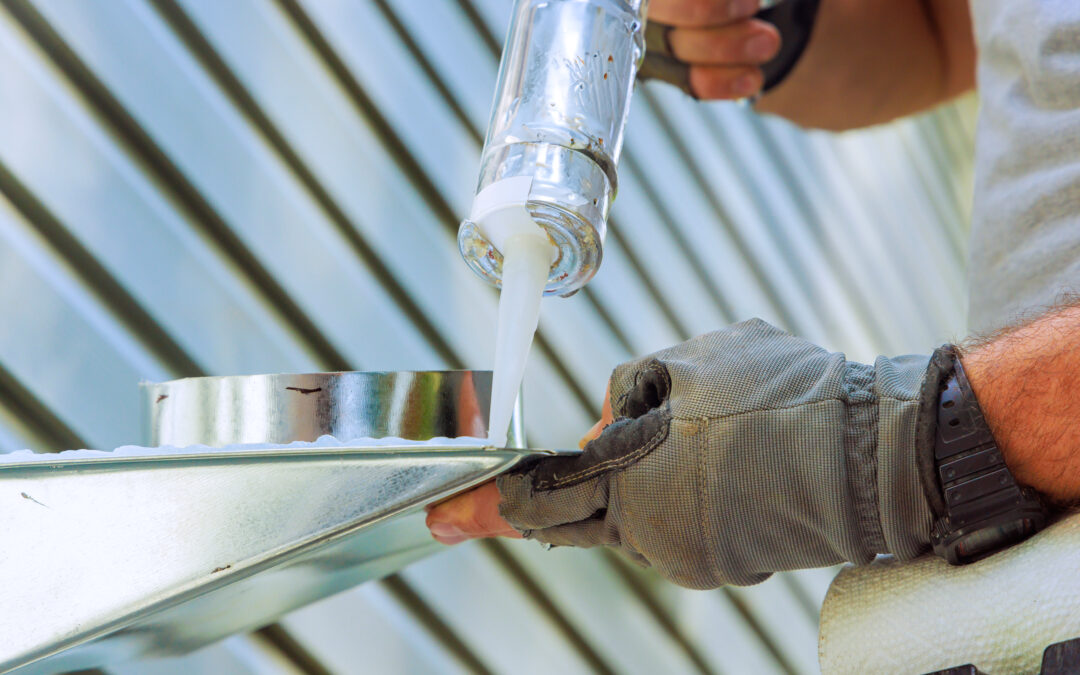
Metal roof sealant helps seal seams, joints, gaps, and other areas where water or air could enter a roofing system. Most gun-grade sealants are applied from a tube and form a bead over or within a joint. Depending on the formulation, the material may remain permanently pliable or cure into a flexible seal.
For metal roofing, flexibility matters. Panels naturally move as temperatures rise and fall, so a sealant used at a moving joint needs to accommodate that movement without losing adhesion.
The location of the seal matters too. A product used at an exposed seam may need different properties than one placed inside a concealed joint.
Sealant also should not be treated as a substitute for proper flashing, fastening, or panel installation. It works as part of the roofing system, not as a fix for a detail that was built incorrectly.
What Is Butyl Tape for Metal Roofing?
Butyl tape is a preformed sealing material typically installed between two roofing components. Instead of applying a bead from a tube, the installer lays a continuous strip of tape along the joint before the materials are fastened together. That makes it especially useful at concealed laps and other locations where two metal surfaces come together.
Butyl stays flexible, which helps it maintain a seal as a metal building experiences normal movement. There are also expanding sealant tapes that serve a similar purpose while filling irregular gaps and accommodating movement within the joint.
Sealant vs. Butyl Tape
The simplest way to think about the difference is application.
Gun-grade sealant works well when you need to apply a bead into a seam, joint, or gap. Butyl tape works well when you need a continuous seal between overlapping or adjoining components.
One is not automatically better than the other. The roof detail determines which type makes sense.
Metal Roof Sealant vs. Butyl Tape: Which Should You Use?
Different roof details put different demands on the sealing product.
These are general guidelines. Always check the roofing-system requirements and the manufacturer’s installation instructions before choosing a product.
4 of the Top Metal Roof Sealants and Butyl Tapes
The right product depends on the joint, expected movement, temperature conditions, and whether the seal will be exposed or concealed.
Here are four options GNMC has tried, tested, and trusts so much that we chose to carry them at our shop.
Best for: Expansion joints, lap seams, and joints that need to accommodate movement.
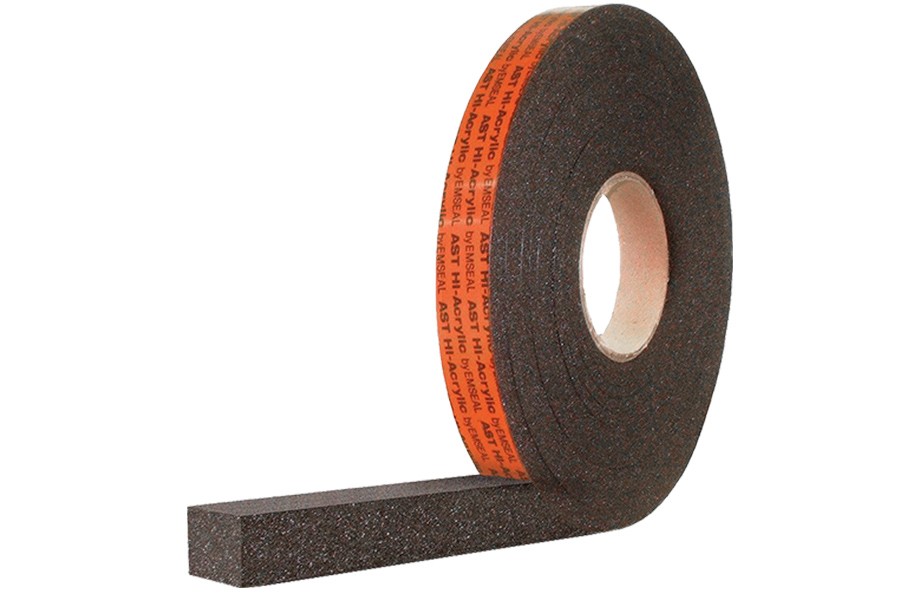
EMSEAL AST Hi-Acrylic Sealant Tape is a self-adhering, open-cell polyurethane foam tape impregnated with acrylic-modified asphalt.
Unlike a standard flat tape, EMSEAL AST gradually expands after it is removed from its packaging. That allows it to conform to the joint and fill gaps along irregular surfaces. For metal roofing and metal buildings, that can be particularly useful around details affected by thermal expansion and contraction.
Why It Works Well With Metal Roofing
One of EMSEAL AST’s biggest advantages is its ability to move with the building. The tape conforms to contours and maintains a seal as metal panels expand and contract. It is designed to help keep out dust, air, wind-driven snow, and moisture through joint details.
It also does not dry out and become hard or brittle over time. Because the material remains compressed within the joint, it is designed to stay in place rather than squeeze out the way some caulks or butyl products can.
Its resistance to UV exposure, aging, and mildew also makes it well suited to demanding exterior applications.
Common Applications
EMSEAL AST can be useful for:
- Expansion and compression joints
- Lap seams
- Mechanically fastened joints
- Irregular gaps
- Metal building details where movement needs to be accommodated
It can also be used alongside several common building materials, including metal, plastic, wood, and concrete.
Interested in EMSEAL AST? Contact GNMC
Best for: Metal panel joints that need a permanently pliable, gun-grade sealant.
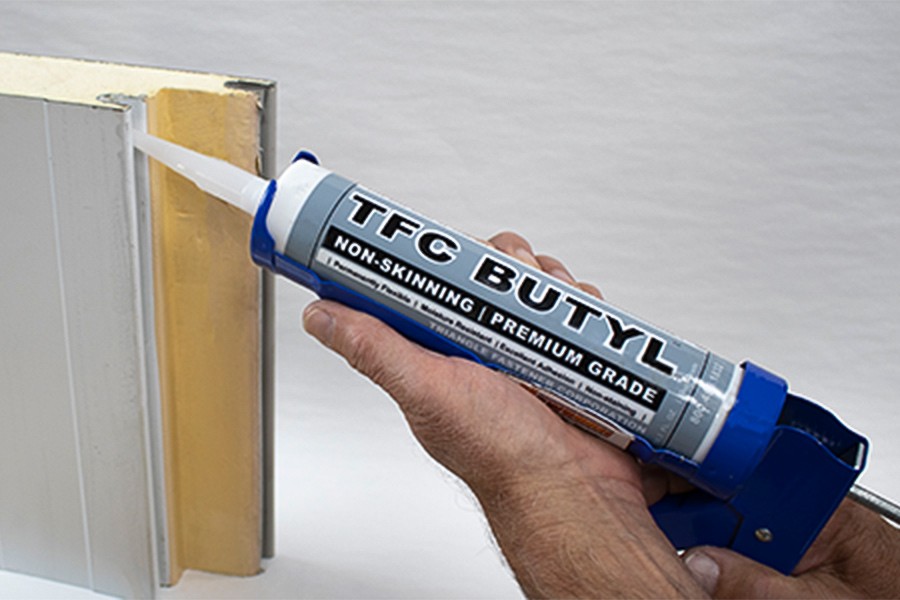
TFC BUTYL™ is a single-component butyl-based sealant designed specifically for strong adhesion to metal panels.
Its biggest distinction is that it remains permanently pliable. It does not skin over into a hard surface, which allows the material to continue moving with the joint after installation.
Why It Works Well With Metal Roofing
Metal panels do not stay perfectly still over the life of a building. Temperature changes create movement, and joints need a sealing product that can handle it.
TFC BUTYL remains flexible and moisture-resistant, which makes it useful for metal panel details where a rigid sealant would not be appropriate.
It also meets or exceeds AAMA 809.2 and is available in gray or white.
Installation Matters
Good adhesion starts with a clean surface. Before applying TFC BUTYL, the substrate should be dry and free from frost, oil, grease, incompatible coatings, or other contaminants that could interfere with adhesion.
The product is applied using a standard caulking gun and can be tooled after application if needed.
It is also worth paying attention to storage. TFC BUTYL should be kept in a controlled, dry environment below 75°F and used within 12 months of manufacture.
One other detail to know before choosing it: TFC BUTYL is not paintable.
Ask GNMC about TFC BUTYL™.
Best for: Seams, panel joints, and gaps that need a flexible cured sealant.
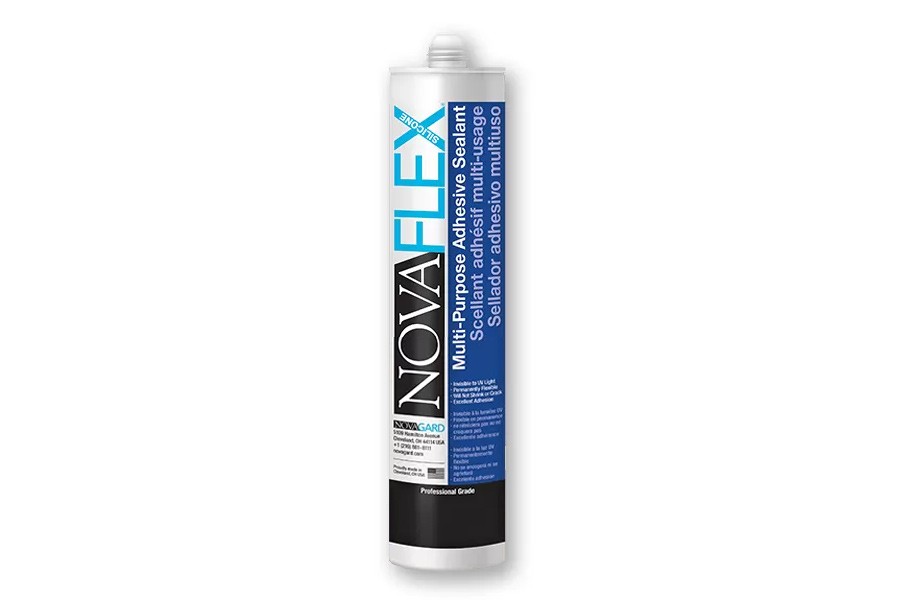
NovaFlex Metal Roof & Panel Adhesive Sealant is a single-component silicone sealant and adhesive commonly used as a seam sealant or joint filler in metal roofing and panel systems.
It is non-corrosive and non-sag, making it useful where contractors need a gun-grade product that will stay where it is placed.
Why It Works Well With Metal Roofing
Temperature range is one of NovaFlex’s standout characteristics. The product can be applied at temperatures from -20°F to 160°F and has a service temperature range of -40°F to 400°F.
That broad range is useful for metal roofing, where surfaces can experience substantial temperature swings.
NovaFlex also offers good adhesion to common building materials and can bridge gaps up to 3/8 inch. Its exterior weathering and aging performance make it suited to exposed building applications.
Where NovaFlex Makes Sense
Contractors may consider NovaFlex for:
- Metal roof seams
- Panel joints
- Joint filling
- Small gaps
- Details exposed to wide temperature swings
It remains flexible at temperatures down to -10°F and is freeze-thaw stable. There are a couple of limitations worth knowing before installation. NovaFlex is not recommended for joints that will be submerged underwater, and it should not be used on surfaces that will later be painted.
Cure time also depends on temperature and humidity, so installers should account for site conditions and follow the product instructions.
Contact GNMC about product availability.
Best for: Concealed metal building joints that need a continuous, flexible seal.
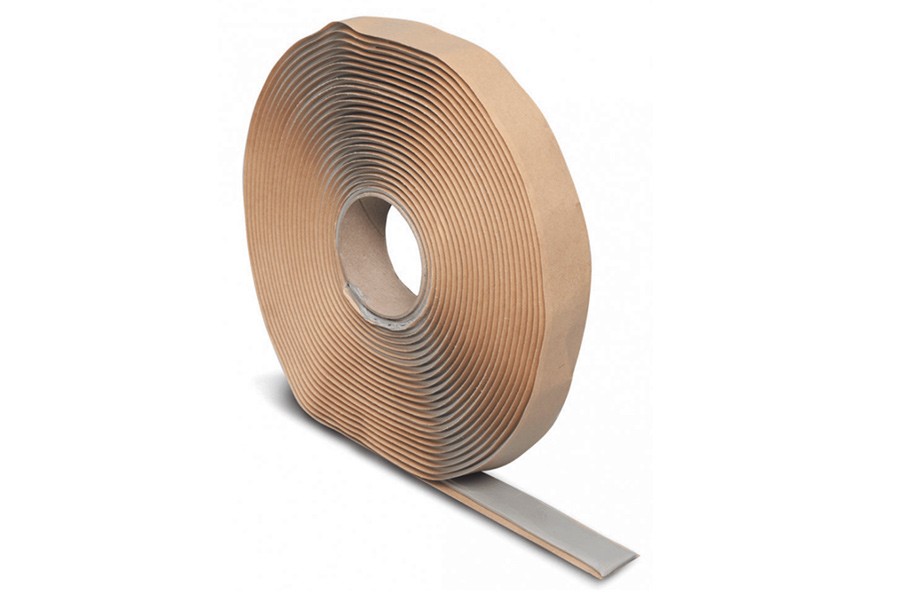
MB-10A Butyl Tape is an elastomeric butyl rubber sealant specifically designed around the requirements of metal buildings.
It comes extruded on silicone-coated release paper, which makes it straightforward to position during installation. It is also produced in different sizes and lengths to suit a range of applications.
Why It Works Well With Metal Roofing
MB-10A is designed to maintain its seal through normal building movement. Its combination of adhesive strength and cohesive strength helps the tape stay together and stay bonded as the assembly moves.
Temperature performance is another important benefit. MB-10A is designed to withstand extreme roof temperatures while maintaining compressibility in colder conditions. It also offers resistance to UV light and cold flow.
Those characteristics matter on metal buildings, where the material may experience a wide range of temperatures throughout the year.
Common Applications
MB-10A may be a good fit for:
- Concealed panel laps
- Metal building joints
- Overlapping components
- Details requiring a continuous butyl seal
- Joints affected by normal building movement
Choosing the right tape size is important. The joint needs enough material to create the intended seal without using so much that the tape squeezes excessively out of the detail.
Inquire about MB-10A Butyl Tape
What to Consider Before Choosing a Metal Roof Sealant
Before grabbing a tube or roll, look at what the joint actually needs and ask yourself the following questions:
- How Much Will the Joint Move? Metal panels expand and contract as temperatures change. A sealing product at a moving joint needs enough flexibility to accommodate that movement.
- What Temperatures Will the Product See? Metal roof surfaces can get hot, and Montana projects can also see very cold conditions. Check the product’s application temperature separately from its service temperature. A sealant may perform across a wide temperature range once cured while still having specific limits for installation.
- Is the Joint Exposed or Concealed? A concealed panel lap has different needs than an exposed seam. Butyl tape is often a practical choice where two materials are compressed together. A gun-grade sealant may make more sense when a seam or gap needs to be filled from the outside.
- What Materials Is the Product Touching? Always check compatibility with the metal substrate and any adjoining materials. A product that adheres well to bare metal may have different requirements around painted finishes, other coatings, plastics, or masonry.
- Will the Surface Be Painted? Some sealants are not paintable. Both TFC BUTYL and NovaFlex have limitations that should be understood before choosing them for a detail that will receive a finish later.
- What Does Installation Require? Good products still need good installation. Surface preparation, storage, bead size, compression, and cure time can all affect the finished seal. Read the product instructions before installation instead of assuming every sealant or tape works the same way.
Frequently Asked Questions About Metal Roof Sealants and Butyl Tape
What is the best sealant for a metal roof?
The best metal roof sealant depends on where it will be used. Gun-grade sealants can work well for seams and joints, while butyl tape is commonly used between overlapping components or in concealed joints. Movement, temperature, substrate compatibility, and exposure should all factor into the decision.
Is butyl tape good for metal roofing?
Yes. Butyl tape is well suited to many metal roofing details because it creates a continuous seal between components while remaining flexible enough to accommodate normal building movement.
Is sealant or butyl tape better for a metal roof?
Neither option is better for every application. Butyl tape is often used inside laps and concealed joints, while gun-grade sealants are useful for filling seams, joints, and gaps. Some details may use both as part of the roofing system.
Does metal roof sealant need to stay flexible?
For joints that experience movement, flexibility is important. Metal panels expand and contract as temperatures change, so the sealing product needs to accommodate the expected movement without losing adhesion.
Can you use any silicone sealant on a metal roof?
No. Use a sealant that is compatible with the roofing material, coating, joint design, and expected temperatures. The product instructions and roofing-system requirements should guide the choice.
Need Metal Roof Sealant or Butyl Tape for Your Next Project?
Great Northern Metal Company carries EMSEAL AST, TFC BUTYL™, NovaFlex, and MB-10A Butyl Tape for a range of metal roofing and metal building applications.
Tell our team what detail you are working on and what you need the product to do. We can help you review the options GNMC carries and get the right product information before you place an order.
Inquire About Metal Roof Sealants