The Ins and Outs of a Metal Roof Warranty
Metal roofs are investment pieces meant to provide lasting value for decades at a time. But if the worst does happen, a leak springs, or the roof’s color doesn’t hold up as long as it should, you need to know what your metal roof warranty actually covers. The last thing you want to do is spend extra cash on a repair that’s covered by your warranty or, worst case scenario, isn’t covered by the warranty you thought covered the roof from top to bottom.
One of the biggest myths about a metal roof warranty is that it covers the entire roof from installation to paint to scratches. Here’s the truth of the matter: it doesn’t! Metal roof warranties cover very specific parts of a metal roof, while other factors are entirely in the hands of the metal roofing installer.
At Great Northern Metal Company, we typically don’t see customers have many warranty issues, but we want to make sure you know exactly what a metal roof warranty covers so you can accurately review and compare warranties with peace of mind. Below, we’ll review some of the top questions we get about metal roof warranties and our expert’s recommendations so you get the most out of your metal roof.
Understanding a Metal Roof Warranty
Before we dive into the details, we wanted to pass along our top pieces of advice for warranties for metal roofing systems. If a warranty is very important to you, we highly recommend you ask questions upfront before the metal roof is installed. Whether it’s a commercial or residential metal roofing project, once the metal roof is installed, you are set with the warranty in place for the panels and paint you chose.
Got it? Great! Now, let’s dive into the top questions we get about metal roofing warranties.
Who Offers the Metal Roof Warranty?
At Great Northern Metal Company, we don’t offer metal roof warranties. Most metal roofing suppliers are not the ones who offer roof warranties, as they don’t cover aspects that relate to our services. Warranties are usually offered by two entities: the paint company that coats your metal roof and the contractor you choose to install your metal roof. When choosing your roofing contractor and panel type and color, ask what warranties they offer.
What Metal Roof Warranties Do Roofing Contractors Offer?
Most Bozeman roofing contractors will offer two types of warranties: workmanship warranties and material warranties. Workmanship warranties cover the contractor’s work during the metal roofing system installation. Material warranties cover any problems with the metal roof installation, such as a worker misinstalling a panel. Typically, costs such as tearing off and reinstalling a roof due to installation mistakes and damage to panels are covered by one or both of these two warranties. Workmanship and material warranty lengths vary depending on the contractor, so do your research before selecting a roofing contractor.
What Warranties Do the Paint Companies Offer?
Typically, the warranty offered depends on the paint company you choose. Per the industry standard, warranties will usually cover colors and trims, and weathertight warranties may be offered, as well. When looking at specific colors and profiles, ask your sales representative what type of warranty is offered for the panel and color you are interested in.
Paint
Paint warranties cover the protective coating (the painted finish) that goes on top of metal roof panels. The average warranty on paint is 30-40 years, but a variety of factors can alter the type of paint warranty you receive. For example, the type of metal panel you choose for your roof impacts the type of paint warranty you get, since different types of panels require certain coatings for maximal protection.
The paint color you choose can also affect your paint warranty, as some colors have a higher likelihood of chalking, the whitish residue that becomes visible on a painted metal roof over time due to excessive sunlight exposure. They are the same warranty but they have different chalk and fad allowances depending on the color. For instance, blues, greens, reds, and some black roofing paints are made more with natural pigments which tend to chalk and fade at a higher rate. This can change the type of paint warranty you receive, so do your research before choosing a paint color.
Additionally, the closer your metal roofing and siding project is to salt water, which can corrode the paint on metal panels, the paint warranty lowers.
Overall, paint warranties usually cover three factors:
- Chalk – As we indicated earlier, chalk happens when the paint starts to fade and gets a milky, chalky color to it. This is due to the primer rising to the top of the paint.
- Fade – Fade is the change in color over time. With any given paint warranty, there is a specific unit of fade or chalk your metal panel must reach for the warranty to kick in. Paint companies will compare the chalk/fade your panel is experiencing with a freshly coated panel to track and compare the level of chalk/fade your panel has. They keep a chip from the same paint lot and coil number to compare, which is stored in a controlled environment.
- Film Integrity – Film integrity relates to defects in the paint that cause it to bubble, peel, chip, or not adequately adhere to the substrate.
Substrate
Substrate, or the metal underneath the paint, can also be covered by a warranty. Typically these warranties range from 15-25 years in length, but it all depends on the substrate you choose and what the company in question offers. Galvalume, aluminum, and galvanized are a few of the most commonly used substrates for metal roofing panels, and each comes with its own unique warranty based on its performance level. Consult with one of our Bozeman roofing professionals to select the best substrate for your metal project that gets the most out of your investment.
Weathertight
A weathertight warranty is either provided by the roofing manufacturer or contractor that guarantees the metal roof is weathertight for the length of time specified in the warranty. This covers leaks due to misinstallation, manufacturing defects due to material defects, elemental wear and tear, etc. Essentially, if the metal roofing system fails to protect your home or building from the weather, then the manufacturer or installer who provided the warranty is financially responsible for all repairs. Manufacturer warranties are usually reserved for large commercial projects and come with a price tag.
How Long Does a Metal Roof Warranty Last?
Warranties can range from 25 to 40 years depending on the panel and paint system. You can ask your sales rep when looking at specific colors and profiles for exact warranty lengths.
Still Have Questions?
If you have specific questions about covering a commercial metal roofing project or are wondering what color would give your metal panels the most value, we’re here to help. At Great Northern Metal Company, our Bozeman metal roofing experts can advise you on which panel type and colors will give you the best bang for your buck and give you extra insight into the specifics of metal roofing warranties. Drop us a line today or give us a call at (406) 624-0435—we’d be happy to answer any questions!
What Is Sealant for Metal Roofing?
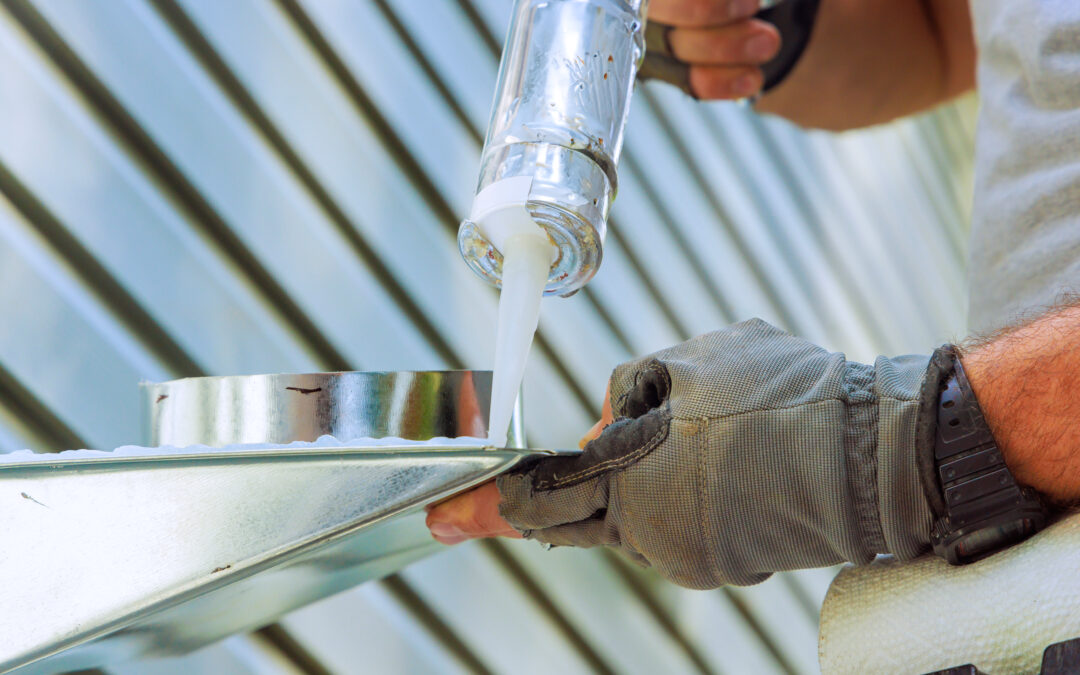
Metal roof sealant helps seal seams, joints, gaps, and other areas where water or air could enter a roofing system. Most gun-grade sealants are applied from a tube and form a bead over or within a joint. Depending on the formulation, the material may remain permanently pliable or cure into a flexible seal.
For metal roofing, flexibility matters. Panels naturally move as temperatures rise and fall, so a sealant used at a moving joint needs to accommodate that movement without losing adhesion.
The location of the seal matters too. A product used at an exposed seam may need different properties than one placed inside a concealed joint.
Sealant also should not be treated as a substitute for proper flashing, fastening, or panel installation. It works as part of the roofing system, not as a fix for a detail that was built incorrectly.
What Is Butyl Tape for Metal Roofing?
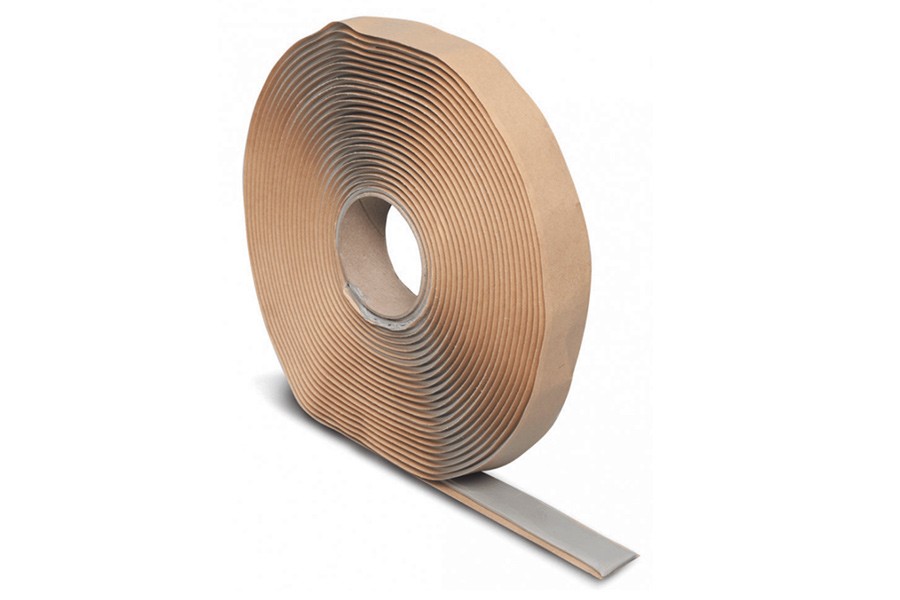
Butyl tape is a preformed sealing material typically installed between two roofing components. Instead of applying a bead from a tube, the installer lays a continuous strip of tape along the joint before the materials are fastened together. That makes it especially useful at concealed laps and other locations where two metal surfaces come together.
Butyl stays flexible, which helps it maintain a seal as a metal building experiences normal movement. There are also expanding sealant tapes that serve a similar purpose while filling irregular gaps and accommodating movement within the joint.
Sealant vs. Butyl Tape
The simplest way to think about the difference is application.
Gun-grade sealant works well when you need to apply a bead into a seam, joint, or gap. Butyl tape works well when you need a continuous seal between overlapping or adjoining components.
One is not automatically better than the other. The roof detail determines which type makes sense.
Metal Roof Sealant vs. Butyl Tape: Which Should You Use?
Different roof details put different demands on the sealing product.
These are general guidelines. Always check the roofing-system requirements and the manufacturer’s installation instructions before choosing a product.
4 of the Top Metal Roof Sealants and Butyl Tapes
The right product depends on the joint, expected movement, temperature conditions, and whether the seal will be exposed or concealed.
Here are four options GNMC has tried, tested, and trusts so much that we chose to carry them at our shop.
Best for: Expansion joints, lap seams, and joints that need to accommodate movement.
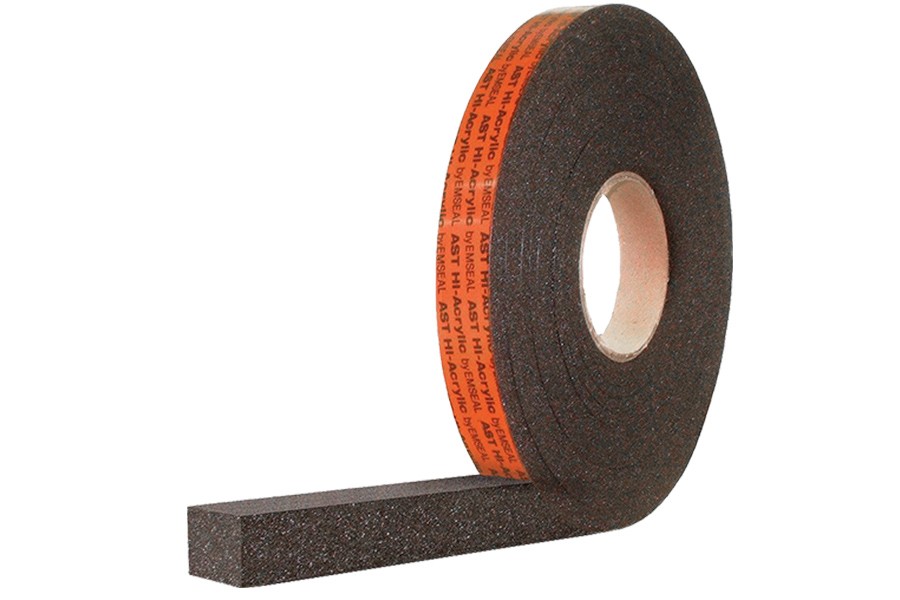
EMSEAL AST Hi-Acrylic Sealant Tape is a self-adhering, open-cell polyurethane foam tape impregnated with acrylic-modified asphalt.
Unlike a standard flat tape, EMSEAL AST gradually expands after it is removed from its packaging. That allows it to conform to the joint and fill gaps along irregular surfaces. For metal roofing and metal buildings, that can be particularly useful around details affected by thermal expansion and contraction.
Why It Works Well With Metal Roofing
One of EMSEAL AST’s biggest advantages is its ability to move with the building. The tape conforms to contours and maintains a seal as metal panels expand and contract. It is designed to help keep out dust, air, wind-driven snow, and moisture through joint details.
It also does not dry out and become hard or brittle over time. Because the material remains compressed within the joint, it is designed to stay in place rather than squeeze out the way some caulks or butyl products can.
Its resistance to UV exposure, aging, and mildew also makes it well suited to demanding exterior applications.
Common Applications
EMSEAL AST can be useful for:
- Expansion and compression joints
- Lap seams
- Mechanically fastened joints
- Irregular gaps
- Metal building details where movement needs to be accommodated
It can also be used alongside several common building materials, including metal, plastic, wood, and concrete.
Interested in EMSEAL AST? Contact GNMC
Best for: Metal panel joints that need a permanently pliable, gun-grade sealant.
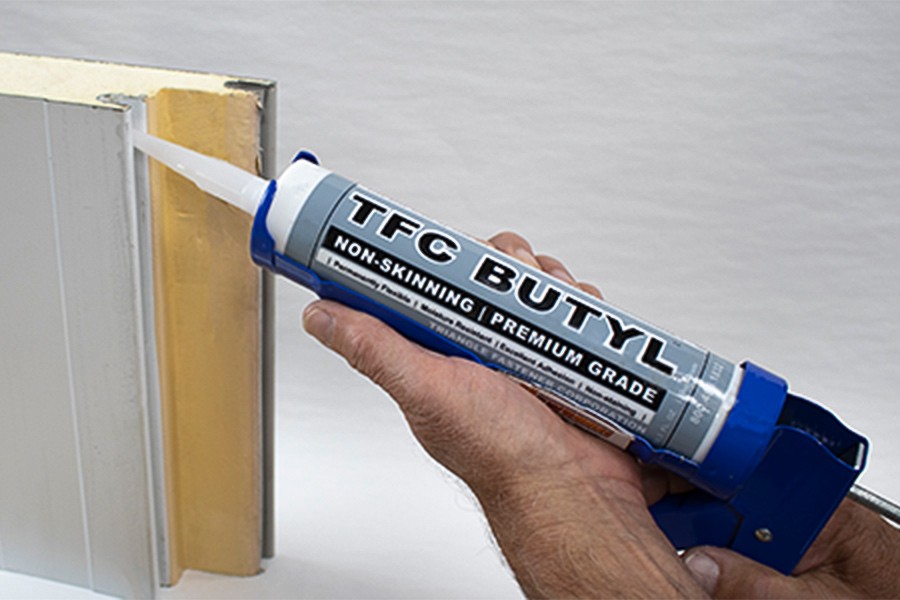
TFC BUTYL™ is a single-component butyl-based sealant designed specifically for strong adhesion to metal panels.
Its biggest distinction is that it remains permanently pliable. It does not skin over into a hard surface, which allows the material to continue moving with the joint after installation.
Why It Works Well With Metal Roofing
Metal panels do not stay perfectly still over the life of a building. Temperature changes create movement, and joints need a sealing product that can handle it.
TFC BUTYL remains flexible and moisture-resistant, which makes it useful for metal panel details where a rigid sealant would not be appropriate.
It also meets or exceeds AAMA 809.2 and is available in gray or white.
Installation Matters
Good adhesion starts with a clean surface. Before applying TFC BUTYL, the substrate should be dry and free from frost, oil, grease, incompatible coatings, or other contaminants that could interfere with adhesion.
The product is applied using a standard caulking gun and can be tooled after application if needed.
It is also worth paying attention to storage. TFC BUTYL should be kept in a controlled, dry environment below 75°F and used within 12 months of manufacture.
One other detail to know before choosing it: TFC BUTYL is not paintable.
Ask GNMC about TFC BUTYL™.
Best for: Seams, panel joints, and gaps that need a flexible cured sealant.
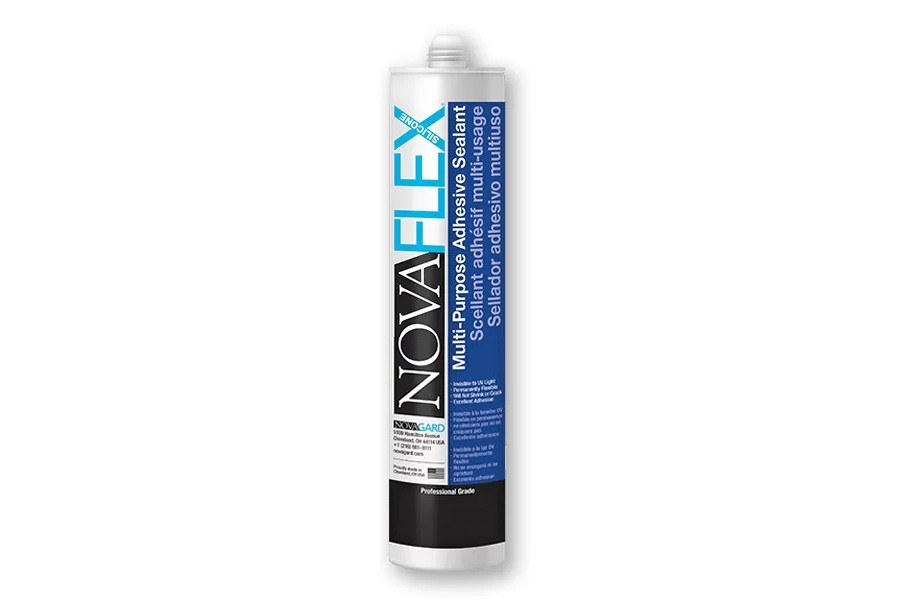
NovaFlex Metal Roof & Panel Adhesive Sealant is a single-component silicone sealant and adhesive commonly used as a seam sealant or joint filler in metal roofing and panel systems.
It is non-corrosive and non-sag, making it useful where contractors need a gun-grade product that will stay where it is placed.
Why It Works Well With Metal Roofing
Temperature range is one of NovaFlex’s standout characteristics. The product can be applied at temperatures from -20°F to 160°F and has a service temperature range of -40°F to 400°F.
That broad range is useful for metal roofing, where surfaces can experience substantial temperature swings.
NovaFlex also offers good adhesion to common building materials and can bridge gaps up to 3/8 inch. Its exterior weathering and aging performance make it suited to exposed building applications.
Where NovaFlex Makes Sense
Contractors may consider NovaFlex for:
- Metal roof seams
- Panel joints
- Joint filling
- Small gaps
- Details exposed to wide temperature swings
It remains flexible at temperatures down to -10°F and is freeze-thaw stable. There are a couple of limitations worth knowing before installation. NovaFlex is not recommended for joints that will be submerged underwater, and it should not be used on surfaces that will later be painted.
Cure time also depends on temperature and humidity, so installers should account for site conditions and follow the product instructions.
Contact GNMC about product availability.
Best for: Concealed metal building joints that need a continuous, flexible seal.
MB-10A Butyl Tape is an elastomeric butyl rubber sealant specifically designed around the requirements of metal buildings.
It comes extruded on silicone-coated release paper, which makes it straightforward to position during installation. It is also produced in different sizes and lengths to suit a range of applications.
Why It Works Well With Metal Roofing
MB-10A is designed to maintain its seal through normal building movement. Its combination of adhesive strength and cohesive strength helps the tape stay together and stay bonded as the assembly moves.
Temperature performance is another important benefit. MB-10A is designed to withstand extreme roof temperatures while maintaining compressibility in colder conditions. It also offers resistance to UV light and cold flow.
Those characteristics matter on metal buildings, where the material may experience a wide range of temperatures throughout the year.
Common Applications
MB-10A may be a good fit for:
- Concealed panel laps
- Metal building joints
- Overlapping components
- Details requiring a continuous butyl seal
- Joints affected by normal building movement
Choosing the right tape size is important. The joint needs enough material to create the intended seal without using so much that the tape squeezes excessively out of the detail.
Inquire about MB-10A Butyl Tape
What to Consider Before Choosing a Metal Roof Sealant
Before grabbing a tube or roll, look at what the joint actually needs and ask yourself the following questions:
- How Much Will the Joint Move? Metal panels expand and contract as temperatures change. A sealing product at a moving joint needs enough flexibility to accommodate that movement.
- What Temperatures Will the Product See? Metal roof surfaces can get hot, and Montana projects can also see very cold conditions. Check the product’s application temperature separately from its service temperature. A sealant may perform across a wide temperature range once cured while still having specific limits for installation.
- Is the Joint Exposed or Concealed? A concealed panel lap has different needs than an exposed seam. Butyl tape is often a practical choice where two materials are compressed together. A gun-grade sealant may make more sense when a seam or gap needs to be filled from the outside.
- What Materials Is the Product Touching? Always check compatibility with the metal substrate and any adjoining materials. A product that adheres well to bare metal may have different requirements around painted finishes, other coatings, plastics, or masonry.
- Will the Surface Be Painted? Some sealants are not paintable. Both TFC BUTYL and NovaFlex have limitations that should be understood before choosing them for a detail that will receive a finish later.
- What Does Installation Require? Good products still need good installation. Surface preparation, storage, bead size, compression, and cure time can all affect the finished seal. Read the product instructions before installation instead of assuming every sealant or tape works the same way.
Frequently Asked Questions About Metal Roof Sealants and Butyl Tape
What is the best sealant for a metal roof?
The best metal roof sealant depends on where it will be used. Gun-grade sealants can work well for seams and joints, while butyl tape is commonly used between overlapping components or in concealed joints. Movement, temperature, substrate compatibility, and exposure should all factor into the decision.
Is butyl tape good for metal roofing?
Yes. Butyl tape is well suited to many metal roofing details because it creates a continuous seal between components while remaining flexible enough to accommodate normal building movement.
Is sealant or butyl tape better for a metal roof?
Neither option is better for every application. Butyl tape is often used inside laps and concealed joints, while gun-grade sealants are useful for filling seams, joints, and gaps. Some details may use both as part of the roofing system.
Does metal roof sealant need to stay flexible?
For joints that experience movement, flexibility is important. Metal panels expand and contract as temperatures change, so the sealing product needs to accommodate the expected movement without losing adhesion.
Can you use any silicone sealant on a metal roof?
No. Use a sealant that is compatible with the roofing material, coating, joint design, and expected temperatures. The product instructions and roofing-system requirements should guide the choice.
Need Metal Roof Sealant or Butyl Tape for Your Next Project?
Great Northern Metal Company carries EMSEAL AST, TFC BUTYL™, NovaFlex, and MB-10A Butyl Tape for a range of metal roofing and metal building applications.
Tell our team what detail you are working on and what you need the product to do. We can help you review the options GNMC carries and get the right product information before you place an order.
Inquire About Metal Roof Sealants