Why Metal Wood Grain Siding Is the Best Choice for Your Next Project

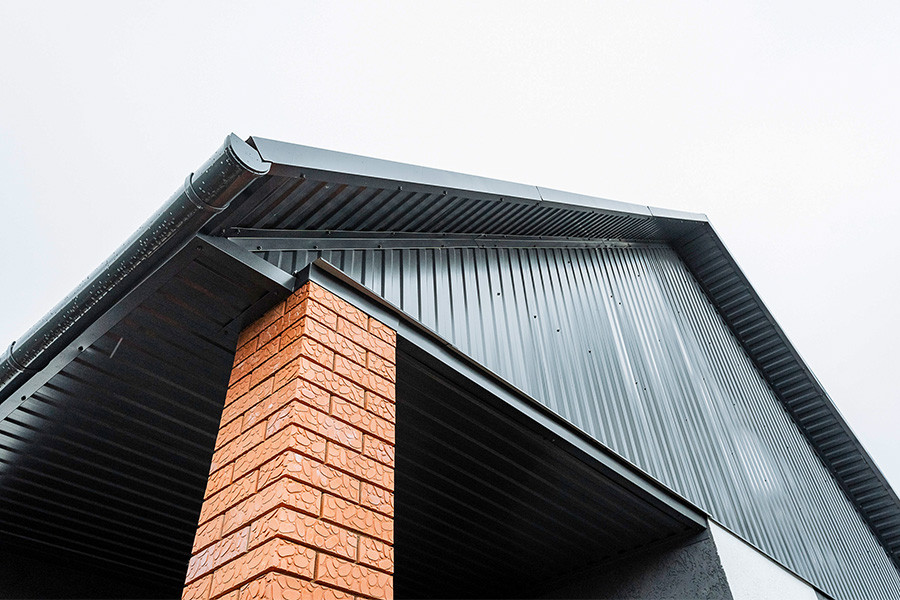
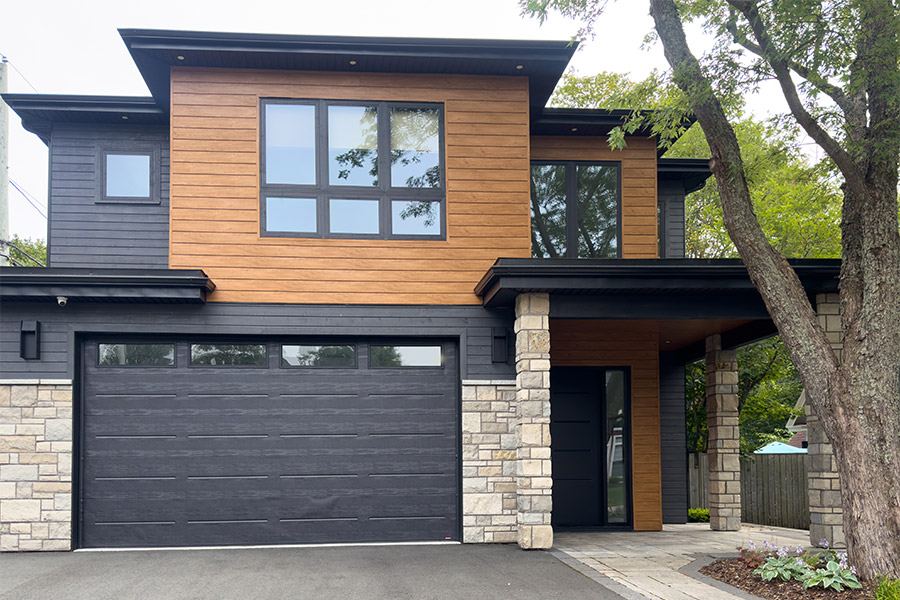
Modern home with metal wood grain siding

Metal Wood Grain Siding: Beauty of Wood with the Strength of Steel

Looking for the timeless charm of wood without the hassle that comes with it? Thanks to major advancements in metal coating technology, metal wood grain siding delivers the beauty of natural wood—without the warping, painting, or pest problems. From rustic lodges to commercial buildings, metal siding that looks like wood offers warmth, character, and performance all in one package.

Let’s break down what it is, why it works, and why your next project will benefit from choosing metal over real wood.

What is Metal Wood Grain Siding?

Metal wood grain siding is made from durable steel or aluminum panels that are factory-coated to mimic the look of natural wood. These finishes are created using high-resolution imaging or advanced paint systems to deliver strikingly realistic wood grain textures—from soft knotty pine to deep walnut or weathered barnwood.

These panels are available in popular siding profiles such as lap siding, board and batten, and flush or shiplap-style panels. If there’s a wood siding look you love, chances are there’s a metal version that replicates it beautifully.

Used in residential homes, commercial buildings, barns, garages, and even outdoor accent features, this siding is engineered to perform—while delivering the look of real wood from just a few feet away.

Aesthetics of Metal Wood Grain Siding

With metal wood grain siding, you’re not limited to just one tone or style. Choose from a wide variety of metal wood grain siding colors—from light, golden hues to deep, rustic browns or modern gray washes. These finishes integrate seamlessly into modern, industrial, craftsman, or farmhouse-style architecture.

This siding can be installed vertically or horizontally, depending on your design goals. It also pairs beautifully with other building materials like stone, stucco, or metal roofing, offering near-limitless flexibility for architects and builders.

Thanks to non-repeating print patterns and embossed textures, many metal wood panels have an organic look that fools even the most trained eye. It’s not just another faux-wood finish—it’s a whole new category of high-end design.

Benefits of Metal Wood Grain Siding vs Real Wood Siding

Metal wood grain siding proves to be a superior alternative to real wood siding in most applications. To truly understand the benefits, let’s compare how metal wood grain siding stacks up against real wood siding in several critical categories:

1. Maintenance

Real wood requires frequent upkeep. Most homeowners need to repaint or re-seal wood siding every 3–5 years to prevent rot, UV damage, and decay. By contrast, metal wood grain siding is virtually maintenance-free. There’s no need to stain, paint, or seal it at all. A periodic wash is usually all that’s needed to keep it looking like new. No scraping, sanding, or refinishing necessary.

2. Durability and pests

Wood is susceptible to moisture and pest damage. It can warp, crack, or rot over time, and it’s a food source for termites and other insects. Metal siding will not rot or support mold growth, and pests cannot chew through or nest in it. You won’t find your metal siding suddenly full of carpenter ant holes, and it won’t soften or swell after heavy rains.

3. Fire resistance

Wood siding (especially dry wood like cedar shakes) is highly combustible, which makes it a fire hazard in many environments. Metal siding is non-combustible and fire-resistant, meaning it doesn’t ignite or fuel a fire. In a wildfire or a stray ember situation, metal cladding can significantly improve a building’s chances compared to wood. (Even fire-retardant-treated wood will eventually burn; steel will not.)

4. Longevity

Wood siding can be long-lasting with care, but it often deteriorates after a few decades of exposure, or sooner if not properly maintained (paint failure, rot, etc., can necessitate replacement). Metal wood grain siding, however, is built to last for multiple decades. Many products include 30- to 40-year finish warranties, and the panels themselves often remain serviceable 50+ years down the line. That means metal can outlive wood siding by a wide margin while retaining its appearance and protective qualities.

5. Consistent appearance

Wood’s look will change over time. Sunlight, rain, and aging can cause fading, staining, or uneven weathering (some planks might warp or darken more than others). Metal wood grain siding maintains a consistent, uniform appearance for the long haul. The color you install is the color you’ll see years later (minus perhaps very slight uniform fading, as covered by warranty). There are no knots or natural defects showing through, and no risk of paint peeling off as happens with wood. Your building’s aesthetic remains on point without periodic touch-ups.

Where to Use Metal Wood Grain Siding

Metal wood grain siding is a highly versatile design solution. Use it for:

  • Full-wall coverage on homes or buildings
  • Decorative accents or insets
  • Gables and dormers
  • Covered porches and entryways
  • Ceilings or soffits
  • Custom trim, window frames, or fascia
  • Pergolas, detached garages, and pool sheds

Wherever you’d typically use wood siding, you can use metal—with better performance and less hassle.

How Much Does Metal Wood Grain Siding Cost?

​​Budget is always a consideration in any project, and here metal wood grain siding shines again. While prices vary by region and product, in many cases metal siding with a wood finish is more cost-effective than real wood siding.

Premium wood siding (such as cedar, redwood, or fiber-cement designed to look like wood) can be quite expensive per square foot, especially when lumber markets are volatile. Metal panels are manufactured efficiently and can be made to order at set lengths, which can lower waste and cost. Some industry sources estimate that you can save up to 75% in material costs by opting for wood-grain metal panels over real lumber.

In addition to the base price of materials, metal siding panels can be ordered in custom lengths to exactly fit your wall dimensions. This reduces on-site cutting and material waste. Wood siding usually comes in standard board lengths, and cutting around windows and doors generates scrap that, essentially, wastes money.

Metal panels, especially those with concealed fastener systems, often install faster as well. Panels can cover a larger area in one piece compared to individual wood boards, and they use interlocking or hidden fastener designs that make installation more efficient. Faster installation means reduced labor costs.

Now, the big kicker: long-term savings. We touched on maintenance savings already; not having to paint every few years is a huge money-saver over decades. Those periodic paint jobs and repairs for wood siding add up to thousands of dollars in ownership costs. Metal wood grain siding essentially eliminates those expenses, letting you redirect your maintenance budget elsewhere (or keep it in your pocket). And given the longer lifespan of metal, you likely won’t be paying for a full siding replacement anytime soon, whereas wood might need partial replacement or a full overhaul after some years of wear.

Installing Metal Wood Grain Siding

Contractors appreciate when a product not only performs well but is also convenient to work with. Metal wood grain siding tends to make life easier for the installers, which can translate to a smoother project for everyone. Here are some installation benefits of these systems:

Concealed Fastener Systems

Many wood-look metal panels use concealed fasteners, meaning the screws or nails are hidden by the next panel or a trim piece rather than exposed on the surface. From an installation standpoint, concealed fastener panels can be very quick to install. You simply secure one panel and the next one snaps or overlaps to cover the fasteners. The speed and simplicity of these systems mean contractors can get the job done faster, with less chance of installation errors (since each panel aligns by design).

Lightweight and Easy Handling

Compared to fiber-cement or thick wood planks, metal siding panels are relatively lightweight for their size. A single person can often carry large steel panels (especially light gauge) and position them, whereas hefty wood boards might require two people or extra muscle over a long day. This can reduce fatigue and even injuries on the job site. Metal panels also aren’t brittle, so you won’t have pieces snapping in half if handled a bit roughly (fiber-cement can crack, and wood can split). Less breakage means less wasted material.

Custom Lengths = Less Cutting

As mentioned earlier, the ability to order metal panels cut to length from the factory means that installers spend less time cutting boards to fit and produce less waste material. With fewer cuts, installation is faster and the site stays cleaner. And when metal panels do need cutting (for a window opening, e.g.), contractors can use power shears or nibblers to quickly slice them – no need for special saw blades as with fiber-cement, or dealing with the dust that creates.

No Onsite Finishing Required

With wood siding, even pre-primed boards often require painting after installation, and cuts or end joints need sealing. That means scheduling additional finishing work (and good weather to do it). Metal wood grain siding is fully finished out of the box. Once it’s fastened up, you’re done. This not only saves labor, but it also means no variability in finish quality (you’re getting a consistent factory-applied finish, not relying on a painter’s work in the field).

Less Waste

Wasted material is wasted money. Since metal siding has minimal scrap and any scrap metal off-cuts can be recycled, it’s an efficient choice. Wood scraps often end up in the dumpster (and ultimately a landfill), and you typically have to over-order wood to cull out warped or knotted pieces. With metal, you receive consistent, usable panels and can better calculate just what you need.

Great Northern Metal: Trusted Metal Wood Grain Siding Supplier

Choosing the right product is important, but choosing the right supplier is key as well. That’s where Great Northern Metal Company comes in. As a local expert in metal roofing and siding based in Montana, we pride ourselves on being a trusted supplier of high-quality metal wood grain siding panels and on providing exceptional support to our customers at every step.

Our team has decades of combined experience in the steel industry and construction, and we use that knowledge to help you get the right solution for your project. From selecting the perfect profile and metal wood grain siding colors for your design, to ensuring precise measurements and accessories, we provide expert guidance so you can move forward with confidence.

We’re proud to offer local, personalized support for contractors, architects, and homeowners. Need a quick turnaround or a custom trim piece? We’ll do our best to accommodate. Have questions in the field during installation? Our staff is here to help troubleshoot and make sure the job runs smoothly. At the end of the day, we stand behind our metal siding products and our customers.

Contact Us for Metal Wood Grain Siding Today

Ready to take the next step? Great Northern Metal Company is here to help make it happen. Reach out for a consultation or a quote tailored to your project. Let our experts guide you in selecting the perfect profile and finish from our metal wood grain siding offerings, answer any questions, and ensure you get a result that exceeds your expectations.

Contact Great Northern Metal Company today to discover how we can bring the beauty of wood and the strength of steel together for your next project.
What Is Sealant for Metal Roofing?

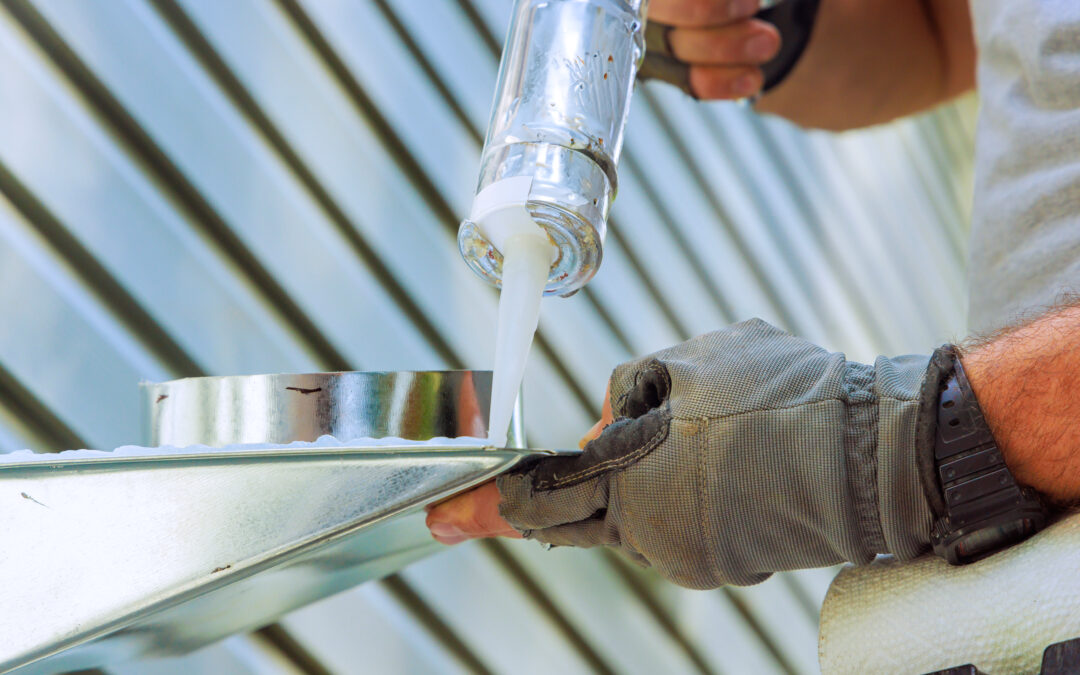
Metal roof sealant helps seal seams, joints, gaps, and other areas where water or air could enter a roofing system. Most gun-grade sealants are applied from a tube and form a bead over or within a joint. Depending on the formulation, the material may remain permanently pliable or cure into a flexible seal.

For metal roofing, flexibility matters. Panels naturally move as temperatures rise and fall, so a sealant used at a moving joint needs to accommodate that movement without losing adhesion. 

The location of the seal matters too. A product used at an exposed seam may need different properties than one placed inside a concealed joint.

Sealant also should not be treated as a substitute for proper flashing, fastening, or panel installation. It works as part of the roofing system, not as a fix for a detail that was built incorrectly.

What Is Butyl Tape for Metal Roofing?

Butyl tape is a preformed sealing material typically installed between two roofing components. Instead of applying a bead from a tube, the installer lays a continuous strip of tape along the joint before the materials are fastened together. That makes it especially useful at concealed laps and other locations where two metal surfaces come together.

Butyl stays flexible, which helps it maintain a seal as a metal building experiences normal movement. There are also expanding sealant tapes that serve a similar purpose while filling irregular gaps and accommodating movement within the joint.

Sealant vs. Butyl Tape

The simplest way to think about the difference is application.

Gun-grade sealant works well when you need to apply a bead into a seam, joint, or gap. Butyl tape works well when you need a continuous seal between overlapping or adjoining components.

One is not automatically better than the other. The roof detail determines which type makes sense.

Metal Roof Sealant vs. Butyl Tape: Which Should You Use?

Different roof details put different demands on the sealing product.

Application

Product Type to Consider

Filling a seam or joint

Gun-grade sealant

Sealing a concealed metal lap

Butyl tape

Joint that moves with expansion and contraction

Flexible sealant or expanding sealant tape

Continuous seal between two components

Butyl tape

Irregular gap that needs to be filled

Gun-grade sealant or expanding tape

Detail exposed to wide temperature changes

Product rated for the expected temperature range

These are general guidelines. Always check the roofing-system requirements and the manufacturer’s installation instructions before choosing a product.

4 of the Top Metal Roof Sealants and Butyl Tapes

The right product depends on the joint, expected movement, temperature conditions, and whether the seal will be exposed or concealed.

Here are four options GNMC has tried, tested, and trusts so much that we chose to carry them at our shop.

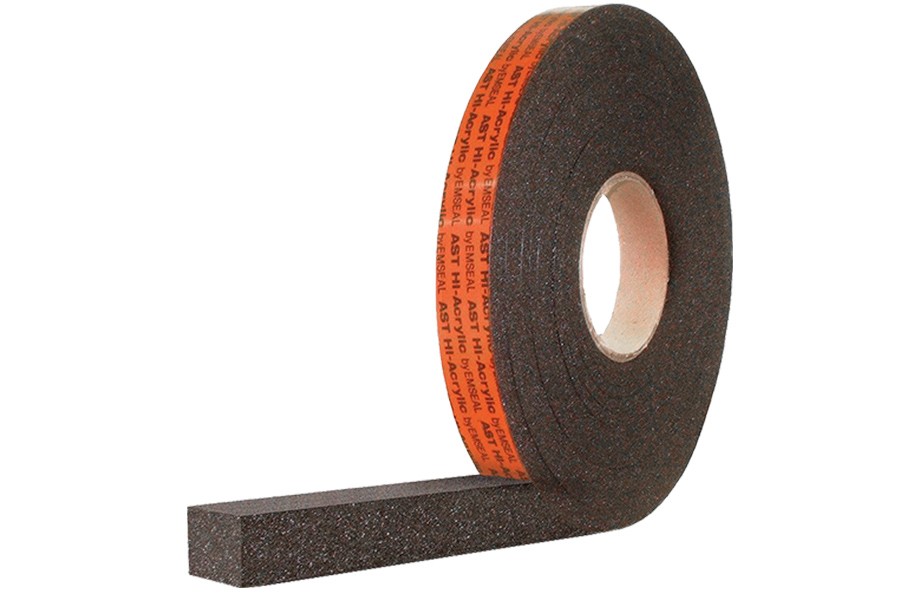
1. EMSEAL AST Hi-Acrylic Sealant Tape

Best for: Expansion joints, lap seams, and joints that need to accommodate movement.

EMSEAL AST Hi-Acrylic Sealant Tape is a self-adhering, open-cell polyurethane foam tape impregnated with acrylic-modified asphalt.

Unlike a standard flat tape, EMSEAL AST gradually expands after it is removed from its packaging. That allows it to conform to the joint and fill gaps along irregular surfaces. For metal roofing and metal buildings, that can be particularly useful around details affected by thermal expansion and contraction.

Emseal AST

Why It Works Well With Metal Roofing

One of EMSEAL AST’s biggest advantages is its ability to move with the building. The tape conforms to contours and maintains a seal as metal panels expand and contract. It is designed to help keep out dust, air, wind-driven snow, and moisture through joint details.

It also does not dry out and become hard or brittle over time. Because the material remains compressed within the joint, it is designed to stay in place rather than squeeze out the way some caulks or butyl products can.

Its resistance to UV exposure, aging, and mildew also makes it well suited to demanding exterior applications.

Common Applications

EMSEAL AST can be useful for:

  • Expansion and compression joints
  • Lap seams
  • Mechanically fastened joints
  • Irregular gaps
  • Metal building details where movement needs to be accommodated

It can also be used alongside several common building materials, including metal, plastic, wood, and concrete.

Interested in EMSEAL AST? Contact GNMC

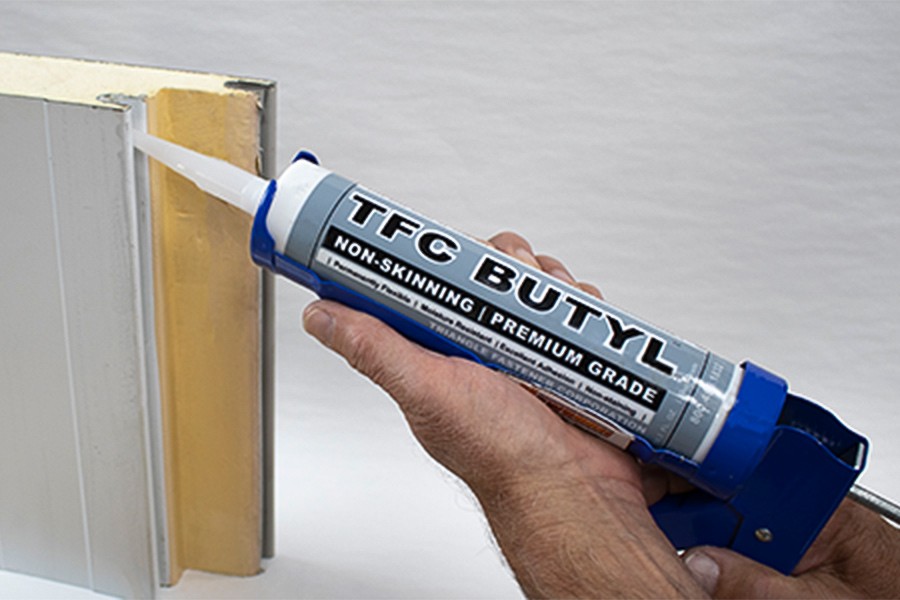
2. TFC BUTYL™ Sealant

Best for: Metal panel joints that need a permanently pliable, gun-grade sealant.

TFC BUTYL™ is a single-component butyl-based sealant designed specifically for strong adhesion to metal panels.

Its biggest distinction is that it remains permanently pliable. It does not skin over into a hard surface, which allows the material to continue moving with the joint after installation.

Why It Works Well With Metal Roofing

Metal panels do not stay perfectly still over the life of a building. Temperature changes create movement, and joints need a sealing product that can handle it.

TFC BUTYL remains flexible and moisture-resistant, which makes it useful for metal panel details where a rigid sealant would not be appropriate.

It also meets or exceeds AAMA 809.2 and is available in gray or white.

Installation Matters

Good adhesion starts with a clean surface. Before applying TFC BUTYL, the substrate should be dry and free from frost, oil, grease, incompatible coatings, or other contaminants that could interfere with adhesion.

The product is applied using a standard caulking gun and can be tooled after application if needed.

It is also worth paying attention to storage. TFC BUTYL should be kept in a controlled, dry environment below 75°F and used within 12 months of manufacture.

One other detail to know before choosing it: TFC BUTYL is not paintable.

Ask GNMC about TFC BUTYL™.

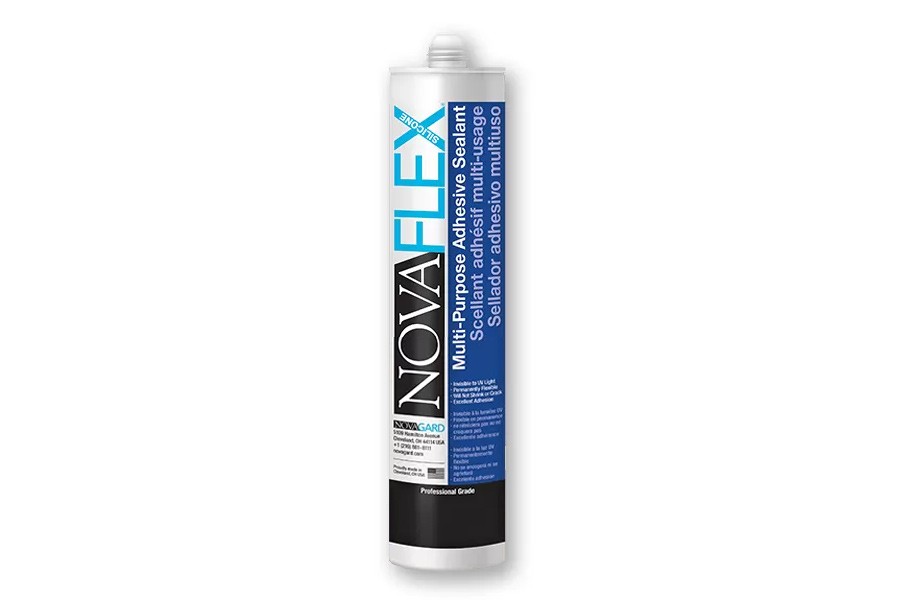
3. NovaFlex Metal Roof & Panel Adhesive Sealant

Best for: Seams, panel joints, and gaps that need a flexible cured sealant.

NovaFlex Metal Roof & Panel Adhesive Sealant is a single-component silicone sealant and adhesive commonly used as a seam sealant or joint filler in metal roofing and panel systems.

It is non-corrosive and non-sag, making it useful where contractors need a gun-grade product that will stay where it is placed.

Why It Works Well With Metal Roofing

Temperature range is one of NovaFlex’s standout characteristics. The product can be applied at temperatures from -20°F to 160°F and has a service temperature range of -40°F to 400°F.

That broad range is useful for metal roofing, where surfaces can experience substantial temperature swings.

NovaFlex also offers good adhesion to common building materials and can bridge gaps up to 3/8 inch. Its exterior weathering and aging performance make it suited to exposed building applications.

Where NovaFlex Makes Sense

Contractors may consider NovaFlex for:

  • Metal roof seams
  • Panel joints
  • Joint filling
  • Small gaps
  • Details exposed to wide temperature swings

It remains flexible at temperatures down to -10°F and is freeze-thaw stable. There are a couple of limitations worth knowing before installation. NovaFlex is not recommended for joints that will be submerged underwater, and it should not be used on surfaces that will later be painted.

Cure time also depends on temperature and humidity, so installers should account for site conditions and follow the product instructions.

Contact GNMC about product availability.

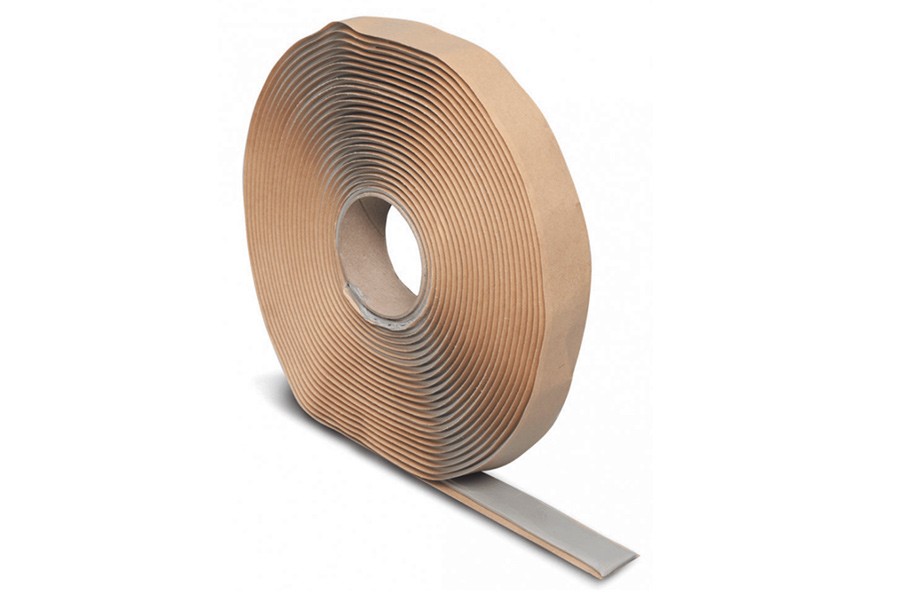
4. MB-10A Butyl Tape

Best for: Concealed metal building joints that need a continuous, flexible seal.

MB-10A Butyl Tape is an elastomeric butyl rubber sealant specifically designed around the requirements of metal buildings.

It comes extruded on silicone-coated release paper, which makes it straightforward to position during installation. It is also produced in different sizes and lengths to suit a range of applications.

Why It Works Well With Metal Roofing

MB-10A is designed to maintain its seal through normal building movement. Its combination of adhesive strength and cohesive strength helps the tape stay together and stay bonded as the assembly moves.

Temperature performance is another important benefit. MB-10A is designed to withstand extreme roof temperatures while maintaining compressibility in colder conditions. It also offers resistance to UV light and cold flow.

Those characteristics matter on metal buildings, where the material may experience a wide range of temperatures throughout the year.

Common Applications

MB-10A may be a good fit for:

  • Concealed panel laps
  • Metal building joints
  • Overlapping components
  • Details requiring a continuous butyl seal
  • Joints affected by normal building movement

Choosing the right tape size is important. The joint needs enough material to create the intended seal without using so much that the tape squeezes excessively out of the detail.

Inquire about MB-10A Butyl Tape

What to Consider Before Choosing a Metal Roof Sealant

Before grabbing a tube or roll, look at what the joint actually needs and ask yourself the following questions:

    1. How Much Will the Joint Move? Metal panels expand and contract as temperatures change. A sealing product at a moving joint needs enough flexibility to accommodate that movement.
    2. What Temperatures Will the Product See? Metal roof surfaces can get hot, and Montana projects can also see very cold conditions. Check the product’s application temperature separately from its service temperature. A sealant may perform across a wide temperature range once cured while still having specific limits for installation.
    3. Is the Joint Exposed or Concealed? A concealed panel lap has different needs than an exposed seam. Butyl tape is often a practical choice where two materials are compressed together. A gun-grade sealant may make more sense when a seam or gap needs to be filled from the outside.
    4. What Materials Is the Product Touching? Always check compatibility with the metal substrate and any adjoining materials. A product that adheres well to bare metal may have different requirements around painted finishes, other coatings, plastics, or masonry.
    5. Will the Surface Be Painted? Some sealants are not paintable. Both TFC BUTYL and NovaFlex have limitations that should be understood before choosing them for a detail that will receive a finish later.
    6. What Does Installation Require? Good products still need good installation. Surface preparation, storage, bead size, compression, and cure time can all affect the finished seal. Read the product instructions before installation instead of assuming every sealant or tape works the same way.

Frequently Asked Questions About Metal Roof Sealants and Butyl Tape

What is the best sealant for a metal roof?

The best metal roof sealant depends on where it will be used. Gun-grade sealants can work well for seams and joints, while butyl tape is commonly used between overlapping components or in concealed joints. Movement, temperature, substrate compatibility, and exposure should all factor into the decision.

Is butyl tape good for metal roofing?

Yes. Butyl tape is well suited to many metal roofing details because it creates a continuous seal between components while remaining flexible enough to accommodate normal building movement.

Is sealant or butyl tape better for a metal roof?

Neither option is better for every application. Butyl tape is often used inside laps and concealed joints, while gun-grade sealants are useful for filling seams, joints, and gaps. Some details may use both as part of the roofing system.

Does metal roof sealant need to stay flexible?

For joints that experience movement, flexibility is important. Metal panels expand and contract as temperatures change, so the sealing product needs to accommodate the expected movement without losing adhesion.

Can you use any silicone sealant on a metal roof?

No. Use a sealant that is compatible with the roofing material, coating, joint design, and expected temperatures. The product instructions and roofing-system requirements should guide the choice.

Need Metal Roof Sealant or Butyl Tape for Your Next Project?

Great Northern Metal Company carries EMSEAL AST, TFC BUTYL™, NovaFlex, and MB-10A Butyl Tape for a range of metal roofing and metal building applications.

Tell our team what detail you are working on and what you need the product to do. We can help you review the options GNMC carries and get the right product information before you place an order.

Inquire About Metal Roof Sealants

Additional Resources

Guides and How-tos
4 Tried and Tested Metal Roof Sealants and Butyl Tapes

4 Tried and Tested Metal Roof Sealants and Butyl Tapes

A metal roof is only as watertight as its details. Seams, laps, joints, penetrations, and other connection points all create places where moisture can work its way into the roofing system if they are not sealed correctly. Metal also expands and contracts as...

We Have Got You Covered

Count on Great Northern Metal Company for Expert Metal Roofing Services

Have Questions? Contact Us