Planning Your Roof Replacement: Why Spring and Summer Are Ideal Times
Have you heard of the Montana homeowner who wanted to replace their roof…in the middle of December?
For residents of the Big Sky State, this sounds like the opening line to a bad joke. But you’d be surprised how many people often forget to consider the impact of weather on their roofing project plans. When juggling factors like the cost of materials or hiring skilled help, people can easily overlook the crucial detail of strategically planning their roof replacement for a season with more consistent weather.
Well, consistent for Montana, that is.
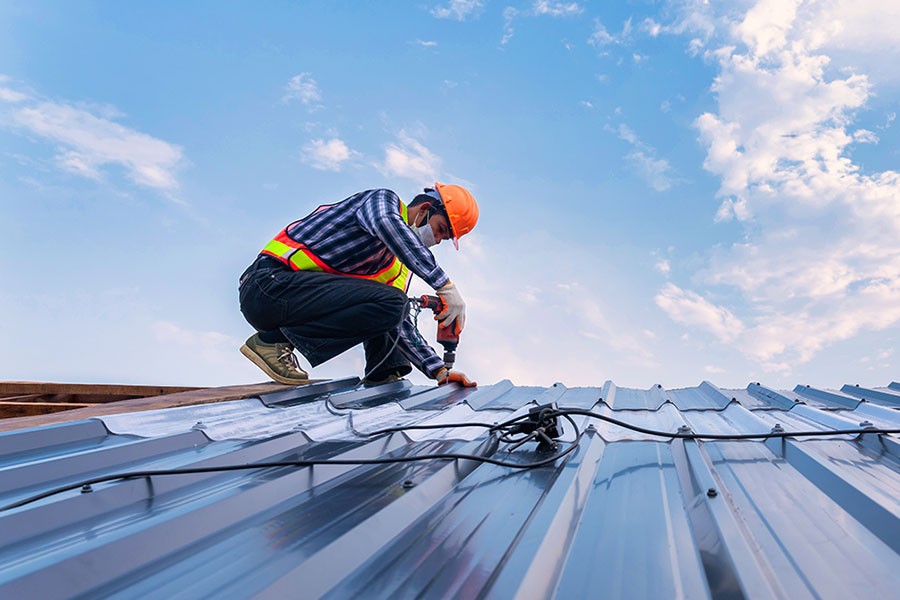
At Great Northern Metal Company, we have over 20 years of metal roofing and siding experience in the Treasure State under our belts. We’ve seen how important pre-planning is for your roof replacement—especially metal roofs—and selecting an optimal season for it to happen. Because of this experience, we know that spring and summer are the best seasons for a roof replacement in Montana.
Below, we’ll outline why other seasons present more challenges for roof replacements, the benefits of spring and summer roof replacements, and how you can stay on top of planning and preparation for your roof replacement. Bonus: we’ll divulge how choosing metal panels for your roof replacement can increase the value of your building and provide better long-term security and comfort than asphalt shingles.
The Challenges of Roof Replacement in Off-Seasons
Unlike standard roof repairs, replacements demand more time, effort, and strategic planning. So, if you choose to tackle a roof replacement during off-seasons—like fall and winter—those demands increase and can impact your overall project goals. Here are a few of the unique challenges that can affect your roofing project if you choose to replace your roof in the fall or winter:
- Weather Constraints: Especially in Montana, fall and winter often bring unpredictable weather conditions such as rain, snow, ice, and strong winds. These conditions can disrupt roofing projects and delay progress.
- Temperature Variations: Colder temperatures can affect the handling and installation of roofing materials, making them less pliable and more difficult to work with.
- Shorter Daylight Hours: With shorter daylight hours during fall and winter, contractors may have limited time work on the roof. This can potentially prolong the project timeline.
- Safety Concerns: Slippery or icy roof surfaces pose safety risks for workers, increasing the likelihood of accidents or injuries.
- Moisture Management: Moisture from rain, snow, or condensation can interfere with the installation process and compromise the integrity of roofing materials if not properly managed.
The Benefits of Spring and Summer for a Roof Replacement
Unlike the unpredictable, frigid conditions of Montana fall and winters, spring and summer are optimal times for scheduling a roof replacement. While our beautiful state has been known to get snow as late as June, the odds of having clear weather in April or May are considerably more in your favor than if you scheduled a replacement for November or even October. Here are a few of the top benefits spring and summer months offer for roof replacement projects.
- Favorable Weather Conditions: In Montana, these seasons typically offer more stable weather patterns, with reduced chances of rain, snow, or extreme temperatures. This creates an ideal environment for roof installation, allowing contractors to work efficiently and with fewer interruptions.
- Longer Daylight Hours: With longer daylight hours during spring and summer, contractors have more time to work each day, maximizing productivity and progress. This extended working period helps expedite the project timeline and ensures timely completion.
- Moderate Temperatures: The mild weather makes handling, installation, and sealing processes easier and more manageable.
- Preparation Before Harsh Winter Weather: Planning a roof replacement before the harsh winter weather sets in is a strategic advantage. By protecting a property against potential damage and lackluster insulation, homeowners can ensure their buildings are comfortable throughout the colder months.
- Advance Planning for Summer Installations: Starting preparations for summer installations during the spring—such as acquiring materials and permits and scheduling—can streamline the project and minimize delays.
Preparing for Your Roof Replacement Project
Now that you have a better understanding of what season to plan your roof replacement for, proper preparation is key. The more pre-planning you do before your roof replacement, the smoother the process will go for you and your selected contractor. Here are a few of our top tips for preparing for your roof replacement:
- Plan Several Months in Advance: To ensure you have time to secure quotes and get into a contractor’s schedule at a time that is convenient for you, start your planning several months in advance of your desired replacement date.
- Assess Your Roof: Conduct a thorough inspection of your roof to assess its condition and identify any issues that need to be addressed.
- Select Your Roofing Materials and Design: Knowing whether you want the same roofing materials or entirely new ones is important to decide upon before scheduling your replacement. Depending on your material of choice, supplies may need to be custom-ordered, which can impact your project timeline if you delay ordering. Additionally, researching the benefits of different roofing materials—like asphalt shingles vs metal panels—can help you better understand which material fits your needs, goals, and budget. Picking a roofing material like metal panels can help you increase the value of your home, as metal panels are more durable, energy-efficient, and long-lasting than asphalt shingles.
- Secure Permits: Check with your local building department to determine if permits are required for your roof replacement project. Obtain any necessary permits well in advance to avoid delays during the construction process.
Why Should I Choose Metal Panels for My Roof Replacement?
If you live in Montana and are considering a roof replacement, seriously consider the benefits of metal roofing for your home. Montana’s diverse climate—full of scorching summers and freezing winters—presents unique challenges for roofing materials. If your roofing materials can’t withstand the elements, you’ll waste time, money, and comfort in the long run. That’s why metal roofing stands out as the supreme choice.
Metal roofing is famous for its exceptional durability and weather resistance, especially in snowy conditions. In the harsh winter months, metal roofing can withstand heavy snow loads and ice buildup, preventing damage and reducing the risk of leaks. Bonus: its reflective properties reduce heat absorption, which can help keep your home cool and comfortable in the summer. Metal roofing is also highly resistant to fire, pests, and rot, providing long-lasting protection. Also, metal roofing is very environmentally friendly. Metal panels are often made from recycled materials and are fully recyclable at the end of their lifespan. With these outstanding benefits, residential metal roofing stands out as a smart investment for homeowners in Montana looking to replace their roofs and protect their homes for years to come.
Want to take a peek at what your next project could look like? Browse through our metal roofing and siding gallery for inspiration for your next build.
Set Yourself Up for Success When Ordering Metal Roofing Supplies
To set yourself up for success, you can work through the below checklist to prepare for ordering your metal roofing supplies. Or, if you need a hand, schedule a consultation with one of our Bozeman roofing and metal panel experts! We’ll talk you through the different factors you’ll need to consider before ordering metal roofing panels for your roof replacement. Learn more about errors to avoid when ordering metal roofing supplies in our resource “Avoid Mistakes: How To Order Metal Roofing.”
Metal Panel Ordering Checklist
- Measure Your Roof: Start by accurately measuring your roof to determine the quantity of metal roofing materials needed. Consider factors such as roof slope, dimensions, and any unique features that may affect material requirements. Your selected roofing contractor can do this for you.
- Select the Right Material: Research different types of metal roofing materials, such as steel, aluminum, or copper, to determine which option best suits your needs, budget, and aesthetic preferences. Consider factors such as durability, longevity, energy efficiency, and maintenance requirements.
- Choose a Color: Select a metal roof color that correlates with the aesthetic of your project and/or HOA codes. Visit our guide on selecting a color for your metal panels.
- Review Product Specifications: Review the product specifications for the metal roofing materials you plan to order. Pay attention to details such as gauge thickness, coating options, panel profiles, exposed fasteners vs concealed fasteners, and color choices to ensure they meet your requirements.
- Consider Additional Components: In addition to metal roofing panels, consider any additional components or accessories you may need, such as underlayment, flashing, fasteners, trim pieces, and gutter systems. Ensure that these components are compatible with your chosen metal roofing materials.
Plan Your Roof Replacement with Great Northern Metal Company
When planning your roof replacement, partnering with Great Northern Metal Company ensures access to expert guidance and support throughout the process. Consulting with knowledgeable professionals is crucial for selecting the right materials and planning the project effectively. Our team offers specialized consultations tailored to the needs of roofing contractors, architects, builders, and homeowners, providing valuable insights and recommendations.
If you’re ready to take the leap and invest in metal panels for your roof replacement, schedule a consultation with our team. We’ll discuss your project and goals and walk you through your next best steps, from picking materials to colors and more. Kickstart your roof replacement project with confidence and peace of mind. Start planning today to transform your vision into reality!
Have Questions about Metal Roofing and Siding?
Check out our metal roofing and siding FAQs, where we explain the benefits of metal roofing and tackle your top questions. If you want to explore more, visit our Resources hub for the top need-to-know information on all things metal roofing and siding. Still have questions? Don’t hesitate to drop us a line—our team is always happy to help!
What Is Sealant for Metal Roofing?
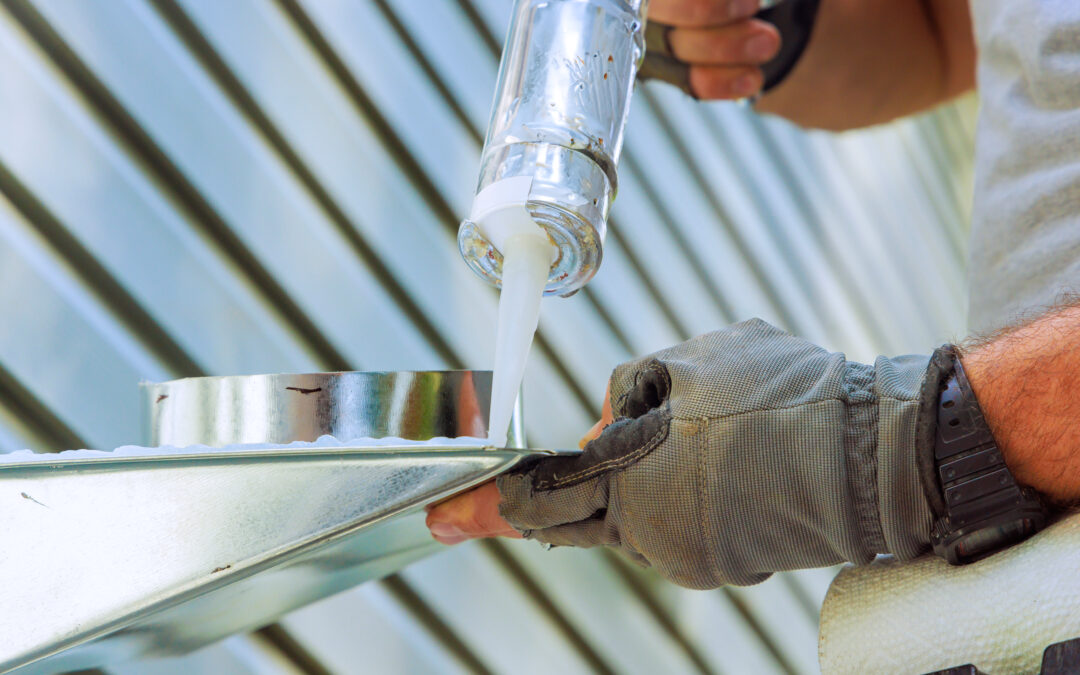
Metal roof sealant helps seal seams, joints, gaps, and other areas where water or air could enter a roofing system. Most gun-grade sealants are applied from a tube and form a bead over or within a joint. Depending on the formulation, the material may remain permanently pliable or cure into a flexible seal.
For metal roofing, flexibility matters. Panels naturally move as temperatures rise and fall, so a sealant used at a moving joint needs to accommodate that movement without losing adhesion.
The location of the seal matters too. A product used at an exposed seam may need different properties than one placed inside a concealed joint.
Sealant also should not be treated as a substitute for proper flashing, fastening, or panel installation. It works as part of the roofing system, not as a fix for a detail that was built incorrectly.
What Is Butyl Tape for Metal Roofing?
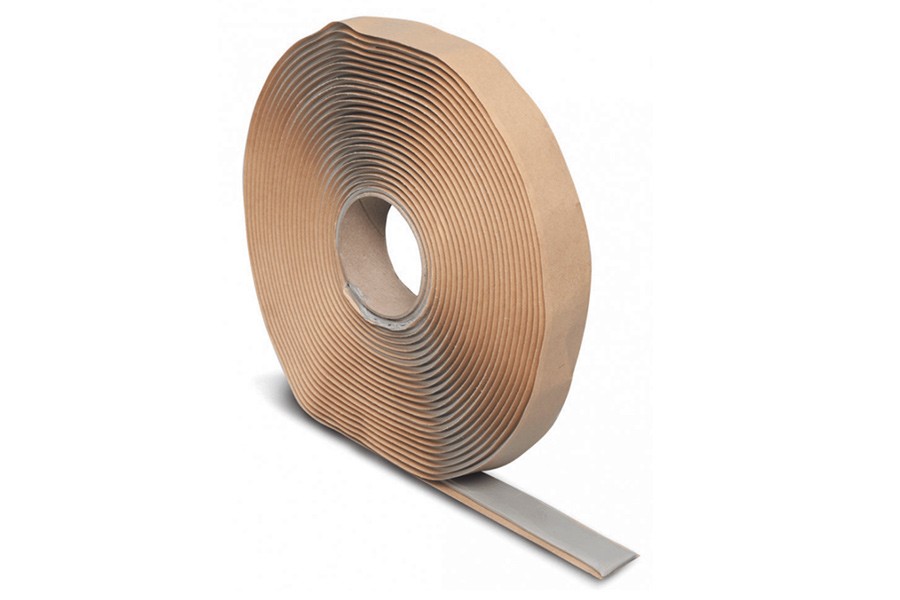
Butyl tape is a preformed sealing material typically installed between two roofing components. Instead of applying a bead from a tube, the installer lays a continuous strip of tape along the joint before the materials are fastened together. That makes it especially useful at concealed laps and other locations where two metal surfaces come together.
Butyl stays flexible, which helps it maintain a seal as a metal building experiences normal movement. There are also expanding sealant tapes that serve a similar purpose while filling irregular gaps and accommodating movement within the joint.
Sealant vs. Butyl Tape
The simplest way to think about the difference is application.
Gun-grade sealant works well when you need to apply a bead into a seam, joint, or gap. Butyl tape works well when you need a continuous seal between overlapping or adjoining components.
One is not automatically better than the other. The roof detail determines which type makes sense.
Metal Roof Sealant vs. Butyl Tape: Which Should You Use?
Different roof details put different demands on the sealing product.
These are general guidelines. Always check the roofing-system requirements and the manufacturer’s installation instructions before choosing a product.
4 of the Top Metal Roof Sealants and Butyl Tapes
The right product depends on the joint, expected movement, temperature conditions, and whether the seal will be exposed or concealed.
Here are four options GNMC has tried, tested, and trusts so much that we chose to carry them at our shop.
Best for: Expansion joints, lap seams, and joints that need to accommodate movement.
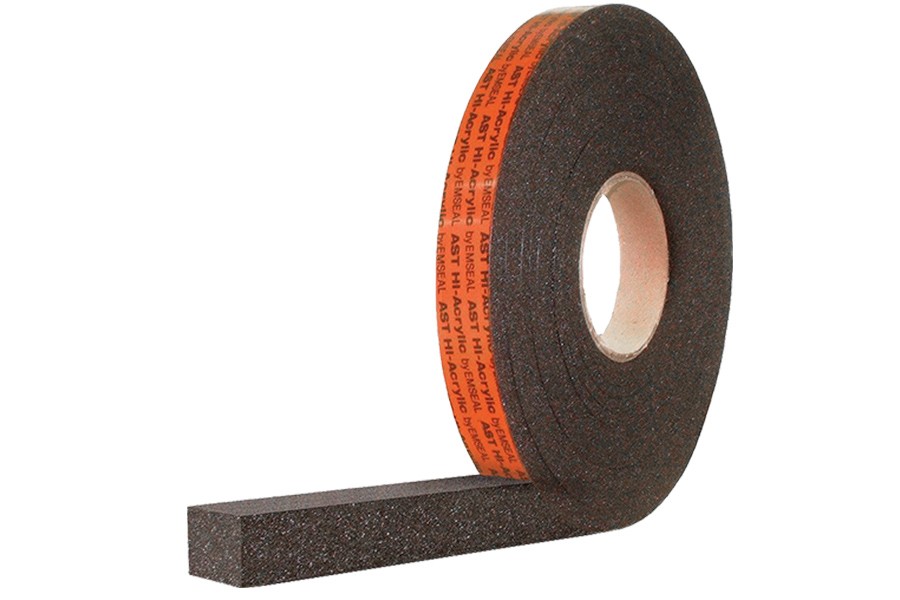
EMSEAL AST Hi-Acrylic Sealant Tape is a self-adhering, open-cell polyurethane foam tape impregnated with acrylic-modified asphalt.
Unlike a standard flat tape, EMSEAL AST gradually expands after it is removed from its packaging. That allows it to conform to the joint and fill gaps along irregular surfaces. For metal roofing and metal buildings, that can be particularly useful around details affected by thermal expansion and contraction.
Why It Works Well With Metal Roofing
One of EMSEAL AST’s biggest advantages is its ability to move with the building. The tape conforms to contours and maintains a seal as metal panels expand and contract. It is designed to help keep out dust, air, wind-driven snow, and moisture through joint details.
It also does not dry out and become hard or brittle over time. Because the material remains compressed within the joint, it is designed to stay in place rather than squeeze out the way some caulks or butyl products can.
Its resistance to UV exposure, aging, and mildew also makes it well suited to demanding exterior applications.
Common Applications
EMSEAL AST can be useful for:
- Expansion and compression joints
- Lap seams
- Mechanically fastened joints
- Irregular gaps
- Metal building details where movement needs to be accommodated
It can also be used alongside several common building materials, including metal, plastic, wood, and concrete.
Interested in EMSEAL AST? Contact GNMC
Best for: Metal panel joints that need a permanently pliable, gun-grade sealant.
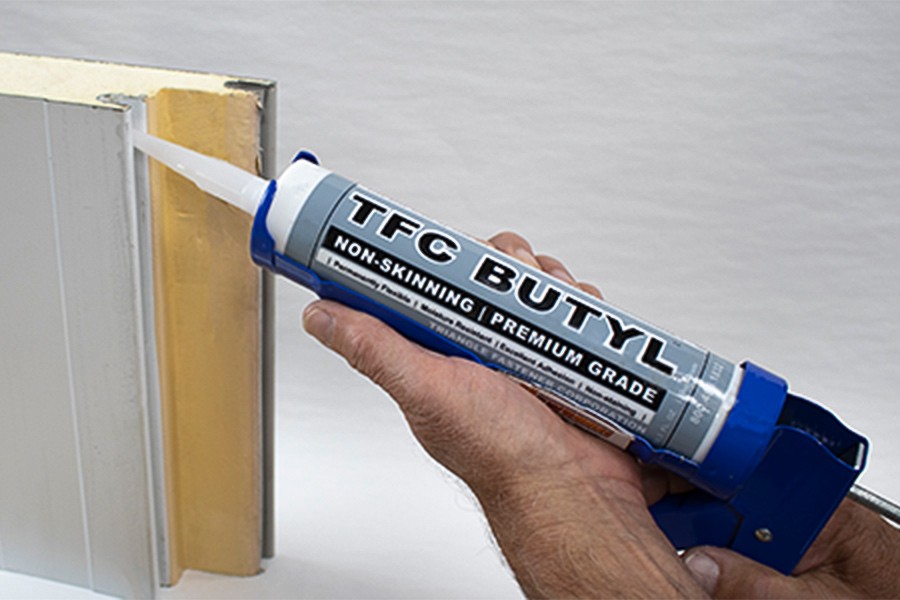
TFC BUTYL™ is a single-component butyl-based sealant designed specifically for strong adhesion to metal panels.
Its biggest distinction is that it remains permanently pliable. It does not skin over into a hard surface, which allows the material to continue moving with the joint after installation.
Why It Works Well With Metal Roofing
Metal panels do not stay perfectly still over the life of a building. Temperature changes create movement, and joints need a sealing product that can handle it.
TFC BUTYL remains flexible and moisture-resistant, which makes it useful for metal panel details where a rigid sealant would not be appropriate.
It also meets or exceeds AAMA 809.2 and is available in gray or white.
Installation Matters
Good adhesion starts with a clean surface. Before applying TFC BUTYL, the substrate should be dry and free from frost, oil, grease, incompatible coatings, or other contaminants that could interfere with adhesion.
The product is applied using a standard caulking gun and can be tooled after application if needed.
It is also worth paying attention to storage. TFC BUTYL should be kept in a controlled, dry environment below 75°F and used within 12 months of manufacture.
One other detail to know before choosing it: TFC BUTYL is not paintable.
Ask GNMC about TFC BUTYL™.
Best for: Seams, panel joints, and gaps that need a flexible cured sealant.
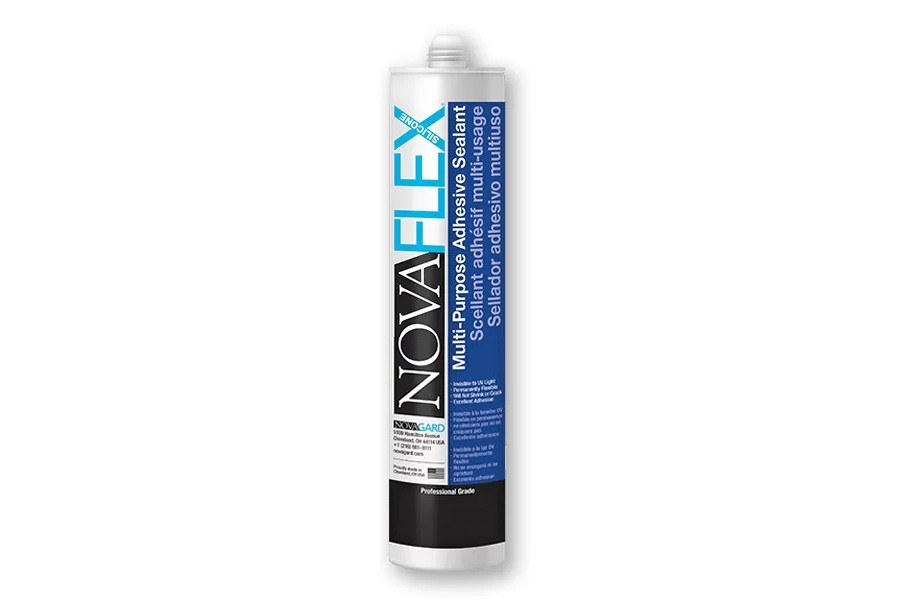
NovaFlex Metal Roof & Panel Adhesive Sealant is a single-component silicone sealant and adhesive commonly used as a seam sealant or joint filler in metal roofing and panel systems.
It is non-corrosive and non-sag, making it useful where contractors need a gun-grade product that will stay where it is placed.
Why It Works Well With Metal Roofing
Temperature range is one of NovaFlex’s standout characteristics. The product can be applied at temperatures from -20°F to 160°F and has a service temperature range of -40°F to 400°F.
That broad range is useful for metal roofing, where surfaces can experience substantial temperature swings.
NovaFlex also offers good adhesion to common building materials and can bridge gaps up to 3/8 inch. Its exterior weathering and aging performance make it suited to exposed building applications.
Where NovaFlex Makes Sense
Contractors may consider NovaFlex for:
- Metal roof seams
- Panel joints
- Joint filling
- Small gaps
- Details exposed to wide temperature swings
It remains flexible at temperatures down to -10°F and is freeze-thaw stable. There are a couple of limitations worth knowing before installation. NovaFlex is not recommended for joints that will be submerged underwater, and it should not be used on surfaces that will later be painted.
Cure time also depends on temperature and humidity, so installers should account for site conditions and follow the product instructions.
Contact GNMC about product availability.
Best for: Concealed metal building joints that need a continuous, flexible seal.
MB-10A Butyl Tape is an elastomeric butyl rubber sealant specifically designed around the requirements of metal buildings.
It comes extruded on silicone-coated release paper, which makes it straightforward to position during installation. It is also produced in different sizes and lengths to suit a range of applications.
Why It Works Well With Metal Roofing
MB-10A is designed to maintain its seal through normal building movement. Its combination of adhesive strength and cohesive strength helps the tape stay together and stay bonded as the assembly moves.
Temperature performance is another important benefit. MB-10A is designed to withstand extreme roof temperatures while maintaining compressibility in colder conditions. It also offers resistance to UV light and cold flow.
Those characteristics matter on metal buildings, where the material may experience a wide range of temperatures throughout the year.
Common Applications
MB-10A may be a good fit for:
- Concealed panel laps
- Metal building joints
- Overlapping components
- Details requiring a continuous butyl seal
- Joints affected by normal building movement
Choosing the right tape size is important. The joint needs enough material to create the intended seal without using so much that the tape squeezes excessively out of the detail.
Inquire about MB-10A Butyl Tape
What to Consider Before Choosing a Metal Roof Sealant
Before grabbing a tube or roll, look at what the joint actually needs and ask yourself the following questions:
- How Much Will the Joint Move? Metal panels expand and contract as temperatures change. A sealing product at a moving joint needs enough flexibility to accommodate that movement.
- What Temperatures Will the Product See? Metal roof surfaces can get hot, and Montana projects can also see very cold conditions. Check the product’s application temperature separately from its service temperature. A sealant may perform across a wide temperature range once cured while still having specific limits for installation.
- Is the Joint Exposed or Concealed? A concealed panel lap has different needs than an exposed seam. Butyl tape is often a practical choice where two materials are compressed together. A gun-grade sealant may make more sense when a seam or gap needs to be filled from the outside.
- What Materials Is the Product Touching? Always check compatibility with the metal substrate and any adjoining materials. A product that adheres well to bare metal may have different requirements around painted finishes, other coatings, plastics, or masonry.
- Will the Surface Be Painted? Some sealants are not paintable. Both TFC BUTYL and NovaFlex have limitations that should be understood before choosing them for a detail that will receive a finish later.
- What Does Installation Require? Good products still need good installation. Surface preparation, storage, bead size, compression, and cure time can all affect the finished seal. Read the product instructions before installation instead of assuming every sealant or tape works the same way.
Frequently Asked Questions About Metal Roof Sealants and Butyl Tape
What is the best sealant for a metal roof?
The best metal roof sealant depends on where it will be used. Gun-grade sealants can work well for seams and joints, while butyl tape is commonly used between overlapping components or in concealed joints. Movement, temperature, substrate compatibility, and exposure should all factor into the decision.
Is butyl tape good for metal roofing?
Yes. Butyl tape is well suited to many metal roofing details because it creates a continuous seal between components while remaining flexible enough to accommodate normal building movement.
Is sealant or butyl tape better for a metal roof?
Neither option is better for every application. Butyl tape is often used inside laps and concealed joints, while gun-grade sealants are useful for filling seams, joints, and gaps. Some details may use both as part of the roofing system.
Does metal roof sealant need to stay flexible?
For joints that experience movement, flexibility is important. Metal panels expand and contract as temperatures change, so the sealing product needs to accommodate the expected movement without losing adhesion.
Can you use any silicone sealant on a metal roof?
No. Use a sealant that is compatible with the roofing material, coating, joint design, and expected temperatures. The product instructions and roofing-system requirements should guide the choice.
Need Metal Roof Sealant or Butyl Tape for Your Next Project?
Great Northern Metal Company carries EMSEAL AST, TFC BUTYL™, NovaFlex, and MB-10A Butyl Tape for a range of metal roofing and metal building applications.
Tell our team what detail you are working on and what you need the product to do. We can help you review the options GNMC carries and get the right product information before you place an order.
Inquire About Metal Roof Sealants